

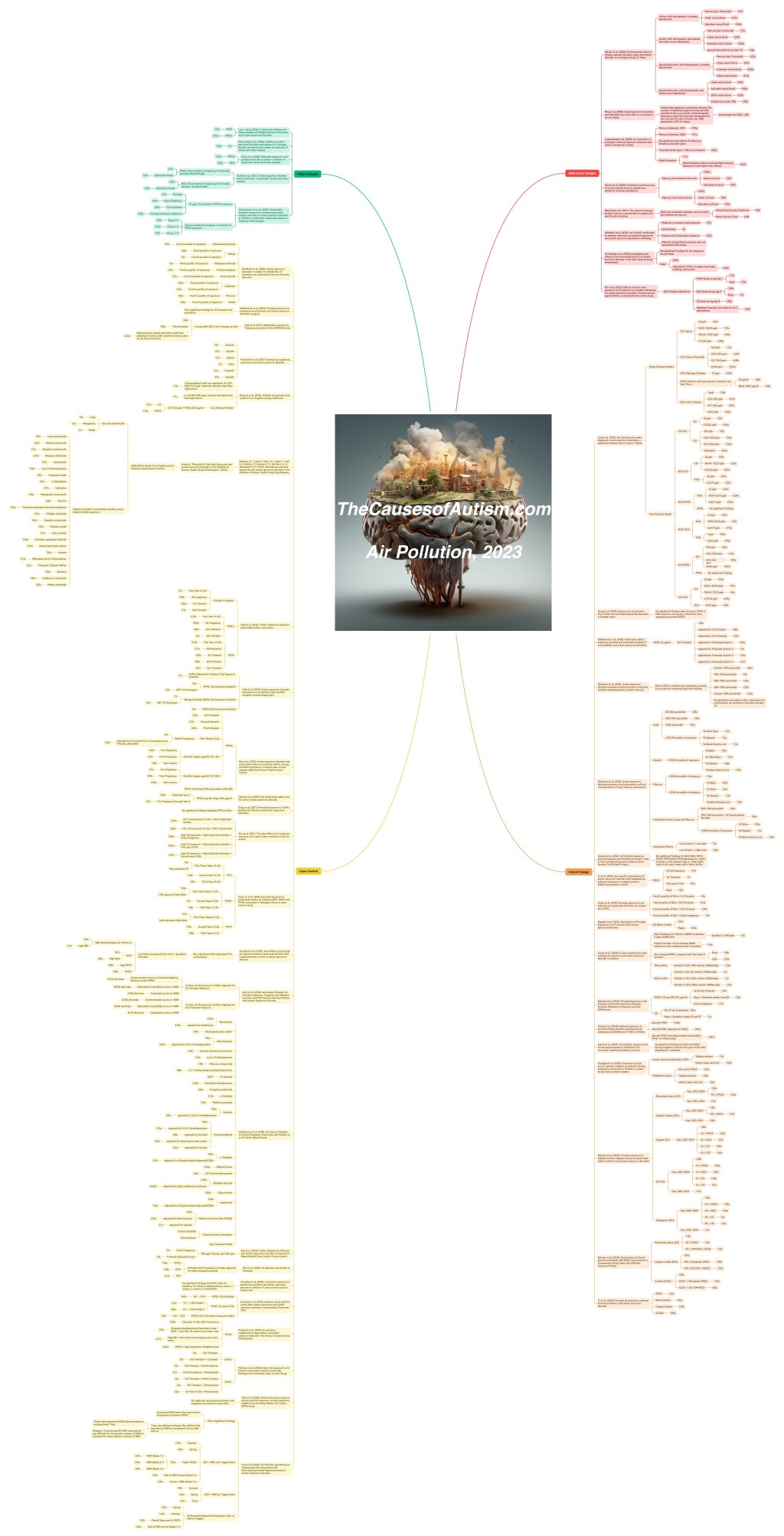
This page shall be updated regularly upon discovery of research that fits the following parameters: research relating to the connection between air pollution and autism.
What is the relationship between air pollution and autism? During which pregnancy period does air pollution exposure pose the greatest risk? The following information is purposefully delivered with the intent of providing the public with scientific evidence regarding the connection between air pollution and autism.
Data on the following studies was collected using a variety of methods, including the use of dispersion models, distance to freeway, assignment of diesel exhaust particle concentration via the Hazardous Air Pollutant monitoring network, and EPA’s Air Quality Monitoring network to evaluate specific effects of particles. Many datasets used CHARGE, a case-control study of California children with autism. Given the ethnic diversity in the state of California, it is arguably a good database for obtaining results that are highly generalizable.
The CALINE4 line-source air-quality dispersion model was applied by various studies to derive estimates of exposure to the complex NRAP mixture. Other studies use the EPA’s Air Quality System (AQS) to assess regional pollutants.
Air pollution variables in the literature include Particulate Matter (PM) less than 10 microns in diameter (PM10), PM less than 2.5 microns (PM2.5), ultrafine particulate matter (PM0.1), and specific pollutants, such as Nitrogen Dioxide (N02), Ozone (O3), and metals such as mercury.
Sources of Particulate Matter: construction sites, unpaved roads, fields, smokestacks or fires, and complex reactions of chemicals such as sulfur dioxide and nitrogen oxides which are pollutants emitted from power plants, industries and automobiles. (EPA)
Sources of Nitrogen Dioxide N02: cars, trucks, buses, power plants, and off-road equipment. (EPA)
Sources of Sulfur Dioxide: burning of fossil fuels by power plants and other industrial facilities; smaller sources of SO2 emissions include: industrial processes such as extracting metal from ore; natural sources such as volcanoes; and locomotives, ships and other vehicles and heavy equipment that burn fuel with a high sulfur content. (EPA)
Sources of Ozone (O3): forms due to chemical interactions between nitrogen oxides (NOx) and volatile organic compounds in the presence of heat and sunlight. (EPA)
Sources of Mercury Emission: artisanal and small scale mining, stationary combustion of coal, nonferrus metals production, cement production, waste from products, vinyl chlorine monomer, biomass burning, ferrous metals production, chlor-alkali production, waste incineration, oil refining, stationary combustion of oil and gas, and cremation. “Estimates of annual global mercury emissions from anthropogenic sources are approximately 2220 metric tons per year (2015 data).” (EPA)
How to Interpret the Numbers on this Page
When you browse various pages on toxins, you’ll encounter many studies. There will be a research paper title followed by numbers underneath. What do those numbers mean and why are there so many of them?
Here’s what those numbers signify:
- 1 = No Difference Between Groups: If the number is 1, it means there’s no difference in the likelihood of developing the condition (like autism) between the group exposed to a certain factor and the group that wasn’t.
- Greater than 1 = Increased Likelihood: If the number is greater than 1, it indicates that the group exposed to the factor has a higher likelihood of the condition. For example:
- 1.5: This means the exposed group has 1.5 times the odds or risk of developing autism compared to the non-exposed group. In other words, their risk is 50% higher.
- Less than 1 = Decreased Likelihood or Protective Effect: Numbers less than 1 suggest that exposure might reduce the likelihood of the condition or could even be protective. For instance:
- 0.75: This would mean the exposed group has 25% lower odds or risk compared to those not exposed.
- Multiple Numbers and Analyses:
- You’ll notice multiple numbers because researchers often look at different aspects related to autism, not just diagnosis but also symptoms or associated traits. They might also adjust for other factors (like age, gender, other health conditions) to isolate the effect of the factor they’re studying. This is why you see various analyses:
- Raw Data: Initial numbers before adjustments.
- Adjusted Analyses: Numbers after accounting for other variables to see if the factor still has an effect.
- You’ll notice multiple numbers because researchers often look at different aspects related to autism, not just diagnosis but also symptoms or associated traits. They might also adjust for other factors (like age, gender, other health conditions) to isolate the effect of the factor they’re studying. This is why you see various analyses:
Thus, when you see a number like 1.5, think of it as “the risk or odds of autism for the exposed group is 1.5 times higher compared to those not exposed.” This doesn’t mean everyone exposed will develop autism, but rather, their risk is increased by that factor.
Meta Analyses
- Lam, J., Sutton, P., Kalkbrenner, A., Windham, G., Halladay, A., Koustas, E., Lawler, C., Davidson, L., Daniels, N., Newschaffer, C., & Woodruff, T. (2016). A Systematic Review and Meta-Analysis of Multiple Airborne Pollutants and Autism Spectrum Disorder. PloS one, 11(9), e0161851. https://doi.org/10.1371/journal.pone.0161851
- PM2.5– 2.32x Odds Ratio
- PM10– 1.07x Odds Ratio
- Flores-Pajot, M. C., Ofner, M., Do, M. T., Lavigne, E., & Villeneuve, P. J. (2016). Childhood autism spectrum disorders and exposure to nitrogen dioxide, and particulate matter air pollution: A review and meta-analysis. Environmental research, 151, 763–776. https://doi.org/10.1016/j.envres.2016.07.030
- O3– 1.05x Risk Ratio
- Based off of only 2 studies, however.
- Additional analyses that included fewer studies resulted in some significant findings for PM2.5, PM10, and NO2; results should be interpreted with caution.
- O3– 1.05x Risk Ratio
- Chun, H., Leung, C., Wen, S. W., McDonald, J., & Shin, H. H. (2020). Maternal exposure to air pollution and risk of autism in children: A systematic review and meta-analysis. Environmental pollution (Barking, Essex : 1987), 256, 113307. https://doi.org/10.1016/j.envpol.2019.113307
- PM2.5– 1.06x Pooled Odds Ratio
- NO2– 1.02x Pooled Odds Ratio
- “For positive association between maternal exposure to ambient air pollution and ASD in children, there is some evidence for PM2.5, weak evidence for NO2 and little evidence for PM10 and ozone. However, patterns in associations over trimesters were inconsistent among studies and among air pollutants.”
- Dutheil, F., Comptour, A., Morlon, R., Mermillod, M., Pereira, B., Baker, J. S., Charkhabi, M., Clinchamps, M., & Bourdel, N. (2021). Autism spectrum disorder and air pollution: A systematic review and meta-analysis. Environmental pollution (Barking, Essex : 1987), 278, 116856. https://doi.org/10.1016/j.envpol.2021.116856
- PM2.5, Preconception, Pregnancy, & Postnatal periods (Global Model)- 1.07x Odds Ratio
- PM2.5, Preconception, Pregnancy, & Postnatal periods (Optimistic Model)- 1.15x Odds Ratio
- NOx, Preconception, Pregnancy, & Postnatal periods- (Global Model)- 1.02x Odds Ratio
- NOx, Preconception, Pregnancy, & Postnatal periods- (Optimistic Model)- 1.05x Odds Ratio
- PM2.5, Preconception, Pregnancy, & Postnatal periods (Global Model)- 1.07x Odds Ratio
- Cheng-Kuan Lin, Yuan-Ting Chang, Fu-Shiuan Lee, Szu-Ta Chen, and David Christiani (2021). Association between exposure to ambient particulate matters and risks of autism spectrum disorder in children: a systematic review and exposure-response meta-analysis. Environmental Research Letters. 16 063003. https://doi.org/10.1088/1748-9326/abfcf7
- Prenatal 10 μg/m−3 increment of PM2.5 exposure- 1.31x Pooled Risk Ratio
- Early Childhood 10 μg/m−3 increment of PM2.5 exposure- 1.64x Pooled Risk Ratio
- Third trimester 10 μg/m−3 increment of PM2.5 exposure- 1.35x Risk Ratio
- Prenatal and early childhood 10 μg/m−3 increment of PM2.5 exposure- 1.43x Pooled Risk Ratio
- Exposure Response Analysis
- 8 μg m−3 increment of PM2.5 exposure- 1.30x Pooled Risk Ratio
- 42 μg m−3 increment of PM2.5 exposure- 1.77x Pooled Risk Ratio
- 74 μg m−3 increment of PM2.5 exposure- 1.44x Pooled Risk Ratio
Cohort Studies
- Jung, C. R., Lin, Y. T., & Hwang, B. F. (2013). Air pollution and newly diagnostic autism spectrum disorders: a population-based cohort study in Taiwan. PloS one, 8(9), e75510. https://doi.org/10.1371/journal.pone.0075510
- O3, Ozone
- 10 ppb- 1.59x Adjusted Hazard Ratio
- 96.92–106.43 ppb- 1.72x Adjusted Hazard Ratio
- 106.44–112.21 ppb- 2.55x Adjusted Hazard Ratio
- ≥112.22 ppb- 5.88x Adjusted Hazard Ratio
- CO, Carbon Monoxide
- 100 ppb- 1.37x Adjusted Hazard Ratio
- 0.42–0.50 ppm- 2.59x Adjusted Hazard Ratio
- 0.51–0.64 ppm- 6.08x Adjusted Hazard Ratio
- ≥0.65 ppm- 13.67x Adjusted Hazard Ratio
- NO2, Nitrogen Dioxides
- 10 ppb- 4.43x Adjusted Hazard Ratio
- PM10, Particles with aerodynamic diameter less than 10 µm
- 10 µg/m3– 1.08x Adjusted Hazard Ratio
- 48.69–57.96 µg/m3– 1.38x Adjusted Hazard Ratio
- SO2, sulfur dioxide
- 1 ppb- 1.18x Adjusted Hazard Ratio
- ≥4.67 ppb- 2.03x Adjusted Hazard Ratio
- Two Pollutant Model
- CO+O3
- O3 (10 ppb)- 1.57x Adjusted Hazard Ratio
- ≥112.22 ppb- 4.05x Adjusted Hazard Ratio
- CO (100 ppb)- 1.37x Adjusted Hazard Ratio
- 0.42–0.50 ppm- 1.83x Adjusted Hazard Ratio
- 0.51–0.64 ppm- 3.26x Adjusted Hazard Ratio
- ≥0.65 ppm- 8.66x Adjusted Hazard Ratio
- O3 (10 ppb)- 1.57x Adjusted Hazard Ratio
- NO2+O3
- O3 (10 ppb)- 1.53x Adjusted Hazard Ratio
- 106.44–112.21 ppb- 2.25x Adjusted Hazard Ratio
- ≥112.22 ppb- 4.93x Adjusted Hazard Ratio
- NO2 (10 ppb)- 4.10x Adjusted Hazard Ratio
- ≥22.77 ppb- 2.81x Adjusted Hazard Ratio
- O3 (10 ppb)- 1.53x Adjusted Hazard Ratio
- NO2+PM10
- NO2 (10 ppb)- 5.69x Adjusted Hazard Ratio
- 18.93–22.76 ppb- 2.24x Adjusted Hazard Ratio
- ≥22.77 ppb- 6.33x Adjusted Hazard Ratio
- PM10 (10 µg/m3)- No significant findings
- NO2 (10 ppb)- 5.69x Adjusted Hazard Ratio
- NO2+SO2
- NO2 (10 ppb)- 4.57x Adjusted Hazard Ratio
- 18.93–22.76 ppb- 1.76x Adjusted Hazard Ratio
- ≥22.77 ppb- 4.73x Adjusted Hazard Ratio
- SO2 ≥4.67 ppb- 1.49x Adjusted Hazard Ratio
- NO2 (10 ppb)- 4.57x Adjusted Hazard Ratio
- CO+PM10
- CO (100 ppb)- 1.40x Adjusted Hazard Ratio
- 0.42–0.50 ppm- 3.16x Adjusted Hazard Ratio
- 0.51–0.64 ppm- 7.99x Adjusted Hazard Ratio
- ≥0.65 ppm- 18.87x Adjusted Hazard Ratio
- PM10 (10 µg/m3)- No significant Findings
- CO (100 ppb)- 1.40x Adjusted Hazard Ratio
- O3+SO2
- O3 (10 ppb)- 1.54x Adjusted Hazard Ratio
- 96.92–106.43 ppb- 1.79x Adjusted Hazard Ratio
- 106.44–112.21 ppb- 2.8x Adjusted Hazard Ratio
- ≥112.22 ppb- 4.95x Adjusted Hazard Ratio
- SO2 ≥4.67 ppb- 1.48x Adjusted Hazard Ratio
- O3 (10 ppb)- 1.54x Adjusted Hazard Ratio
- CO+O3
- Covariates: Baseline age in year 2000, sex, SES, anxiety, bipolar disorder, depressive disorder, intellectual disabilities, obsessive compulsive disorder, phobic disorder.
- O3, Ozone
- Gong, T., Almqvist, C., Bölte, S., Lichtenstein, P., Anckarsäter, H., Lind, T., Lundholm, C., & Pershagen, G. (2014). Exposure to air pollution from traffic and neurodevelopmental disorders in Swedish twins. Twin research and human genetics : the official journal of the International Society for Twin Studies, 17(6), 553–562. https://doi.org/10.1017/thg.2014.58
- No significant findings were found for PM10 or NOx exposure during any of the three time windows and autism/ADHD.
- Dickerson, A. S., Rahbar, M. H., Han, I., Bakian, A. V., Bilder, D. A., Harrington, R. A., Pettygrove, S., Durkin, M., Kirby, R. S., Wingate, M. S., Tian, L. H., Zahorodny, W. M., Pearson, D. A., Moyé, L. A., 3rd, & Baio, J. (2015). Autism spectrum disorder prevalence and proximity to industrial facilities releasing arsenic, lead or mercury. The Science of the total environment, 536, 245–251. https://doi.org/10.1016/j.scitotenv.2015.07.024
- Risk of ASD for children by residential proximity to air pollutant releasing industrial facilities
- Closest <10th percentile- 1.46x Odds Ratio
- 10th–20th percentile- 1.3x Odds Ratio
- 20th–30th percentile- 1.43x Odds Ratio
- 30th–40th percentile- 1.32x Odds Ratio
- Closest <50th percentile- 1.24x Odds Ratio
- No significant associations after adjustment for confounders, as confidence intervals included 1.0.
- Covariates: % male, % White race, % Hispanic ethnicity, % college educated, rural geography, and % below poverty.
- Dickerson, A. S., Rahbar, M. H., Bakian, A. V., Bilder, D. A., Harrington, R. A., Pettygrove, S., Kirby, R. S., Durkin, M. S., Han, I., Moyé, L. A., 3rd, Pearson, D. A., Wingate, M. S., & Zahorodny, W. M. (2016). Autism spectrum disorder prevalence and associations with air concentrations of lead, mercury, and arsenic. Environmental monitoring and assessment, 188(7), 407. https://doi.org/10.1007/s10661-016-5405-1
- Arsenic
- >75% Percentile of exposure
- % Black- 1.25x Risk Ratio
- % Other Race- 1.12x Risk Ratio
- % Hispanic- 1.08x Risk Ratio
- % Below Poverty Line- 1.09x Risk Ratio
- >75% Percentile of exposure
- Lead
- 25-50th percentile- 1.28x Adjusted Risk Ratio
- 50th-75th percentile- 1.26x Adjusted Risk Ratio
- >75th percentile- 1.36x Adjusted Risk Ratio
- >75% Percentile of exposure
- % Other Race- 1.19x Risk Ratio
- % Hispanic- 1.16x Risk Ratio
- % Below Poverty Line- 1.11x Risk Ratio
- >75% Percentile of exposure
- Mercury
- >75% Percentile of exposure- 1.14x Risk Ratio
- >75% Percentile of exposure
- % Black- 1.03x Risk Ratio
- % Other- 1.16x Risk Ratio
- % Hispanic- 1.11x Risk Ratio
- % Below Poverty Line- 1.19x Risk Ratio
- >75% Percentile of exposure
- >75% Percentile of exposure- 1.14x Risk Ratio
- Combined Arsenic, Lead, and Mercury,
- 50th-75th percentile- 1.34x Risk Ratio
- 50th-75th percentile + % Poverty Below Average- 1.36x Risk Ratio
- >75% Percentile of exposure
- % Other- 1.22x Risk Ratio
- % Hispanic- 1.2x Risk Ratio
- % Below Poverty Line- 1.25x Risk Ratio
- Interactive Effects
- Low Arsenic + Low Lead- 1.2x Adjusted Risk Ratio
- Low Arsenic + High Lead- 1.26x Adjusted Risk Ratio
- Covariates: SES, whether the tract was urban or rural, percentage of college-educated residents, percentage of the population below the poverty line, and median household income in the highest quartile.
- Arsenic
- Kalkbrenner, A. E., Windham, G. C., Serre, M. L., Akita, Y., Wang, X., Hoffman, K., Thayer, B. P., & Daniels, J. L. (2015). Particulate matter exposure, prenatal and postnatal windows of susceptibility, and autism spectrum disorders. Epidemiology (Cambridge, Mass.), 26(1), 30–42. https://doi.org/10.1097/EDE.0000000000000173
- PM10
- 3rd Trimester- 1.36x adjusted Odds Ratio
- 3rd Trimester, adjusted for 1st Trimester- 1.38x adjusted Odds Ratio
- 3rd Trimester, adjusted for 2nd Trimester- 1.37x adjusted Odds Ratio
- 3rd Trimester, adjusted for Postnatal Quarter 1- 1.36x adjusted Odds Ratio
- 3rd Trimester, adjusted for Postnatal Quarter 2- 1.3x adjusted Odds Ratio
- 3rd Trimester, adjusted for Postnatal Quarter 3- 1.33x adjusted Odds Ratio
- 3rd Trimester, adjusted for Postnatal Quarter 4- 1.37x adjusted Odds Ratio
- Guxens, M., Ghassabian, A., Gong, T., Garcia-Esteban, R., Porta, D., Giorgis-Allemand, L., Almqvist, C., Aranbarri, A., Beelen, R., Badaloni, C., Cesaroni, G., de Nazelle, A., Estarlich, M., Forastiere, F., Forns, J., Gehring, U., Ibarluzea, J., Jaddoe, V. W., Korek, M., Lichtenstein, P., … Sunyer, J. (2016). Air Pollution Exposure during Pregnancy and Childhood Autistic Traits in Four European Population-Based Cohort Studies: The ESCAPE Project. Environmental health perspectives, 124(1), 133–140. https://doi.org/10.1289/ehp.1408483
- No significant findings for NO2, NOX, PM10, PM2.5, PMCOARSE, PM2.5absorbance, Traffic intensity on the nearest road, or Total traffic load on all major roads within 100-m buffer.
- Oudin, A., Frondelius, K., Haglund, N., Källén, K., Forsberg, B., Gustafsson, P., & Malmqvist, E. (2019). Prenatal exposure to air pollution as a potential risk factor for autism and ADHD. Environment international, 133(Pt A), 105149. https://doi.org/10.1016/j.envint.2019.105149
- Fourth quartile of NOx + 1st Trimester- 1.4x Adjusted Odds Ratio
- Third quartile of NOx + 3rd Trimester– 1.41x Adjusted Odds Ratio
- Fourth quartile of NOx + 3rd Trimester- 1.39x Adjusted Odds Ratio
- Fourth quartile of NOx + Entire Pregnancy- 1.4x Adjusted Odds Ratio
- Covariates: gender of child, maternal age, parity, maternal smoking, maternal BMI, maternal education, disposable income, maternal country of birth.
- Pagalan, L., Bickford, C., Weikum, W., Lanphear, B., Brauer, M., Lanphear, N., Hanley, G. E., Oberlander, T. F., & Winters, M. (2019). Association of Prenatal Exposure to Air Pollution With Autism Spectrum Disorder. JAMA pediatrics, 173(1), 86–92. https://doi.org/10.1001/jamapediatrics.2018.3101
- NO (Nitric Oxide)- 1.07x Adjusted Odds Ratio
- NO + Males- 1.09x Adjusted Odds Ratio
- Covariates: child sex, birth month, birth year, maternal age, maternal birthplace, urbanicity, and income band for exposure.
- NO (Nitric Oxide)- 1.07x Adjusted Odds Ratio
- Jo, H., Eckel, S. P., Wang, X., Chen, J. C., Cockburn, M., Martinez, M. P., Chow, T., Molshatzki, N., Lurmann, F. W., Funk, W. E., Xiang, A. H., & McConnell, R. (2019). Sex-specific associations of autism spectrum disorder with residential air pollution exposure in a large Southern California pregnancy cohort. Environmental pollution (Barking, Essex : 1987), 254(Pt A), 113010. https://doi.org/10.1016/j.envpol.2019.113010
- PM2.5
- Entire Pregnancy- 1.17x Adjusted Hazard Ratio
- First Trimester- 1.10 Adjusted Hazard Ratio
- First year of life- 1.21x Hazard Ratio
- Boys- 1.18x Hazard Ratio
- Covariates: sex and maternal race/ethnicity, and maternal age at delivery, parity, education, maternal history of comorbidity, and median family household income in the census tract of residence.
- PM2.5
- Carter, S. A., Rahman, M. M., Lin, J. C., Shu, Y. H., Chow, T., Yu, X., Martinez, M. P., Eckel, S. P., Chen, J. C., Chen, Z., Schwartz, J., Pavlovic, N., Lurmann, F. W., McConnell, R., & Xiang, A. H. (2022). In utero exposure to near-roadway air pollution and autism spectrum disorder in children. Environment international, 158, 106898. https://doi.org/10.1016/j.envint.2021.106898
- Near-Roadway Air Pollution (NRAP) scaled per 5 ppb CALINE NOx
- Quintile 5: >3.80 ppb– 1.2x Hazard Ratio
- Highest Quintile of non-freeway NRAP exposure to the combined lower 4 quintiles
- Quintile 5: >3.80 ppb- 1.19x Hazard Ratio
- Non-freeway NRAP, compared with the lower 4 quintiles
- Boys- 1.18x Adjusted Hazard Ratio
- Girls- 1.23x Adjusted Hazard Ratio
- 150m buffer
- Quintile 5: 5.99–139.0 vehicle-1000km/day- 1.14x Hazard Ratio
- 300m buffer
- Quintile 3: 9.0–15.2 vehicle-1000km/day- 1.1x Hazard Ratio
- Quintile 4: 15.2–26.0 vehicle-1000km/day- 1.1x Hazard Ratio
- Quintile 5: 26.0–290.0 vehicle-1000km/day- 1.13x Hazard Ratio
- Covariates: birth year, medical center, maternal age, maternal ethnicity, maternal education, parity, history of comorbidity, income at age one, season of conception, pre-pregnancy diabetes mellitus, pre-pregnancy obesity, smoking in pregnancy, and child’s sex
- Near-Roadway Air Pollution (NRAP) scaled per 5 ppb CALINE NOx
- Rahman, M. M., Shu, Y. H., Chow, T., Lurmann, F. W., Yu, X., Martinez, M. P., Carter, S. A., Eckel, S. P., Chen, J. C., Chen, Z., Levitt, P., Schwartz, J., McConnell, R., & Xiang, A. H. (2022). Prenatal Exposure to Air Pollution and Autism Spectrum Disorder: Sensitive Windows of Exposure and Sex Differences. Environmental health perspectives, 130(1), 17008. https://doi.org/10.1289/EHP9509
- PM2.5 1.14 per IQR (7.4-μg/m3)
- 1st & 2nd Trimester- 1.14x Cumulative Hazard Ratio
- Boys + Gestation weeks 1 and 28- 1.16x Hazard Ratio
- Entire Pregnancy- 1.17x Hazard Ratio
- O3
- 34–37 wk of gestation- 1.06x Cumulative Hazard Ratio
- Boys + Gestation weeks 33 and 37- 1.1x Hazard Ratio
- Covariates: child sex, maternal race/ethnicity in the KPSC EMR, maternal age at delivery, parity, education, maternal history of comorbidity, medical center, median family household income in census tract of residence, birth year, and an indicator variable for season.
- PM2.5 1.14 per IQR (7.4-μg/m3)
- Carter, S. A., Rahman, M. M., Lin, J. C., Chow, T., Yu, X., Martinez, M. P., Levitt, P., Chen, Z., Chen, J. C., Eckel, S. P., Schwartz, J., Lurmann, F. W., Kleeman, M. J., McConnell, R., & Xiang, A. H. (2023). Maternal exposure to aircraft emitted ultrafine particles during pregnancy and likelihood of ASD in children. Environment international, 178, 108061. https://doi.org/10.1016/j.envint.2023.108061
- Aircraft PM0.1– 1.016x Hazard Ratio
- Aircraft PM0.1 adjusted for PM2.5– 1.017x Adjusted Hazard Ratio
- Aircraft PM0.1 excluding mothers living within 20 km of military base- 1.037x Hazard Ratio
- Covariates: child sex, maternal race/ethnicity, maternal age at delivery, parity, maternal education, maternal history of comorbidity, median family household income in census tract of residence, birth year, and an indicator variable for season
- Flanagan, E., Malmqvist, E., Rittner, R., Gustafsson, P., Källén, K., & Oudin, A. (2023). Exposure to local, source-specific ambient air pollution during pregnancy and autism in children: a cohort study from southern Sweden. Scientific reports, 13(1), 3848. https://doi.org/10.1038/s41598-023-30877-5
- Autism Spectrum Disorders (ASD) conceptualized as “one or more of the following areas of neurodivergence: qualitative variations in patterns of communication; difficulties with reciprocal social interactions; and a restricted, repetitive collection of behaviors and interests.” International
Classification of Mental and Behavioral Disorders version 10 (ICD-10) diagnosis codes starting with F84]- Tailpipe exhaust- 1.3x Adjusted Odds Ratio
- Vehicle wear-and-tear- 1.24x Adjusted Odds Ratio
- Childhood Autism conceptualized as: “symptoms within all three areas of neurodivergence must be present before the age of 3 years.” ICD-10 diagnosis code F84.0) only.
- All-source PM2.5– 1.34x Adjusted Odds Ratio
- Tailpipe exhaust- 1.46x Adjusted Odds Ratio
- Vehicle wear-and-tear- 1.36x Adjusted Odds Ratio
- Covariates: maternal age, parity, pre-pregnancy body mass index, smoking status at first antenatal visit, as well as sex of the child, birth year, maternal birth country, maternal education, annual household disposable income, neighborhood-level SES, birth month, and low birth weight.
- Autism Spectrum Disorders (ASD) conceptualized as “one or more of the following areas of neurodivergence: qualitative variations in patterns of communication; difficulties with reciprocal social interactions; and a restricted, repetitive collection of behaviors and interests.” International
- Rahman, M. M., Carter, S. A., Lin, J. C., Chow, T., Yu, X., Martinez, M. P., Chen, Z., Chen, J. C., Rud, D., Lewinger, J. P., van Donkelaar, A., Martin, R. V., Eckel, S. P., Schwartz, J., Lurmann, F., Kleeman, M. J., McConnell, R., & Xiang, A. H. (2023). Associations of Autism Spectrum Disorder with PM2.5 Components: A Comparative Study Using Two Different Exposure Models. Environmental science & technology, 57(1), 405–414. https://doi.org/10.1021/acs.est.2c05197
- Elemental carbon [EC]- 1.12x Hazard Ratio
- EC + PM2.5– 1.15x Hazard Ratio
- EC + OM+NO3−+SO42− 1.13x Hazard Ratio
- Organic matter [OM]- 1.09x
- OM + Remainder PM2.5– 1.09x Hazard Ratio
- OM + EC+NO3−+SO42−– 1.02x Hazard Ratio
- Sulfate (SO42−)- 1.05x Hazard Ratio
- SO42− + Remainder PM2.5– 1.04x Hazard Ratio
- SO42− + EC+OM+NO3−– 1.05x Hazard Ratio
- Covariates: child sex, maternal race/ethnicity, maternal age at delivery, parity, education, maternal comorbidities, household income (census tract level), birth year (non-linear), season (wet/dry), and pre-pregnancy diabetes
- Elemental carbon [EC]- 1.12x Hazard Ratio
- Iyanna, N., Yolton, K., LeMasters, G., Lanphear, B. P., Cecil, K. M., Schwartz, J., Brokamp, C., Rasnick, E., Xu, Y., MacDougall, M. C., & Ryan, P. H. (2023). Air pollution exposure and social responsiveness in childhood: The cincinnati combined childhood cohorts. International journal of hygiene and environmental health, 251, 114172. https://doi.org/10.1016/j.ijheh.2023.114172
- No significant findings for NO2 and PM2.5 during pregnancy and the first year of life after adjusting for covariates.
- Rahman, M. M., Carter, S. A., Lin, J. C., Chow, T., Yu, X., Martinez, M. P., Levitt, P., Chen, Z., Chen, J. C., Rud, D., Lewinger, J. P., Eckel, S. P., Schwartz, J., Lurmann, F. W., Kleeman, M. J., McConnell, R., & Xiang, A. H. (2023). Prenatal exposure to tailpipe and non-tailpipe tracers of particulate matter pollution and autism spectrum disorders. Environment international, 171, 107736. https://doi.org/10.1016/j.envint.2023.107736
- Year, 2001–2014
- Elemental carbon [EC]- 1.11x Hazard Ratio
- Organic carbon [OC]- 1.09x Hazard Ratio
- Iron [Fe]- 1.14x Hazard Ratio
- Manganese [Mn]- 1.17x Hazard Ratio
- Year, 2001–2009
- Elemental carbon [EC]- 1.25x Hazard Ratio
- EC + PM2.5– 1.29x Hazard Ratio
- Organic carbon [OC]- 1.18x Hazard Ratio
- OC + PM2.5– 1.13x Hazard Ratio
- Copper [Cu]- 1.46x Hazard Ratio
- Cu + PM2.5– 1.62x Hazard Ratio
- Cu + NO2– 1.51x Hazard Ratio
- Cu + EC- 1.58x Hazard Ratio
- Cu + OC- 1.67x Hazard Ratio
- Iron [Fe]- 1.43x Hazard Ratio
- Fe + PM2.5– 1.58x Hazard Ratio
- Fe + NO2– 1.45x Hazard Ratio
- Fe + EC- 1.49x Hazard Ratio
- Fe + OC- 1.61x Hazard Ratio
- Manganese [Mn]- 1.43x Hazard Ratio
- Mn + PM2.5– 1.59x Hazard Ratio
- Mn + NO2– 1.46x Hazard Ratio
- Mn + EC- 1.5x Hazard Ratio
- Mn + OC- 1.61x Hazard Ratio
- Elemental carbon [EC]- 1.25x Hazard Ratio
- Covariates: child sex, maternal race/ethnicity, maternal age at delivery, parity, education, maternal comorbidities, household income, birth year (non-linear), season (wet/dry), and pre-pregnancy diabetes.
- Year, 2001–2014
- Yu, X., Mostafijur Rahman, M., Carter, S. A., Lin, J. C., Zhuang, Z., Chow, T., Lurmann, F. W., Kleeman, M. J., Martinez, M. P., van Donkelaar, A., Martin, R. V., Eckel, S. P., Chen, Z., Levitt, P., Schwartz, J., Hackman, D., Chen, J. C., McConnell, R., & Xiang, A. H. (2023). Prenatal air pollution, maternal immune activation, and autism spectrum disorder. Environment international, 179, 108148. https://doi.org/10.1016/j.envint.2023.108148
- PM2.5– 1.07x Adjusted Hazard Ratio
- BC (Black Carbon)- 1.06x Adjusted Hazard Ratio
- OM (Organic Matter)- 1.09x Adjusted Hazard Ratio
- NO42- (Sulfate)- 1.08x Adjusted Hazard Ratio
- Covariates: child sex, maternal race/ethnicity, maternal age at delivery, parity, education, maternal history of severe comorbidities, neighborhood disadvantage index, birth year, and season
Case Control Studies
- Windham, G. C., Zhang, L., Gunier, R., Croen, L. A., & Grether, J. K. (2006). Autism spectrum disorders in relation to distribution of hazardous air pollutants in the san francisco bay area. Environmental health perspectives, 114(9), 1438–1444. https://doi.org/10.1289/ehp.9120
- Chlorinated Solvents
- Fourth quartile exposure- 1.55x Adjusted Odds Ratio
- Metals
- Third quartile exposure- 1.68x Adjusted Odds Ratio
- Fourth quartile exposure- 1.5x Adjusted Odds Ratio
- Methylene chloride
- Third quartile exposure- 1.5x Adjusted Odds Ratio
- Trichloroethylene
- Fourth quartile exposure- 1.47x Adjusted Odds Ratio
- Vinyl chloride
- Fourth quartile exposure- 1.75x Adjusted Odds Ratio
- Cadmium
- Third quartile exposure- 1.43x Adjusted Odds Ratio
- Fourth quartile exposure- 1.54x Adjusted Odds Ratio
- Mercury
- Fourth quartile exposure- 1.92x Adjusted Odds Ratio
- Nickel
- Fourth quartile exposure- 1.46x Adjusted Odds Ratio
- Covariates: maternal age, race, education, and parity; paternal race and age; low birth weight, preterm delivery, and child race.
- Chlorinated Solvents
- Kalkbrenner, A. E., Daniels, J. L., Chen, J. C., Poole, C., Emch, M., & Morrissey, J. (2010). Perinatal exposure to hazardous air pollutants and autism spectrum disorders at age 8. Epidemiology (Cambridge, Mass.), 21(5), 631–641. https://doi.org/10.1097/EDE.0b013e3181e65d76
- Non-significant findings for 35 hazardous air pollutants
- Volk, H. E., Hertz-Picciotto, I., Delwiche, L., Lurmann, F., & McConnell, R. (2011). Residential proximity to freeways and autism in the CHARGE study. Environmental health perspectives, 119(6), 873–877. https://doi.org/10.1289/ehp.1002835
- Living within 309 m of a freeway at birth- 1.86x Adjusted Odds Ratio
- Third trimester- 1.96x Adjusted Odds Ratio
- Restricting the sample with birth certificate addresses to those with residential history data for all three trimesters- 2.22x Adjusted Odds Ratio
- Living within 309 m of a freeway at birth- 1.86x Adjusted Odds Ratio
- McCanlies, E. C., Fekedulegn, D., Mnatsakanova, A., Burchfiel, C. M., Sanderson, W. T., Charles, L. E., & Hertz-Picciotto, I. (2012). Parental occupational exposures and autism spectrum disorder. Journal of autism and developmental disorders, 42(11), 2323–2334. https://doi.org/10.1007/s10803-012-1468-1
- Lacquer- 7.3x Odds Ratio
- Varnish- 4.7x Odds Ratio
- Xylene- 2.7x Odds Ratio
- Paint- 2.0x Odds Ratio
- Solvents- 3.1x Odds Ratio
- Asphalt- 6.9x Odds Ratio
- P-Value Correction- None of the findings remained signifcant after correcting the P-values for multiple tests (pc). However, the findings are presented here due to their contribution to the contextual understanding of the air pollution literature. In spite of non-significant p-values, the findings arguable are consistent with the rest of the literature. Additionally, the p-value correction might assume independent effect of each toxicant, and would not assume synergistic toxicity if a parent is exposed to multiple airborne toxins.
- Becerra, T. A., Wilhelm, M., Olsen, J., Cockburn, M., & Ritz, B. (2013). Ambient air pollution and autism in Los Angeles county, California. Environmental health perspectives, 121(3), 380–386. https://doi.org/10.1289/ehp.1205827
- Unseasonalized land use regression (U-LUR-NO2) 5.41 ppb + less than high school maternal education- 1.17x Adjusted Odds Ratio
- U-LUR-NO 9.40 ppb + less than high school maternal education- 1.11x Adjusted Odds Ratio
- Two-Pollutant Model
- O3 11.54 ppb + PM2.5 8.25 µg/m3
- O3, adjusting for PM2.5– 1.12x adjusted Odds Ratio
- PM2.5, adjusting for O3– 1.15x adjusted Odds Ratio
- O3 11.54 ppb + PM2.5 8.25 µg/m3
- Covariates- maternal age, maternal place of birth, race/ethnicity, and education; type of birth (single, multiple), parity; insurance type (public, private, or other, a proxy for socioeconomic status); and gestational age at birth (weeks).
- Estimation of pollutant effects without adjustment for gestational age due to the possibility that this factor might be a mechanism between air pollution and autism.
- Roberts, A. L., Lyall, K., Hart, J. E., Laden, F., Just, A. C., Bobb, J. F., Koenen, K. C., Ascherio, A., & Weisskopf, M. G. (2013). Perinatal air pollutant exposures and autism spectrum disorder in the children of Nurses’ Health Study II participants. Environmental health perspectives, 121(8), 978–984. https://doi.org/10.1289/ehp.1206187
- Erratum: “Perinatal Air Pollutant Exposures and Autism Spectrum Disorder in the Children of Nurses’ Health Study II Participants”. (2014). Environmental Health Perspectives, 122(6), A152. https://doi.org/10.1289/ehp.122-A152
- Odds Ratios drawn from Supplementary Material updated post-erratum.
- One Pollutant Model
- Lead- 1.6x Odds Ratio
- Manganese- 1.5x Odds Ratio
- Nickel- 1.7x Odds Ratio
- Highest pollutant concentration Quintile versus lowest Quintile exposure
- Beryllium compounds- 1.77x Odds Ratio
- Ethylene dichloride- 2.14x Odds Ratio
- Acetonitrile- 1.73x Odds Ratio
- 1,2,4-Trichlorobenzene- 1.58x Odds Ratio
- Nickel compounds- 1.65x Odds Ratio
- Propylene oxide- 1.81x Odds Ratio
- 1,3-Butadiene- 1.57x Odds Ratio
- Hydrazine- 1.47x Odds Ratio
- Lead compounds- 1.57x Odds Ratio
- Manganese compounds- 1.54x Odds Ratio
- Toluene- 1.56x Odds Ratio
- Tetrachloroethylene (Perchloroethylene)- 1.60x Odds Ratio
- Phthalic anhydride- 1.75x Odds Ratio
- Cyanide compounds- 1.64x Odds Ratio
- Ethylene oxide- 1.50x Odds Ratio
- Vinyl acetate- 1.71x Odds Ratio
- Dimethyl carbamoyl chloride- 2.63x Odds Ratio
- Diesel particulate matter- 2.01x Odds Ratio
- Hexane- 1.50x Odds Ratio
- Methylene_bis (2-chloroaniline)- 1.51x Odds Ratio
- Polycyclic Organic Matter- 1.61x Odds Ratio
- Benzene- 1.48x Odds Ratio
- Cadmium compounds- 1.46x Odds Ratio
- Maleic anhydride- 1.60x Odds Ratio
- Covariates: adjusted for maternal age at birth, year of birth, maternal parents’ education, Census tract median income, Census tract % college educated, HAP model year and sex. Diesel was excluded from multiple pollutant models presented here because diesel data were available for only 4,843 respondents.
- One Pollutant Model
- Windham, G. C., Sumner, A., Li, S. X., Anderson, M., Katz, E., Croen, L. A., & Grether, J. K. (2013). Use of birth certificates to examine maternal occupational exposures and autism spectrum disorders in offspring. Autism research: official journal of the International Society for Autism Research, 6(1), 57–63. https://doi.org/10.1002/aur.1275
- Exhaust and Combustion Products- 12.0 Adjusted Odds Ratio
- Occupation with exposure- 2.3x Adjusted Odds Ratio
- Paternal occupational exposure was not associated with autism
- Volk, H. E., Lurmann, F., Penfold, B., Hertz-Picciotto, I., & McConnell, R. (2013). Traffic-related air pollution, particulate matter, and autism. JAMA psychiatry, 70(1), 71–77. https://doi.org/10.1001/jamapsychiatry.2013.266
- Traffic related Pollution, 31.8 ppb or greater
- First Year of Life- 3.1x Adjusted Odds Ratio
- All pregnancy- 1.98x Adjusted Odds Ratio
- 1st Trimester- 1.85x Adjusted Odds Ratio
- 3rd Trimester- 2.1x Adjusted Odds Ratio
- PM2.5
- First Year of Life- 2.12x Adjusted Odds Ratio
- All Pregnancy- 2.08x Adjusted Odds Ratio
- 2nd Trimester- 1.48x Adjusted Odds Ratio
- 3rd Trimester- 1.4x Adjusted Odds Ratio
- PM10
- First Year of Life- 2.14x Adjusted Odds Ratio
- All Pregnancy- 2.17x Adjusted Odds Ratio
- 1st Trimester- 1.44x Adjusted Odds Ratio
- 2nd Trimester- 1.83x Adjusted Odds Ratio
- 3rd Trimester- 1.61x Adjusted Odds Ratio
- Nitrogen Dioxide
- First Year of Life- 2.06x Adjusted Odds Ratio
- All Pregnancy- 1.81x Adjusted Odds Ratio
- 1st Trimester- 1.44x Adjusted Odds Ratio
- 2nd Trimester- 1.61x Adjusted Odds Ratio
- 3rd Trimester- 1.64x Adjusted Odds Ratio
- Traffic related Pollution, 31.8 ppb or greater
- Volk, H. E., Kerin, T., Lurmann, F., Hertz-Picciotto, I., McConnell, R., & Campbell, D. B. (2014). Autism spectrum disorder: interaction of air pollution with the MET receptor tyrosine kinase gene. Epidemiology (Cambridge, Mass.), 25(1), 44–47. https://doi.org/10.1097/EDE.0000000000000030
- Traffic Related Air Pollution (Top Exposure Quartile)– 1.7x Odds Ratio
- PM10 (Top Exposure Quartile)– 2.5x Odds Ratio
- MET CC Genotype + PM10 (Top Exposure Quartile)- 3.2x Adjusted Odds Ratio
- Nitrogen Dioxide (NO2) (Top Exposure Quartile)– 1.7x Odds Ratio
- MET CC Genotype + Nitrogen Dioxide (NO2) (Top Exposure Quartile)- 3.6x Adjusted Odds Ratio
- PM2.5 (Top Exposure Quartile)– 1.9x Odds Ratio
- Talbott, E. O., Arena, V. C., Rager, J. R., Clougherty, J. E., Michanowicz, D. R., Sharma, R. K., & Stacy, S. L. (2015). Fine particulate matter and the risk of autism spectrum disorder. Environmental research, 140, 414–420. https://doi.org/10.1016/j.envres.2015.04.021
- PM2.5 + Postnatal Year 2 – 1.45x Adjusted Odds Ratio
- PM2.5 + Pre-Pregnancy through Year 2- 1.51x Adjusted Odds Ratio
- Raz, R., Roberts, A. L., Lyall, K., Hart, J. E., Just, A. C., Laden, F., & Weisskopf, M. G. (2015). Autism spectrum disorder and particulate matter air pollution before, during, and after pregnancy: a nested case-control analysis within the Nurses’ Health Study II Cohort. Environmental health perspectives, 123(3), 264–270. https://doi.org/10.1289/ehp.1408133
- PM2.5
- First trimester- 1.23x Adjusted Odds Ratio
- Second trimester- 1.27x Adjusted Odds Ratio
- Third trimester- 1.49x Adjusted Odds Ratio
- PM2.5, Non-Movers only
- Whole Pregnancy- 1.5x Adjusted Odds Ratio
- Whole Pregnancy, Adjusted for 9 months Prior to Conception and 9 Months After Birth- 1.63x Adjusted Odds Ratio
- PM2.5 by Quartile of Exposure
- (μg/m3) 14.6–16.7 (Third Quartile)
- Pre-Pregnancy Address- 1.62x
- Post-Pregnancy Address- 1.72x Odds Ratio
- Non-Movers- 1.84x Odds Ratio
- (μg/m3) 16.7–30.8 (Fourth/Highest Quartile)
- Pre-Pregnancy Address- 1.71x Odds Ratio
- Post-Pregnancy Address- 1.99x Odds Ratio
- Non-Movers- 2.06x Odds Ratio
- (μg/m3) 14.6–16.7 (Third Quartile)
- PM10–2.5 showed little association with ASD in this study
- Covariates: child’s birth year, birth month, and sex, maternal age at birth, paternal age at birth, and median census tract income in the birth year; premature birth, birth weight, gestational diabetes, preeclampsia), smoking during pregnancy, state, marital status, median census house value, paternal education, and maternal grandparents’ education
- PM2.5
- Kim, D., Volk, H., Girirajan, S., Pendergrass, S., Hall, M. A., Verma, S. S., Schmidt, R. J., Hansen, R. L., Ghosh, D., Ludena-Rodriguez, Y., Kim, K., Ritchie, M. D., Hertz-Picciotto, I., & Selleck, S. B. (2017). The joint effect of air pollution exposure and copy number variation on risk for autism. Autism research : official journal of the International Society for Autism Research, 10(9), 1470–1480. https://doi.org/10.1002/aur.1799
- O3 + Second year of Life + CNV Duplication burden- 3.43x Odds Ratio
- O3 + Second year of Life + CNV Total burden- 2.58x Odds Ratio
- High O3 exposure + High Duplication Burden + Entire Pregnancy- 2.84x Odds Ratio
- High O3 exposure + High Duplication Burden + First year of life- 4.24x Adjusted Odds Ratio
- High O3 exposure + High Duplication Burden + Second year of life- 3.41x Adjusted Odds Ratio
- Covariates: maximum education level of parents, child’s sex and child’s ethnicity
- Gong, T., Dalman, C., Wicks, S., Dal, H., Magnusson, C., Lundholm, C., Almqvist, C., & Pershagen, G. (2017). Perinatal Exposure to Traffic-Related Air Pollution and Autism Spectrum Disorders. Environmental health perspectives, 125(1), 119–126. https://doi.org/10.1289/EHP118
- No significant findings for Pre- and postnatal exposure to either NOx (Nitrogen Oxides) or PM10
- Autism Librarian’s Note: Why were 420 (2.1%) children diagnosed with autism during follow up excluded?
- Kalkbrenner, A. E., Windham, G. C., Zheng, C., McConnell, R., Lee, N. L., Schauer, J. J., Thayer, B., Pandey, J., & Volk, H. E. (2018). Air Toxics in Relation to Autism Diagnosis, Phenotype, and Severity in a U.S. Family-Based Study. Environmental health perspectives, 126(3), 037004. https://doi.org/10.1289/EHP1867
- Single Pollutant Model
- Bromoform- 3.94x Odds Ratio
- Diesel particulate matter- 1.44x Odds Ratio
- Ethyl benzene- 1.55x Odds Ratio
- Xylenes (isomers and mixture)- 1.49x Odds Ratio
- 2,2,4-Trimethylpentane- 1.79x Odds Ratio
- Mercury compounds- 1.78x Odds Ratio
- 1,1,1-Trichloroethane (methylchloroform)- 1.88x Odds Ratio
- 1,4-dioxane- 2.87x Odds Ratio
- Pentachloronitrobenzene- 2.22x Odds Ratio
- Propylene dichloride- 1.58x Odds Ratio
- o-Anisidine- 2.13x Odds Ratio
- Methyl isocyanate- 1.99x Odds Ratio
- Acrolein- 1.65x Odds Ratio
- Propionaldehyde- 1.92x Odds Ratio
- o-Toluidine- 1.46x Odds Ratio
- Dibenzofurans- 2.53x Odds Ratio
- 2,4-Toluene diisocyanate- 1.64x Odds Ratio
- Ethylene thiourea- 6.33x Odds Ratio
- Glycol ethers- 2.05x Odds Ratio
- Isophorone- 1.24x Odds Ratio
- Methyl tert-butyl ether(MTBE)- 2.33x Odds Ratio
- Two-Pollutant Models
- Acrolein adjusted for 2.2.4-Trimethylpentane- 1.89x Adjusted Odds Ratio
- Ethyl benzene adjusted for 2.2.4-Trimethylpentane- 2.97x Adjusted Odds Ratio
- Propionaldehyde
- adjusted for 2.2.4-Trimethylpentane- 2.76x Adjusted Odds Ratio
- adjusted for Acrolein- 1.83x Adjusted Odds Ratio
- adjusted for Diesel particulate matter- 1.93x Adjusted Odds Ratio
- adjusted for Xylenes- 2.01x Adjusted Odds Ratio
- Ethylene thiourea adjusted for Ethyl carbamate (urethane)- 13.42x Adjusted Odds Ratio
- Bromoform adjusted for Isophorone- 3.36x Adjusted Odds Ratio
- Isophorone adjusted for Polychlorinated biphenyls(PCBs)- 1.26x Adjusted Odds Ratio
- Methyl tert-butyl ether
- adjusted for Ethyl benzene- 2.03x Adjusted Odds Ratio
- adjusted for Xylenes- 2.1x Adjusted Odds Ratio
- o-Toluidine adjusted for Polychlorinated biphenyls(PCBs)- 1.51x Adjusted Odds Ratio
- Autism severity- positively associated with carbon disulfide and chlorobenzene
- Convariates: such as year of birth, race/ethnicity ,number of siblings in the family, and maternal age
- Single Pollutant Model
- Goodrich, A. J., Volk, H. E., Tancredi, D. J., McConnell, R., Lurmann, F. W., Hansen, R. L., & Schmidt, R. J. (2018). Joint effects of prenatal air pollutant exposure and maternal folic acid supplementation on risk of autism spectrum disorder. Autism research : official journal of the International Society for Autism Research, 11(1), 69–80. https://doi.org/10.1002/aur.1885
- Low Periconceptional Folic Acid + …
- NRP (Near Roadway Air Pollution)- 1.87x Odds Ratio
- Non-significant after adjustment for confounders
- NO2– 1.87x Odds Ratio
- Non-significant after adjustment for confounders
- High NRP– 1.77x Odds Ratio
- Non-significant after adjustment for confounders
- High NO2– 1.98x Odds Ratio
- Non-significant after adjustment for confounders
- High PM10– 1.85x Odds Ratio
- Non-significant after adjustment for confounders
- High PM2.5– 1.83x Odds Ratio
- Non-significant after adjustment for confounders
- NRP (Near Roadway Air Pollution)- 1.87x Odds Ratio
- Covariates: self-reported financial hardship between 3 months before pregnancy to time of interview (yes/no), child’s year of birth, vitamin A and zinc intake during the first month of pregnancy
- Low Periconceptional Folic Acid + …
- Kerin, T., Volk, H., Li, W., Lurmann, F., Eckel, S., McConnell, R., & Hertz-Picciotto, I. (2018). Association Between Air Pollution Exposure, Cognitive and Adaptive Function, and ASD Severity Among Children with Autism Spectrum Disorder. Journal of autism and developmental disorders, 48(1), 137–150. https://doi.org/10.1007/s10803-017-3304-0
- 1st Year of Life Exposure to NO2, Adjusted for 1st Trimester Exposure
- 15.5% decrease Communication score on Vineland Adaptive Behavior Scale (VABS)
- 8.95% decrease in Dependent Living Skills score on VABS
- 11.8% decrease in Composite score on VABS
- 1st Year of Life Exposure to NO2, Adjusted for 2nd Trimester Exposure
- 21.6% decrease Communication score on VABS
- 10.6% decrease in Dependent Living Skills score on VABS
- 15.1% decrease in Composite score on VABS
- Covariates: race and ethnicity, parental education, child gender, mother’s smoking during pregnancy, mother’s age at delivery, referral center, or home ownership.
- 1st Year of Life Exposure to NO2, Adjusted for 1st Trimester Exposure
- Ritz, B., Liew, Z., Yan, Q., Cui, X., Virk, J., Ketzel, M., & Raaschou-Nielsen, O. (2018). Air pollution and Autism in Denmark. Environmental epidemiology (Philadelphia, Pa.), 2(4), e028. https://doi.org/10.1097/EE9.0000000000000028
- 9 Months after Pregnancy, mutually adjusted for other pregnancy periods
- PM2.5– 1.06x adjusted Odds Ratio
- NO2– 1.08x adjusted Odds Ratio
- SO2– 1.21x adjusted Odds Ratio
- Covariates: age, paternal age, location of birth, neighborhood SES employment, neighborhood SES housing, and maternal smoking during pregnancy.
- 9 Months after Pregnancy, mutually adjusted for other pregnancy periods
- Chen, G., Jin, Z., Li, S., Jin, X., Tong, S., Liu, S., Yang, Y., Huang, H., & Guo, Y. (2018). Early life exposure to particulate matter air pollution (PM1, PM2.5 and PM10) and autism in Shanghai, China: A case-control study. Environment international, 121(Pt 2), 1121–1127. https://doi.org/10.1016/j.envint.2018.10.026
- First Three Years of Life
- PM1– 1.5x Odds Ratio
- 1.86x adjusted Odds Ratio
- PM2.5– 1.56x Odds Ratio
- 1.78x adjusted Odds Ratio
- PM10– 1.51x Odds Ratio
- 1.68x adjusted Odds Ratio
- PM1– 1.5x Odds Ratio
- Second Year of Life
- PM1– 1.78x adjusted Odds Ratio
- PM2.5– 1.5x adjusted Odds Ratio
- PM10– 1.73x adjusted Odds Ratio
- Third Year of Life
- PM1– 1.87x adjusted Odds Ratio
- PM2.5– 1.78x adjusted Odds Ratio
- PM10– 1.58x adjusted Odds Ratio
- First Three Years of Life
- Raz, R., Levine, H., Pinto, O., Broday, D. M., Yuval, & Weisskopf, M. G. (2018). Traffic-Related Air Pollution and Autism Spectrum Disorder: A Population-Based Nested Case-Control Study in Israel. American journal of epidemiology, 187(4), 717–725. https://doi.org/10.1093/aje/kwx294
- Nitrogen Dioxide
- Entire Pregnancy- .77x Adjusted Odds Ratio
- 9-Month Postnatal Period- 1.4x Adjusted Odds Ratio
- Nitrogen Dioxide
- Yousefian, F., Mahvi, A. H., Yunesian, M., Hassanvand, M. S., Kashani, H., & Amini, H. (2018). Long-term exposure to ambient air pollution and autism spectrum disorder in children: A case-control study in Tehran, Iran. The Science of the total environment, 643, 1216–1222. https://doi.org/10.1016/j.scitotenv.2018.06.259
- No significant findings for PM10, SO2, for benzene, for toluene, ethylbenzene, p-xylen, o-xylene, m-xylene, or total BTEX.
- Kaufman, J. A., Wright, J. M., Rice, G., Connolly, N., Bowers, K., & Anixt, J. (2019). Ambient ozone and fine particulate matter exposures and autism spectrum disorder in metropolitan Cincinnati, Ohio. Environmental research, 171, 218–227. https://doi.org/10.1016/j.envres.2019.01.013
- PM2.5 2nd trimester (μg/m3)
- 10.1 – <14.9- 1.44x adjusted Odds Ratio
- PM2.5 1st year of life (μg/m3)
- 11.7 – <13.8 (Model 1 adjustments)- 1.67x adjusted Odds Ratio
- 11.7 – <13.8 (Model 2 adjustments)- 1.84x adjusted Odds Ratio
- PM2.5, CEI (cumulative exposure index) (μg/m3)
- 11.8 – <13.2- 1.41x adjusted Odds Ratio
- Covariates: Model 1 adjusted for year of birth, mother’s education, birth spacing, maternal pre-pregnancy body mass index, month of conception.
- Model 2 adjusted for all variables in model 1 and multi-window (except for CEI models), and multi-pollutant. Multi-window models: 1st trimester models adjusted for 3rd trimester average exposure; 2nd trimester models adjusted for 3rd trimester average exposure; 3rd trimester models adjusted for 1st trimester average exposure; 1st year of life models adjusted for pregnancy average exposure; 2nd year of life models adjusted for pregnancy average exposure. Multi-pollutant models: ozone models adjusted for PM2.5 average exposures for the same time period; PM2.5 models adjusted for ozone average exposure during the same time period.
- PM2.5 2nd trimester (μg/m3)
- McGuinn, L. A., Windham, G. C., Messer, L. C., Di, Q., Schwartz, J., Croen, L. A., Moody, E. J., Rappold, A. G., Richardson, D. B., Neas, L. M., Gammon, M. D., Schieve, L. A., & Daniels, J. L. (2019). Air pollution, neighborhood deprivation, and autism spectrum disorder in the Study to Explore Early Development. Environmental epidemiology (Philadelphia, Pa.), 3(5), e067. https://doi.org/10.1097/ee9.0000000000000067
- PM2.5
- First year of Life, ASD Continuous- 2.08x Adjusted Odds Ratio
- Moderate Neighborhood Deprivation Index (NDI) + Less than 45 meters from major road- 1.94x Adjusted Odds Ratio
- High NDI + More than 12 micrograms per cubic meter- 2.17x Odds Ratio
- High + More than 12 micrograms per cubic meter- 2.17x Odds Ratio- 2.42x Stratified Odds Ratio
- Covariates: study site, year of birth, month of birth, maternal age, maternal race/ethnicity, maternal education, and maternal smoking.
- PM2.5
- McGuinn, L. A., Windham, G. C., Kalkbrenner, A. E., Bradley, C., Di, Q., Croen, L. A., Fallin, M. D., Hoffman, K., Ladd-Acosta, C., Schwartz, J., Rappold, A. G., Richardson, D. B., Neas, L. M., Gammon, M. D., Schieve, L. A., & Daniels, J. L. (2020). Early Life Exposure to Air Pollution and Autism Spectrum Disorder: Findings from a Multisite Case-Control Study. Epidemiology (Cambridge, Mass.), 31(1), 103–114. https://doi.org/10.1097/EDE.0000000000001109
- Ozone, O3
- 3rd Trimester- 1.2x Adjusted Odds Ratio
- 3rd Trimester + Colorado- 1.3x Odds Ratio
- 3rd Trimester + North Carolina- 1.5x Odds Ratio
- PM2.5
- Entire Pregnancy + Pennsylvania- 3.1x Odds Ratio
- 3rd Trimester + North Carolina- 1.2x Odds Ratio
- 3rd Trimester + Pennsylvania- 1.3x Odds Ratio
- 1st Year of Life + Pennsylvania- 2.8x Odds Ratio
- Covariates: maternal age, maternal race/ethnicity, maternal education, maternal smoking, and year of birth
- Ozone, O3
- Volk, H. E., Park, B., Hollingue, C., Jones, K. L., Ashwood, P., Windham, G. C., Lurman, F., Alexeeff, S. E., Kharrazi, M., Pearl, M., Van de Water, J., & Croen, L. A. (2020). Maternal immune response and air pollution exposure during pregnancy: insights from the Early Markers for Autism (EMA) study. Journal of neurodevelopmental disorders, 12(1), 42. https://doi.org/10.1186/s11689-020-09343-0
- No signficant associations between mid-pregnancy air pollution and autism
- Frye, R. E., Cakir, J., McCarty, P. J., Rose, S., Delhey, L. M., Palmer, R. F., Austin, C., Curtin, P., Yitshak-Sade, M., & Arora, M. (2022). Air Pollution and Maximum Temperature Are Associated with Neurodevelopmental Regressive Events in Autism Spectrum Disorder. Journal of personalized medicine, 12(11), 1809. https://doi.org/10.3390/jpm12111809
- All Neurodevelopmental Regression (with or without trigger)
- Spring- 1.23x Odds Ratio
- Summer- 1.22x Odds Ratio
- Overall Exposure to PM2.5– 1.02x Odds Ratio
- Risk of NDR during Weeks 5–6- 1.04x Odds Ratio
- ASD + NDR w/o Trigger Event
- Summer- 1.24x Odds Ratio
- Spring- 1.09x Odds Ratio
- Risk of NDR during Weeks 5-6- 1.99x Odds Ratio
- Higher PM2.5– 1.04x Odds Ratio
- PM2.5 + NDR Weeks 1-2- 1.04x Odds Ratio
- PM2.5 + NDR Weeks 3-4- 1.03x Odds Ratio
- PM2.5 + NDR Weeks 5-6- 1.06x Odds Ratio
- Ozone + NDR Weeks 5-6- 1.02x Odds Ratio
- ASD + NDR w/ Trigger Event
- Summer- 1.19x Odds Ratio
- Spring- 1.26x Odds Ratio
- Tmax– 1.01x Odds Ratio
- Other significant findings
- During the NDR event, there was a linear progressive increase in PM2.5 [Increase by 0.015 (SE 0.005) ug/m3/day]
- Tmax was different between the children that experienced NDR as compared to those that did not
- Those that experienced NDR demonstrated an average lower Tmax
- Change in Tmax during the NDR event period was different for those with a history of NDR as compared to those without a history of NDR
- Covariates: No analyses mutually adjusting for different time periods conducted.
- All Neurodevelopmental Regression (with or without trigger)
Other Designs
- Palmer, R. F., Blanchard, S., Stein, Z., Mandell, D., & Miller, C. (2006). Environmental mercury release, special education rates, and autism disorder: an ecological study of Texas. Health & place, 12(2), 203–209. https://doi.org/10.1016/j.healthplace.2004.11.005
- Autism, with demographic covariate adjustments
- Mercury (per 1k pounds)- 1.61x Relative Risk
- Urban versus Rural- 4.72x Relative Risk
- Suburban versus Rural- 2.54x Relative Risk
- Autism, with demographic and special education count adjustment
- Mercury (per 1k pounds)- 1.17x Relative Risk
- Urban versus Rural- 2.59x Relative Risk
- Suburban versus Rural- 2.24x Relative Risk
- Special Education Count (per 1k)- 1.18x Relative Risk
- Special Education, with demographic covariate adjustments
- Mercury (per 1k pounds)- 1.43x Relative Risk
- Urban versus Rural- 15.5x Relative Risk
- Suburban versus Rural- 8.24x Relative Risk
- Other versus Rural- 4.71x Relative Risk
- Special Education, with demographic and autism count adjustment
- Urban versus Rural- 9.39x Relative Risk
- Suburban versus Rural- 6.69x Relative Risk
- Other versus Rural- 3.23x Relative Risk
- Autism Count (per 100)- 1.99x Relative Risk
- Autism, with demographic covariate adjustments
- Ming, X., Brimacombe, M., Malek, J. H., Jani, N., & Wagner, G. C. (2008). Autism spectrum disorders and identified toxic land fills: co-occurrence across States. Environmental health insights, 2, 55–59. https://doi.org/10.4137/ehi.s830
- An EPA Superfund site is a location contaminated by hazardous waste that has been designated for this purpose by the U.S.
- Statistically significant correlation between the number of identified superfund sites and the rate of autism per 1000 population in 49 U.S. states.
- Autism Rate Per 1000 = .345 (p = 0.015; Oregon excluded)
- Palmer, R. F., Blanchard, S., & Wood, R. (2009). Proximity to point sources of environmental mercury release as a predictor of autism prevalence. Health & place, 15(1), 18–24. https://doi.org/10.1016/j.healthplace.2008.02.001
- Mercury from Industrial Sources- 1.026x Incident Risk Ratio
- Urban vs. Rural- 1.33x Incident Risk Ratio
- Suburban vs. Rural- 1.39x Incident Risk Ratio
- Mercury from Power Plants- 1.037x Incident Risk Ratio
- Urban vs. Rural- 1.33x Incident Risk Ratio
- Suburban vs. Rural- 1.39x Incident Risk Ratio
- Mercury from Industrial Sources- 1.026x Incident Risk Ratio
- Lewandowski, T. A., Bartell, S. M., Yager, J. W., & Levin, L. (2009). An evaluation of surrogate chemical exposure measures and autism prevalence in Texas. Journal of toxicology and environmental health. Part A, 72(24), 1592–1603. https://doi.org/10.1080/15287390903232483
- Mercury Emissions, 2001- 4.45x Relative Risk
- Mercury Emissions, 2002- 2.71x Relative Risk
- No significant associations for Mercury Emissions and later years
- Traumatic Brain Injury + Mercury Emissions- 5.06x Relative Risk
- Nickel Emissions- 1.71x Relative Risk
- Nickel Emissions (after removing highly deviant data point much higher than others)- 3.59x Relative Risk
- Blanchard, K. S., Palmer, R. F., & Stein, Z. (2011). The value of ecologic studies: mercury concentration in ambient air and the risk of autism. Reviews on environmental health, 26(2), 111–118. https://doi.org/10.1515/reveh.2011.015
- Rank sum correlation between rate of autism and
ambient air mercury- Santa Clara County, California- 0.38 (p = 0.04)
- Bexar County, Texas- 0.68 (p = 0.01)
- Rank sum correlation between rate of autism and
- Windham, G. C., Sumner, A., Li, S. X., Anderson, M., Katz, E., Croen, L. A., & Grether, J. K. (2013). Use of birth certificates to examine maternal occupational exposures and autism spectrum disorders in offspring. Autism research: official journal of the International Society for Autism Research, 6(1), 57–63. https://doi.org/10.1002/aur.1275
- Any exposure- 2.3x Adjusted Odds Ratio
- Disinfectants- 4.0x Adjusted Odds Ratio
- Exhaust and Combustion Products- 12.0 Adjusted Odds Ratio
- Paternal occupational exposure was not associated with autism
- Al-Hamdan, A. Z., Preetha, P. P., Albashaireh, R. N., Al-Hamdan, M. Z., & Crosson, W. L. (2018). Investigating the effects of environmental factors on autism spectrum disorder in the USA using remotely sensed data. Environmental science and pollution research international, 25(8), 7924–7936. https://doi.org/10.1007/s11356-017-1114-8
- “Effects of the unhealthy environmental exposures on the odds ratios of ASD of this study were inconclusive for all categories except for Asians.”
- Asians- 2.96x Odds Ratio
- Asians- 3.59x Adjusted Odds Ratio
- Covariates: PM2.5, sunlight, heat index, smoking, and income
- Kim, K. N., Sohn, J. H., Cho, S. J., Seo, H. Y., Kim, S., & Hong, Y. C. (2022). Effects of short-term exposure to air pollution on hospital admissions for autism spectrum disorder in Korean school-aged children: a nationwide time-series study. BMJ open, 12(9), e058286. https://doi.org/10.1136/bmjopen-2021-058286
- ASD Hospital admissions
- PM2.5 levels at lag day 1- 1.17x Relative Risk
- Boys- 1.19x Relative Risk
- NO2 levels at lag day 5- 1.09x Relative Risk
- Boys- 1.1x Relative Risk
- O3 levels at lag day 4- 1.03x Relative Risk (CI 1.00 to 1.07)
- Weighted Quantile Sum Index for all 3 associations- 1.29x Relative Risk
Animal Studies
- Sugamata, M., Ihara, T., Sugamata, M., & Takeda, K. (2006). Maternal exposure to diesel exhaust leads to pathological similarity to autism in newborns. Journal of Health Science, 52(4), 486-488. https://doi.org/10.1248/jhs.52.486
- Suzuki, T., Oshio, S., Iwata, M., Saburi, H., Odagiri, T., Udagawa, T., Sugawara, I., Umezawa, M., & Takeda, K. (2010). In utero exposure to a low concentration of diesel exhaust affects spontaneous locomotor activity and monoaminergic system in male mice. Particle and fibre toxicology, 7, 7. https://doi.org/10.1186/1743-8977-7-7
- Davis, D. A., Bortolato, M., Godar, S. C., Sander, T. K., Iwata, N., Pakbin, P., Shih, J. C., Berhane, K., McConnell, R., Sioutas, C., Finch, C. E., & Morgan, T. E. (2013). Prenatal exposure to urban air nanoparticles in mice causes altered neuronal differentiation and depression-like responses. PloS one, 8(5), e64128. https://doi.org/10.1371/journal.pone.0064128
- Allen, J. L., Liu, X., Weston, D., Prince, L., Oberdörster, G., Finkelstein, J. N., Johnston, C. J., & Cory-Slechta, D. A. (2014). Developmental exposure to concentrated ambient ultrafine particulate matter air pollution in mice results in persistent and sex-dependent behavioral neurotoxicity and glial activation. Toxicological sciences : an official journal of the Society of Toxicology, 140(1), 160–178. https://doi.org/10.1093/toxsci/kfu059
- Zhou, Q., Tian, Y., Xu, C., Wang, J., & Jin, Y. (2021). Prenatal and postnatal traffic pollution exposure, DNA methylation in Shank3 and MeCP2 promoter regions, H3K4me3 and H3K27me3 and sociability in rats’ offspring. Clinical epigenetics, 13(1), 180. https://doi.org/10.1186/s13148-021-01170-x
- Chen, H., Van Reyk, D., Oliveira, A., Chan, Y. L., Town, S. E., Rayner, B., Pollock, C. A., Saad, S., George, J., Padula, M. P., & Oliver, B. G. (2022). Sex-Dependent Responses to Maternal Exposure to PM2.5 in the Offspring. Antioxidants (Basel, Switzerland), 11(11), 2255. https://doi.org/10.3390/antiox11112255
- Ramírez-Mendoza, A. A., Mendoza-Magaña, M. L., Ramírez-Herrera, M. A., Hernández-Nazara, Z. H., & Domínguez-Rosales, J. A. (2024). Nitrooxidative Stress and Neuroinflammation Caused by Air Pollutants Are Associated with the Biological Markers of Neurodegenerative Diseases. Antioxidants (Basel, Switzerland), 13(3), 326. https://doi.org/10.3390/antiox13030326
- Cory-Slechta, D. A., Marvin, E., Welle, K., Goeke, C., Chalupa, D., Oberdörster, G., & Sobolewski, M. (2024). Male-biased vulnerability of mouse brain tryptophan/kynurenine and glutamate systems to adolescent exposures to concentrated ambient ultrafine particle air pollution. Neurotoxicology, 104, 20–35. Advance online publication. https://doi.org/10.1016/j.neuro.2024.07.004
- Ruiz-Sobremazas, D., Ruiz Coca, M., Morales-Navas, M., Rodulfo-Cárdenas, R., López-Granero, C., Colomina, M. T., Perez-Fernandez, C., & Sanchez-Santed, F. (2024). Neurodevelopmental consequences of gestational exposure to particulate matter 10: Ultrasonic vocalizations and gene expression analysis using a bayesian approach. Environmental research, 240(Pt 1), 117487. https://doi.org/10.1016/j.envres.2023.117487
GreenSpace
- Jarvis, I., Davis, Z., Sbihi, H., Brauer, M., Czekajlo, A., Davies, H. W., Gergel, S. E., Guhn, M., Jerrett, M., Koehoorn, M., Oberlander, T. F., Su, J., & van den Bosch, M. (2021). Assessing the association between lifetime exposure to greenspace and early childhood development and the mediation effects of air pollution and noise in Canada: a population-based birth cohort study. The Lancet. Planetary health, 5(10), e709–e717. https://doi.org/10.1016/S2542-5196(21)00235-7
- Pagalan, L., Oberlander, T. F., Hanley, G. E., Rosella, L. C., Bickford, C., Weikum, W., Lanphear, N., Lanphear, B., Brauer, M., & van den Bosch, M. (2022). The association between prenatal greenspace exposure and Autism spectrum disorder, and the potentially mediating role of air pollution reduction: A population-based birth cohort study. Environment international, 167, 107445. https://doi.org/10.1016/j.envint.2022.107445
- Lavigne, É., Abdulaziz, K. E., Murphy, M. S., Stanescu, C., Dingwall-Harvey, A. L., Stieb, D. M., Walker, M. C., Wen, S. W., & Shin, H. H. (2024). Associations of neighborhood greenspace, and active living environments with autism spectrum disorders: A matched case-control study in Ontario, Canada. Environmental research, 252(Pt 2), 118828. https://doi.org/10.1016/j.envres.2024.118828
2024 Lineup
- Amnuaylojaroen, T., Parasin, N., & Saokaew, S. (2024). Exploring the association between early-life air pollution exposure and autism spectrum disorders in children: A systematic review and meta-analysis. Reproductive toxicology (Elmsford, N.Y.), 125, 108582. Advance online publication. https://doi.org/10.1016/j.reprotox.2024.108582
- Jin, T., Pang, Q., Huang, W., Xing, D., He, Z., Cao, Z., & Zhang, T. (2024). Particulate matter 2.5 causally increased genetic risk of autism spectrum disorder. BMC psychiatry, 24(1), 129. https://doi.org/10.1186/s12888-024-05564-y
- Goodrich, A. J., Kleeman, M. J., Tancredi, D. J., Ludeña, Y. J., Bennett, D. H., Hertz-Picciotto, I., & Schmidt, R. J. (2024). Ultrafine particulate matter exposure during second year of life, but not before, associated with increased risk of autism spectrum disorder in BKMR mixtures model of multiple air pollutants. Environmental research, 242, 117624. https://doi.org/10.1016/j.envres.2023.117624
- O’Sharkey, K., Meng, Q., Mitra, S., Paik, S. A., Liu, J., Shen, J., Thompson, L. K., Chow, T., Su, J., Cockburn, M., Weichenthal, S., Paulson, S. E., Jerrett, M., & Ritz, B. (2024). Associations between brake and tire wear-related PM2.5 metal components, particulate oxidative stress potential, and autism spectrum disorder in Southern California. Environment international, 185, 108573. https://doi.org/10.1016/j.envint.2024.108573
- Schrott, R., Feinberg, J. I., Newschaffer, C. J., Hertz-Picciotto, I., Croen, L. A., Fallin, M. D., Volk, H. E., Ladd-Acosta, C., & Feinberg, A. P. (2024). Exposure to air pollution is associated with DNA methylation changes in sperm. Environmental epigenetics, 10(1), dvae003. https://doi.org/10.1093/eep/dvae003
- Bragg, M. G., Gorski-Steiner, I., Song, A., Chavarro, J. E., Hart, J. E., Tabb, L. P., Weisskopf, M. G., Volk, H., & Lyall, K. (2024). Prenatal air pollution and children’s autism traits score: Examination of joint associations with maternal intake of vitamin D, methyl donors, and polyunsaturated fatty acids using mixture methods. Environmental epidemiology (Philadelphia, Pa.), 8(4), e316. https://doi.org/10.1097/EE9.0000000000000316
- Goez, H., Nielsen, C. C., Bryan, S., Clark, B., Zwaigenbaum, L., Yamamoto, S. S., & Osornio-Vargas, A. R. (2024). Autistic Regression and Exposure to Industrial Chemicals: Preliminary Observations. The Canadian journal of neurological sciences. Le journal canadien des sciences neurologiques, 51(2), 289–292. https://doi.org/10.1017/cjn.2023.265
- O’Sharkey, K., Meng, Q., Mitra, S., Paik, S. A., Liu, J., Shen, J., Thompson, L. K., Chow, T., Su, J., Cockburn, M., Weichenthal, S., Paulson, S. E., Jerrett, M., & Ritz, B. (2024). Associations between brake and tire wear-related PM2.5 metal components, particulate oxidative stress potential, and autism spectrum disorder in Southern California. Environment international, 185, 108573. https://doi.org/10.1016/j.envint.2024.108573
- Goodrich, A. J., Kleeman, M. J., Tancredi, D. J., Ludeña, Y. J., Bennett, D. H., Hertz-Picciotto, I., & Schmidt, R. J. (2024). Pre-pregnancy ozone and ultrafine particulate matter exposure during second year of life associated with decreased cognitive and adaptive functioning at aged 2-5 years. Environmental research, 252(Pt 1), 118854. https://doi.org/10.1016/j.envres.2024.118854
- Moschetti, A., Giangreco, M., Ronfani, L., Cervellera, S., Ruffilli, M. P., Nume, C., Barbi, E., & Servidio, A. G. (2024). An ecological study shows increased prevalence of autism spectrum disorder in children living in a heavily polluted area. Scientific reports, 14(1), 17159. https://doi.org/10.1038/s41598-024-67980-0
Literature Reviews
- Kalkbrenner, A. E., Schmidt, R. J., & Penlesky, A. C. (2014). Environmental chemical exposures and autism spectrum disorders: a review of the epidemiological evidence. Current problems in pediatric and adolescent health care, 44(10), 277–318. https://doi.org/10.1016/j.cppeds.2014.06.001
- Weisskopf, M. G., Kioumourtzoglou, M. A., & Roberts, A. L. (2015). Air Pollution and Autism Spectrum Disorders: Causal or Confounded?. Current environmental health reports, 2(4), 430–439. https://doi.org/10.1007/s40572-015-0073-9
- Morales-Suárez-Varela, M., Peraita-Costa, I., & Llopis-González, A. (2017). Systematic review of the association between particulate matter exposure and autism spectrum disorders. Environmental research, 153, 150–160. https://doi.org/10.1016/j.envres.2016.11.022
- Imbriani, G., Panico, A., Grassi, T., Idolo, A., Serio, F., Bagordo, F., De Filippis, G., De Giorgi, D., Antonucci, G., Piscitelli, P., Colangelo, M., Peccarisi, L., Tumolo, M. R., De Masi, R., Miani, A., & De Donno, A. (2021). Early-Life Exposure to Environmental Air Pollution and Autism Spectrum Disorder: A Review of Available Evidence. International journal of environmental research and public health, 18(3), 1204. https://doi.org/10.3390/ijerph18031204
- Yu, X., Rahman, M. M., Wang, Z., Carter, S. A., Schwartz, J., Chen, Z., Eckel, S. P., Hackman, D., Chen, J. C., Xiang, A. H., & McConnell, R. (2022). Evidence of susceptibility to autism risks associated with early life ambient air pollution: A systematic review. Environmental research, 208, 112590. https://doi.org/10.1016/j.envres.2021.112590
- Kang, N., Sargsyan, S., Chough, I., Petrick, L., Liao, J., Chen, W., Pavlovic, N., Lurmann, F. W., Martinez, M. P., McConnell, R., Xiang, A. H., & Chen, Z. (2024). Dysregulated Metabolic Pathways Associated with Air Pollution Exposure and the Risk of Autism: Evidence from Epidemiological Studies. Environmental pollution (Barking, Essex : 1987), 124729. Advance online publication. https://doi.org/10.1016/j.envpol.2024.124729
Geoengineering
The impact of geoengineering on neurodevelopment is presently unknown due to lack of research on the impact of geoengineering on air pollution to begin with. The literature does not exist; yet chemical trails are rampant across the world. Think it’s a conspiracy theory? GeoengineeringWatch.org is perhaps the best source for information regarding this developing literature.
- Are Chemtrails Real? an interview with Robert F. Kennedy Jr.
- Tackling the Chemtrail Controversy an interview with The HighWire
- Are the Skies Poisoning Us? an interview by Children’s Health Defense
- Extensive List Of Patents Confirming Reality of Geoengineering
- Lab Tests Confirm Aluminum, Among Other Metals, Present in Chemtrails
- Aluminum Snow: Lab Test Confirmed
- Chemtrails – Shocking Phoenix Air Quality Test Results
“What makes us sensitive to Wi-Fi and to the electromagnetic radiation in general is the metals in our body. And we never used to have aluminum in our mitochondria.
The aluminum in our mitochondria makes the inside of the mitochondria resonant with Wi-Fi, and they start heating up and it starts destroying the mitochondrial DNA at a very very rapid rate. And so, it’s really the synergy of the metals dispersed in our body and the Wi-Fi making our body a resonant antenna with the Wi-Fi environment.
And of course you know we are going now from 3 or 4G to 5G with the ever increasing amplitude of energy that’s delivered into our systems.” Dietrich Klinghardt, PHD. MD/Founder, Sophia Health Institute. 1:42:42 The Dimming
The paradox with Sea Surface Ice Nucleation is this: the climate engineers are actually putting a lid, or a cap, on oceans that are already too warm for natural ice nucleation to occur. In doing so, the climate engineers are, in effect, sealing the heat in the oceans. Thus, increasing the overall heating of the planet.”
More updates coming!
 The Causes of Autism