

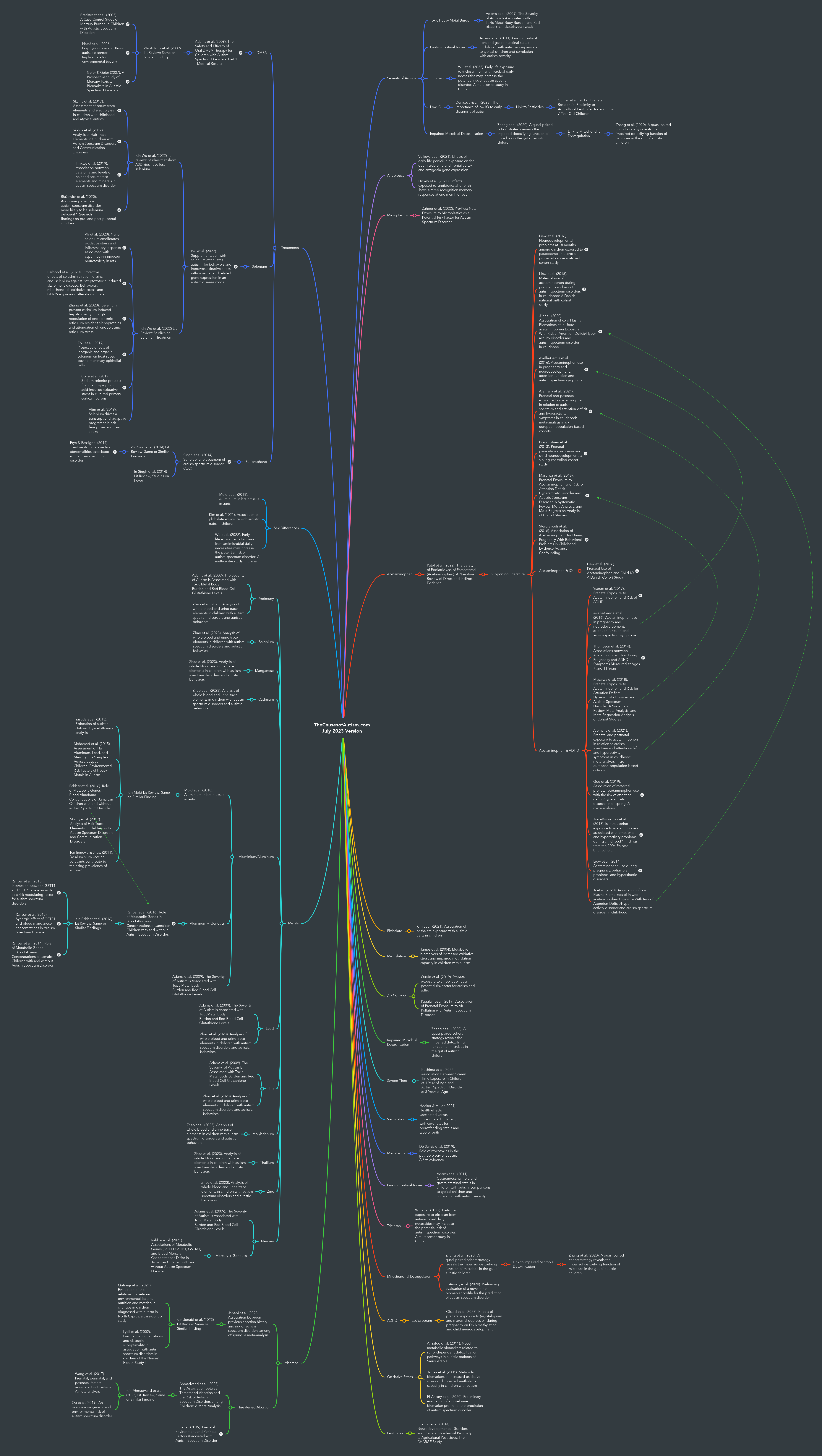
Autism awareness over the past few decades has been split into multiple limited hangouts.

On one hand, there’s the mainstream media version of autism awareness that attempts to spread information on the condition of autism while providing the mass public limited or no scientific evidence regarding autism’s connection to environmental toxins. Its goal is simple: inform people of the heterogeneous characteristics of autism in order to reduce the stigma associated with the disorder, ignore research on environmental toxins associated with autism, deny that vaccines can cause autism, and pretend that autism is largely genetic while shrugging one’s shoulders and saying “no one knows what’s causing autism.”
Let’s call this Autism Awareness Limited Hangout Number One (AA-LH-#1).
This limited hangout is quite scientifically useless in that it allows no questions to be asked about vaccines or which environmental toxins are associated with autism so that measures can be taken now to mitigate future risk of autism. Nothing can be done under this subset of attitudes; we just have to helplessly wait around and see if autism incidence continues to increase or if it somehow levels out.
Within AA-LH-#1, a subgroup formed that focused heavily on viewing autism as a perceived strength or a “superpower” rather than a disorder. Concepts of so-called “neurodiversity” are an identity-focused approach to help teenagers, parents, and adults cope with autism diagnosis by heavily identifying with the diagnosis (e.g., calling someone ‘autistic’ instead of calling them a ‘person with autism’ as should be done per actual medical diagnostic criteria) and viewing what would otherwise be considered symptoms or manifestations of the autism diagnosis as strengths to be celebrated rather than viewing them as deficits. This perspective, or identity, seems to ignore autism cases that are incapacitating and require lifelong care, and it presently is not clear how adults within this subgroup reconcile this matter. In other words, how is it possible to view adults with autism as having a “superpower” or being “neurodiverse/neurodivergent” while at the same time admitting that for some children and adults autism diagnosis requires serious lifelong healthcare? It literally makes no sense.
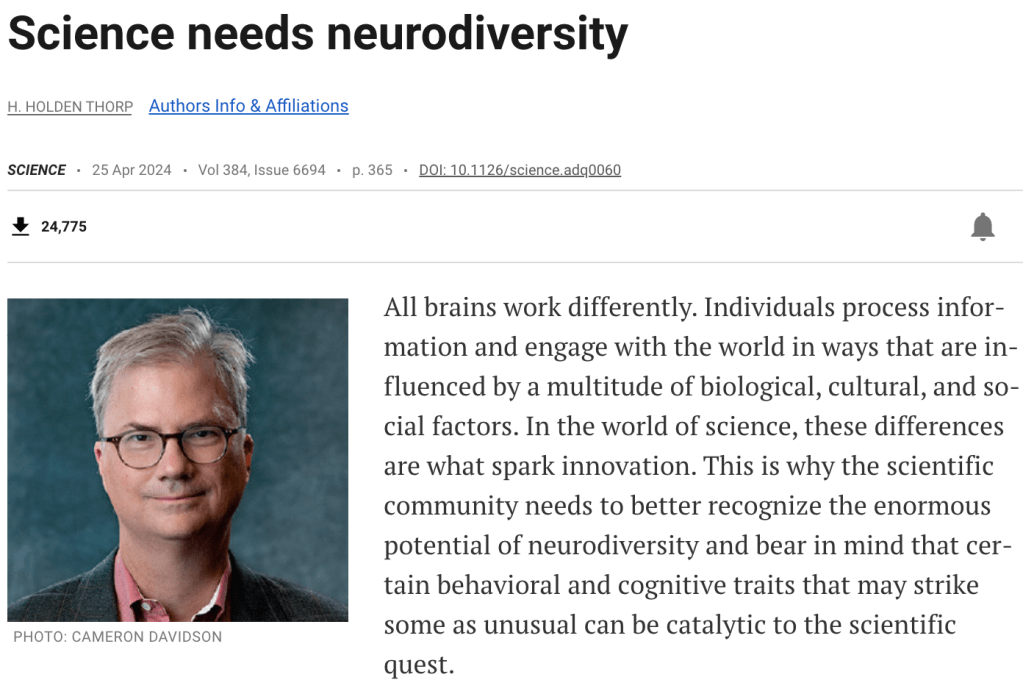
This group, arguably, is an even further deviation from scientific foundations as it could place individuals with an actual diagnosis psychologically resistant toward treatment for their autism symptoms which are viewed now as strengths rather than symptoms to be improved upon to maximize mental health and improve quality of life. Adults are being robbed of the ability to improve their mental health and quality of life, and their condition is being normalized, and many adults are party to this hangout. Considering this is a limited hangout within a limited hangout and presently prevalent enough among groups of adults with autism unwilling to address environmental factors associated with autism, it earns the title Autism Awareness Limited Hangout Number 2 (AA-LH-#2).
Next, we have autism awareness from vaccine safety advocates regarding the utter lack of placebo-controlled clinical trials for vaccines licensed by the FDA as well as the piling evidence on the connection between vaccines and autism. This has been a monumental movement that has awakened many to the adverse events of vaccines, vaccine excipients, fraud, and perhaps what can only be described as intent to harm by the vaccine industry which to this day remains free from liability for injuries or deaths caused by vaccines.
The vaccine safety movement has been so powerful, so impactful, and has gathered so much support…that scientific evidence that points toward the connection between other environmental toxins and autism is given less credence than evidence that vaccines cause autism. This can be ascertained simply from the behavior of popular individuals and organizations who, to start with, don’t provide equal content or attention to these other literatures as much as they do vaccines.
To be fair, the p(l)andemic has made many weary and extremely on guard with vaccines, and for good reason. The current autism-vaccine page would not exist due to the great awakening that has taken place. As many point out, some good came out of the pandemic.
However, the attention and subsequent bias toward vaccines has now created a limited hangout. Are organizations and individuals on social media purposefully giving more attention to vaccines and ignoring or passively suppressing information on other toxins connected to autism?
As a researcher only interested in the truth, I don’t fail to ask myself the question: do vaccines deserve more attention than pesticides and air pollution?
I will play devil’s advocate for both sides of the equation:
- Advocating for the viewpoint that vaccines are a primary cause of autism.
- Arguable is that the plethora of studies, FDA package inserts indicating adverse events, vaccine excipients, lack of placebo controlled trials, and major case reports regarding regression of developmental milestones after the administration of vaccines points toward them as a major causal factor related to autism.
No arguments there, even I can see that clearly.
The McDowell case in which all 3 triplets regressed into autism after their vaccines haunts me as profound evidence regarding vaccines and autism.
I wouldn’t be compiling more and more evidence on the autism-vaccine connection if this weren’t so serious. Those things are literal poison. Call me Anti-Poison, not Anti-Vax.
- Arguable is that the plethora of studies, FDA package inserts indicating adverse events, vaccine excipients, lack of placebo controlled trials, and major case reports regarding regression of developmental milestones after the administration of vaccines points toward them as a major causal factor related to autism.
- Advocating for the viewpoint that other toxins deserve equal attention.
- Arguable is that other literatures on toxins associated with autism that have a corresponding animal literature should be regarded seriously, in that a toxin like pesticides is also exerting risk of autism in the offspring of animals exposed to the toxin and no other toxins.
In other words, when there is both a human literature that shows exposure to a toxin is causing autism (in humans exposed to other toxins) and there is also an animal literature in which animals in tightly controlled environments without exposure to other toxins are exposed to the factor in question (pesticides, air pollution chemicals, etc.) and the toxin is also causing autism-like symptoms in the animals/offspring, the animal literature can and should be weighted as evidence toward the conclusion that the toxin is exerting an effect independent of co-exposure to other toxins and should also be regarded as equally impactful on subsequent risk of autism.
- Arguable is that other literatures on toxins associated with autism that have a corresponding animal literature should be regarded seriously, in that a toxin like pesticides is also exerting risk of autism in the offspring of animals exposed to the toxin and no other toxins.
Unfortunately, point number two is presently still not considered by many in spite of having previously compiled and shared on social media major literatures on autism-pesticides and autism-air pollution.
The focus continues to be around vaccines, even from major organizations that occasionally draw attention to other toxins.
Social media platforms like X, which have become the hallmark for freedom of speech discussions that have indeed paved the way for open conversations on vaccine safety and injury, conversations which currently are considered offenses that may result in banning on other platforms, are resulting in biases toward the topic of vaccines and against environmental toxins with scientific literatures connecting them to autism.
Two years worth of careful observation of the content on X surrounding autism implicates vaccines as the primary factor.
In April of this year, this library provided to the public the extracted statistically significant data from many research studies on the connection between autism and pesticides. Various high profile individuals were tagged in the post.
However, soon thereafter, there was crickets.
Realistically speaking, there should have been an increase in discussion on the X platform about pesticides and autism.
Why shouldn’t there have been?
The pesticide discussion is not like the vaccine discussion.
Pesticides are known to be poisonous and harmful to health. Unlike vaccines, there is zero question among the general population that pesticides are hazardous.
But there wasn’t increased discussion.
The focus continued to be around vaccines.
In August of this year, this library provided to the public the extracted statistically significant data from many research studies on the connection between autism and air pollution. Again, various high profile individuals were tagged in the post on X.
However, the post gained no traction, and compared to the vaccines and pesticides literature, the air pollution literature has even lower public attention.
Are we dealing with a limited hangout?
Let’s consider one of the organizations I have been following for many years and whose work, along with the man himself, Robert F. Kennedy Jr., in part inspired this library.
Unfortunately, not a single time in 2024, even after this library brought to public awareness additional literatures, has Children’s Health Defense (CHD) posted an original article about pesticides or air pollution being linked to autism diagnosis.
CHD reposted one article by ProPublica on a pesticide being linked to autism, and several individuals in the comments tried to bring it back to vaccines.
To be fair, CHD articles on November 20 and December 5 mention pesticides, but greater word count (i.e., attention) is present for vaccines in both articles.
If a major organization like Children’s Health Defense which has gained so much support isn’t addressing other scientific literatures connected to autism diagnosis, but focuses almost exclusively on vaccines, is this creating a limited hangout?
To be fair, Children’s Health Defense has its beginnings and foundation in vaccine safety advocacy, and that is worth considering in regards to their content being heavily geared toward vaccines which has been their primary effort for so many years. Let us not forget that point.
Nevertheless, if other organizations and individuals forget this point and follow suit in their attention to content, this could result in portions of the public believing that vaccines are the primary causal factor related to autism diagnosis and disregard other literatures. Consequently, people will be less receptive even when an organization like Children’s Health Defense seeks to bring awareness to those literatures. This is evidenced by the fact that articles on autism and other toxins gain less public response.

This could spell trouble for autism incidence rates.
If incidence of autism doesn’t decrease because of other toxins when the National Childhood Vaccine Injury Act of 1986 finally goes to hell and the public at large becomes aware of the lies surrounding vaccines, could this backfire on vaccine safety advocacy? I dread to think of it.
To make matters worse, pesticide manufacturers are presently seeking to obtain the same immunity from liability as vaccine manufacturers. This would be the National Childhood Vaccine Injury Act version for the pesticide industry.
We cannot allow an entire literature on pesticides-autism to be ignored and grant pesticide manufacturers immunity from harm.
If we do, and we focus solely on vaccines, we are creating a limited hangout.
Only vaccines can cause autism, but not other toxins in spite of entire scientific literatures connecting them to autism?
Ignoring that science would spell a disaster for health.
We shall call this Autism Awareness Limited Hangout Number 3 (AA-LH-#3).

Screenshot, X, December 7, 2024, 11:33am PST.
What Limited Hangouts Occur in the ABA Field?
As a Board Certified Behavior Analyst working in the Applied Behavior Analysis early intervention services field, I typically encounter zero discussion around environmental toxins that could have resulted in an autism diagnosis and could have impacted the severity of autism symptoms in the children we work with. Many BCBAs might start out in AA-LH-#1 due to undergraduate and graduate level education that failed to address research on environmental toxins associated with autism, and later begin to migrate toward the adoption of beliefs corresponding to AA-LH-#2.
Unfortunately, AA-LH-#2 is not only promoted by many adults with autism playing dumb to the hardships of children and parents with severe autism, but it has also been pushed by BCBAs who have/had an autism diagnosis. This in particular is a problem because these BCBA’s ignorant of the literatures on toxins might be considered authority figures on autism and people may find them credible, which pushes us into cycles of the first two limited hangouts. Admittedly I do wonder whether the BCBAs with autism are adults with legitimate autism diagnoses or adults who choose to continue to identify as autistic to draw empathy from the ABA community to portray themselves as individuals who understand autism at deeper levels -you know…because they themselves have autism or identify as “autistic.”
It almost feels like we’re stigmatizing autism by addressing environmental toxins, to be quite honest. And don’t get me started on trying to bring up the topic regarding vaccines and autism amongst BCBAs. Sacrilege! How dare you! We don’t know what’s causing autism!
Before I was locked out of Linked In, I began posting openly regarding vaccines-autism. I was friends with and followed many BCBAs on that platform. Out of dozens in my network, I only received a message from one BCBA thanking me for speaking openly about vaccines.
Again, ignoring the evidence is a deviation from science.
Hopefully these issues will improve as these limited hangouts are eliminated and true autism awareness that is based in scientific research meets the eyes of the ABA community.
Importantly, the literatures could inform the practice of ABA by supplying information to both ABA providers and funding sources regarding progress that a child might make in ABA given the severity of their symptoms that might’ve been impacted by exposure to multiple toxins. It’s one of the struggles facing the ABA field; presently there’s zero way of predicting how a child will respond to ABA treatment. Could awareness of prenatal and early life toxic exposures become a predictor for how a child responds to ABA treatment? Could this be used to inform funding sources on why some children require lifelong care and others may make substantial progress and graduate from ABA?
Continuing Education courses for BCBAs on how to discuss (or not discuss) environmental toxins associated with autism would be beneficial to the field. Strategies could be developed on methods of communication to reduce the stigma of environmental exposures leading to subsequent autism diagnosis while improve understanding of the medical condition of autism.
It is noteworthy that in the ABA field there are individuals with an autism diagnosis who do not push the limited hangout of neurodiversity when they work with children and families. At least in practice, I have never seen this. Observations of such a limited hangout are limited to social media and brief mention in Continuing Education. Nevertheless, I have the pleasure of working with several of such individuals under my supervision and would like to recognize them and many others for not promoting such a limited hangout.
For the time being, however, most BCBAs seem to be indoctrinated by universities and mainstream media into AA-LH-#1 and #2.
That will take work to undo…
Limited Hangouts, (Un)Limited Funding
AA-LH-#1 and #2 are extremely beneficial to the CDC, NIH, FDA, and EPA who are attempting to escape responsibility for rising incidence of autism due to various environmental toxins. Funding for autism research can be funneled into genetics research that does not account for exposure to environmental toxins, research on “neurodiversity”, as well as research on drugs that treat symptoms of ADHD of which many of end up being prescribed to children with autism anyway due to an ADHD comorbidity.
It could not be clearer that these first two limited hangouts benefit Big Pharma, Big Agriculture, and Big Oil.
Unfortunately, this may also impact funding for universities’ research programs, influenced by these government health agencies, if these health agencies don’t wish to draw too much attention to these toxins because it places greater responsibility upon them for taking measures to develop solutions against these environmental toxins or fund research for detoxification using non-drug treatments.
“Let food be thy medicine, and medicine be thy food.” -Hippocrates
If food is the medicine to detox from vaccines, pesticides, and air pollution, then addressing these toxins does not financially benefit the health agencies that are putting more chemicals in our food, water, environment, and medicine itself.
Hundreds of billions of dollars are at stake in AA-LH-#1 and #2.
AA-LH-#3 is financially beneficial to individuals and organizations who continue drawing attention to their efforts around vaccine safety advocacy and fundraise solely around those efforts. Most of these are non-government organizations or just regular citizens dependent upon public support. Nevertheless, it is beneficial for them to ignore literatures on other toxins associated with autism to elevate their message and draw more public support.
Why address any other literature associated with autism if it could undermine their strong, angry messages about vaccines?
Why address research on air pollution and autism if it could undermine posting yet another video that goes viral about Robert F. Kennedy Jr. talking about mercury? I do enjoy seeing those videos, to admit my own bias…
Fundraising and social support via content engagement is no doubt impacted by the degree to which the consumer accepts a message as being true and supports the organization’s message and advocacy on that matter. Thus, it goes without saying that among those not privy to the finer details of scientific literatures, the connection between vaccines and autism could start to be questioned if an organization or individual begins to draw attention to other toxins and autism. At least, this is one perspective unless careful attention is given to inform the public that the various toxins can and should be taken equally seriously, whilst treating the scientific literatures equally dangerously and separately.
But presently we are not seeing this.
It appears we are seeing limited hangouts.
Limited Hangouts and Matching Law
Whether the creation of these limited hangouts is conscious or simply a reaction to the way consumers respond to the information is another matter that deserves attending to.
In Operant Conditioning, Matching Law indicates one will match the frequency a behavior to match degree to which that behavior is reinforced. If Topic A gets 70% of engagement and Topic B gets 30%, Matching Law would recommend allocating approximately 70% of content efforts to Topic A and 30% to Topic B.
Are we seeing Matching Law occur before our very eyes? Are we seeing individuals and organizations matching public attention toward vaccines by matching it with more content around vaccines? Less public attention toward air pollution and pesticides will thereby be matched by less content around those toxins.

This is a problem when looming threats such as pesticides and air pollution have entire scientific literatures behind them, but the behavior of organizations and individuals changes to match consumer behaviors around certain topics. [Reminder: Just using CHD as an example because I follow their work a lot, bearing in mind their roots are grounded in vaccine safety advocacy.]
Sadly, however, threats such as pesticides and air pollution end up being put on the back-burner and a lack of public response to scientific literatures is passively allowed to shape the content of the organizations and individuals on social media.
And the industries impacting the autism literatures get the last laugh.
NIH Article Admits Valproic Acid is Causing Autism and No One’s Talking About It
Limited hangouts, whether actively pushed to protect financial interests or passive consequence of public preference toward topics like vaccines, are a deterrent toward the decimation of factual, scientific information that can help us progress forward.
In this regard, let us consider that on the day before Thanksgiving 2024 the National Institutes of Health published an article admitting the anti-seizure medication valproate causes autism [1] and the silence from both mainstream and independent media has been stunning.
Valproate was approved by the FDA in 1978.
The Valproate-autism literature goes back decades and is/was a future literature review.
However, little attention from both mainstream and independent media has been given to how valproic acid may have impacted autism incidence rates.
The article from NIH reads:
Treating epilepsy during pregnancy is challenging, as some antiseizure medications, primarily older drugs such as valproate, are known to cause serious birth defects and cognitive problems in children, including lower IQ and autism spectrum disorders.
The NIH article highlights a new study to laud researchers for developing new anti-seizure medications that… you know… don’t cause neuro-developmental disorders like autism.
This is great for AA-LH-#1 because it protects Big Pharma by not allowing mainstream media to bring attention to how valproate causes autism while continuing to reel in funding for more studies on drugs that don’t cause autism when pregnant mothers are exposed. The pharmaceutical-complex at its finest!
The AA-LH-#2 and #3 crowds are of course quiet on the matter.
When the NIH article was brought to public awareness on X, it received minimal attention.
Now, say the quiet part out loud:
No one told me valproate was causing autism in the children of mothers who took the drug during pregnancy.
Where’s the outrage? Where’s the viral posts where people are screaming about valproate? Where are those lawsuits?
The lawsuits exist, they’re just given little to no attention.
Now, here’s an interesting question to consider:
Could exposure to Valproate be confounded by exposure to vaccines?
In other words, might it actually be vaccines during pregnancy, and not valproate, that is causing autism in offspring?
The answer to this is that we don’t have a scientific study on vaccines and autism controlling for co-exposure to valproate during pregnancy to remove that effect.
We don’t have such a study because…you know…how dare we even question vaccines to dare posit that they cause autism. Sacrilege!
Nevertheless, the lack of such a study isn’t enough to state that valproate is not exerting an effect on neurodevelopment of the unborn baby that is independent of exposure to vaccines during pregnancy.
We must return to the point stated earlier regarding multiple toxins:
“When there is both a human literature that shows exposure to a toxin is causing autism and there is also an animal literature in which animals in tightly controlled environments without exposure to other toxins are exposed to the factor in question (pesticides, air pollution chemicals, etc.) and the toxin is also causing autism-like symptoms in the animals/offspring, the animal literature can and should be weighted as evidence toward the conclusion that the toxin is exerting an effect independent of co-exposure to other toxins and should also be regarded as equally impactful on subsequent risk of autism.”
Valproic acid is used extensively to induce autism in animals such as rodents, zebrafish, and non-human primates in order to study autism [4].
The NIH article admitting valproic acid causes autism is just the tip of the iceberg.
A Very Short History of Valproate/Depakote and Autism
Depakote is a medication that contains divalproex sodium, a compound that is derived from valproic acid.
Depakote was initially approved by the FDA in 1983 as an anti-epileptic drug and it was later approved for off-label use to treat migraines and bi-polar disorder.
Did you know the FDA package insert for Depakote lists autism as an adverse reaction? The 2024 FDA Package insert reads:
If you take Depakote during pregnancy for any medical condition, your child is at risk for having lower IQ and may be at risk for developing autism or attention deficit/hyperactivity disorder.
No news on this of course from the limited hangouts.
Reviewing the history of FDA package inserts for Depakote reveals that increased risk of autism was first listed on the October 7, 2011 FDA Package Insert. Autism was not listed on the 2 separate labels in 2006 or on the 2009 label. The 2011 label reads:
There have been reports of developmental delay, autism and/or autism spectrum disorder in the offspring of
women exposed to valproate during pregnancy.
This note regarding autism on the FDA package insert came two months after the FDA conducted a Drug and Safety Communication and announced to the world that valproate was causing lower IQ in the offspring of mothers who took it during pregnancy:
[6-30-2011] The U.S. Food and Drug Administration (FDA) is informing the public that children born to mothers who take the anti-seizure medication valproate sodium or related products (valproic acid and divalproex sodium) during pregnancy have an increased risk of lower cognitive test scores than children exposed to other anti-seizure medications during pregnancy.
And another announcement came again in 2013:
[05-06-2013] The U.S. Food and Drug Administration (FDA) is advising health care professionals and women that the anti-seizure medication valproate sodium and related products, valproic acid and divalproex sodium, are contraindicated and should not be taken by pregnant women for the prevention of migraine headaches. Based on information from a recent study, there is evidence that these medications can cause decreased IQ scores in children whose mothers took them while pregnant.
Noticeable is that the FDA Safety Communications failed to mention they added autism to the package insert for Depakote!
The omission on the FDA announcements regarding valproate and autism is troubling; the FDA package insert beginning in October 7, 2011 lists increased risk of autism for pregnant mothers taking valproate, but the Safety Announcements omitted that particular detail. Surely not an oversight!
Did these warnings by the FDA impact use of valproic acid during pregnancy?
What’s the history on the matter since the 2011 announcement and addition of autism to the package insert?
Unfortunately, a 2024 study published in JAMA examining a 15 year time span across January 1, 2005, to December 31, 2020 revealed that Valproic Acid use during pregnancy did not decline in spite of warnings by the FDA [2]. While its use for epilepsy was low, prescription for mood and migraines doubled during the study period. Additionally, they found that only 22.3% of treatment with Valproic Acid had a 1-day overlap with contraception use. This means many pregnant mothers are still taking valproic acid, whether its for epilepsy, migraines, or mood disorders in spite of contraindication.
What does this mean for our understanding of autism incidence rates since Valproic Acid was approved by the FDA for epilepsy in 1978, and the later approval of Depakote for bipolar disorder in 1994 and migraines in 1996?
The suggestion here is not that Valproic Acid is entirely responsible for the increasing incidence of autism.
But merely a challenge to AA-LH-#3 that blames vaccines for all incidence increases of autism, especially considering the pesticides and air pollution literatures as well.
All limited hangouts are impacted by this information.
So, Who Exactly is Pushing Limited Hang Outs?
This is a question best answered by observing the social media behavior and content of various individuals and organizations on their discussions around autism.
For AA-LH-#1 and #2, it’s quite obvious this is the Big Pharma et al. narrative seeking to divert attention from vaccines and funnel more funding into genetics, drugs, and neurodiversity. No questions there.
Big Agriculture hasn’t stepped in to disregard the autism-pesticide literature, at least not to my knowledge. But no doubt they seek to protect their assets, best exemplified through their current efforts to obtain immunity from liability.
Regarding AA-LH-#3, it’s not quite so clear regarding whether this limited hangout is occurring through passive response as a consequence of Matching Law based upon consumer response to content, or active response to protect a message about vaccines.
An optimistic outlook would blame Matching Law.
A view that realizes all humans are humans and the most basic of drives can be transformed into active or passive/unconscious biases against information that threatens relationships, status, or funding…wants to blame active promotion of limited hangouts.
At least in regards to this library, there has been a long attempt to inform high profile individuals by tagging them when major additions to this library were made, such as the pesticide and air pollution literatures. However, it would appear such efforts have been in vain.
Conversations around pesticides and air pollution being connected to autism have rarely occurred.
Admittedly, these observations are biased toward the X platform because it’s the only social media locale where such conversations on vaccines and other toxins can simultaneously occur. However, this is arguably not a negative factor. On the contrary, X as it is presently thanks to Elon Musk’s advocacy for Freedom of Speech is the perfect sowing ground.
Regardless, can we conclude that AA-LH-#3 is being actively allowed to occur?
Perhaps we must then pretend that coal-fired electricity generation, smelting, and the incineration of waste don’t put mercury into the air. Might as well ignore that on the EPA website it states global mercury emissions are approximately 2220 metric tons per year.
AA-LH-#3 tends to interpret any study pointing at mercury as always having to do with vaccines.
There could be disastrous consequences for vaccine safety advocacy if autism incidence isn’t reduced because of mercury in the environment.
What if vaccine safety advocates are called liars, and vaccine-pushers use it as grounds to justify their “safety” of vaccines when in fact, it was the fault of other toxins? Could vaccine-pushers use this as justification to prove their argument that vaccines do not cause autism?
Admittedly, I do place some hope that autism incidence is reduced solely with eliminating that vaccine-poison, so as to know that greater attention given to vaccines was merited. Nevertheless, these other literatures are a looming danger, and it is recommended they be treated with equal regard further research pending.
There are several conclusions and hypotheses based upon social media posts, articles, content creation, etc. that can presently be drawn:
- Matching Law is in full effect, creating conscious and subconscious biases in content/organizations toward vaccine-autism evidence only.
- Because content/organizations also focus more on vaccines than other literatures, this impacts public perception and bias that autism-vaccine evidence is the only important literature.
- This bias can be undone by individuals/organizations with large followings who can draw more attention to other literatures; in other words, they can push back against the biases and not allow their behavior/content to be impacted by consumers.
- The choice to create content to sway the bias in directions toward other scientific literatures is available everyday.
- The choice not to impact the biases when having full knowledge of other scientific literatures could be interpreted as promoting a limited hangout.
It is therefore left to the individual to question regarding who is promoting AA-LH-#3.
This library directly accuses no one.
What Other Biases Impact the Reach of this Library?
Self-aggrandizement is the name of the game on many social media platforms.
Obtain followers, get engagement, get more followers, monetize, etc.
Truly, in America the individualistic culture reverberates true in a dog-eat-dog social media world. Competition is fierce. How many times do we see accounts post the same video that was posted by dozens of other accounts?
Everyone and their momma wants to be an “influencer” and “thought leader.”
It’s a curious culture that’s developed where people with -forgive me for saying this- no significant intelligent discussion to add to a conversation want to have a large following.
Popularity, self-aggrandizement, just for it’s own sake seems to be the goal.
In this regard, let us also consider two other social aspects of human behavior that are hypothesized to presently negatively impact the reach of this library.
- Conformity biases
- Hypothesis 1: Small accounts wait for larger accounts to notice a smaller account and bring awareness to it before providing it attention.
- This reinforces notions of conformity and doing what is socially acceptable.
- Hypothesis 2: Large accounts wait for smaller accounts to notice the small account and bring awareness to it before providing it attention.
- This also reinforces notions of conformity and doing what is socially acceptable.
- Hypothesis 3: A small account, in spite of delivering the truth, will not be regarded with much engagement if the account is not receiving support.
- This reinforces notions of not conforming to what others are not conforming to (i.e., reinforcing the conformity of non-conformity toward something) by not doing what is not socially acceptable to others.
- These three postulations create a vicious cycle.
- Hypothesis 1: Small accounts wait for larger accounts to notice a smaller account and bring awareness to it before providing it attention.
- Negativity biases- Given that research indicates online news consumption is impacted by preference for negative stimuli [3]…
- Hypothesis 1: A lack of outrage posting -or perhaps not in greater numbers- on X has created biases against this library. There could be perceptions that I’m not angry enough or outraged enough about vaccines-autism, or that I don’t care enough.
- Hypothesis 2: If hypothesis 1 is true, then hypothesis 2 would be that engagement with content created by this library is impacted via misperceptions regarding the degree to which I may be perceived as not ‘being part of the crowd.’
- So perhaps this would be a conformity bias impacted by negativity bias.
- For the record, I chose to put most of my energy into reading research papers and extracting findings. I channeled my energy into that…
Astounding is that even when public awareness was sought on the matter that multiple FDA package inserts indicated the vaccine was not tested for mutagenic potential, there was little public response.
“Not tested for mutagenic potential,” what does this mean?
Let’s quote the original post:
“Within the context of autism, never testing mutagenic potential means they never tested the vaccine for how it may mutate GENES, and this would apply to both parents and children receiving vaccines.
For future parents, we may not know how administration of vaccines may result in genetic mutations (I.e, in the sperm or egg) that may increase the risk of autism in their offspring. For the offspring themselves that have been impacted by potential parental genetic mutations, the further administration of vaccines in their young life may also result in genetic mutations cumulatively impacting subsequent risk of autism.
The FDA/CDC is in big trouble.
Can the CDC state “vaccines do not cause autism” if the vaccines have never been evaluated for mutagenic potential?
Can the CDC state “vaccines do not cause autism” if no studies have been conducted on genetic mutations impacted by vaccines, and correlating those genetic mutations with subsequent risk of autism diagnosis?
Those mutated genes would have to be NOT related to subsequent risk of autism diagnosis to exonerate the vaccine…..and thats just assuming a single dose administration before considering mutagenic potential of multiple vaccine doses at once. Post marketing monitoring of adverse reactions typically focuses on single dose administrations, not even multiple doses.”
It is presently unknown what biases are occurring that would result in minimal public response, even on a topic like vaccines!
Perhaps the message just didn’t come from the right person.
This Library is an Ally, not a Competitor
Perceptions of competition against this library are ill-placed, if occurring.
All the work done in this library has been done with zero funding. There’s never been a request for funding. The route was one of zero financial stake; it could then be claimed that an independent review of multiple literatures was conducted with zero conflicts of interest.
This library is not funded by Big Pharma and it’s not funded by individuals seeking confirmation bias for their awareness on vaccines which could pressure more focus on vaccines.
This library is an ally to vaccine safety advocates and others alike.
On a double commentary on Children’s Health Defense and Hubermanlab podcast earlier this year, it was stated that the NTP researchers should not have neglected the animal literature on fluoride because within the context of exposures to multiple toxins the animal literatures point to the single toxins’ effect on neurodevelopment/IQ.
This was reiterated in a second fluoride commentary in October:
I have, admittedly, for some time wondered why I have not encountered studies in the pesticide literature controlling for particulate matter (aka air pollution), or vice versa. Why not factor out the impact of air pollution when assessing the impact of pesticides on autism? The same goes for other toxins…
But the answer hit me: they don’t need to if in tightly controlled environments with no exposure to other toxins the animals exposed to the toxin (or their offspring) are also displaying autism symptoms!
Thus, it may not be unreasonable to state that each individual literature that connects a toxin to autism should be treated separately if there is a corresponding animal literature that displays similar results as humans insofar as autism symptoms are concerned. In the case of vaccines where there is not an extensive animal literature on autism, there is an overabundance of data, investigations, challenges, conflicts of interest in research, etc. to heavily implicate vaccines in being causally connected to autism.
Thus, the argument has consistently been that each toxin should be treated as dangerously as the next in increasing subsequent risk of autism.
Again, this library has been an ally, not a competitor.
In Summary…
Between limited hangouts promoted by various individuals/organizations as well as various human-social biases, the odds appear to be quite stacked against the scientific literature in this library.
Will human bias allow this literature to go to waste?
Will human bias allow the pesticide-autism literature to go ignored and result in pesticide manufacturers getting immunity from liability?
Perhaps the right messenger didn’t appear,
and perhaps the right message didn’t appear,
to serve the current prevalence of biases.
Surely, one might say a live experiment on social behavior occurred right before our very eyes: how will a population respond when scientific evidence is presented that contradicts the general consensus when the evidence comes from a non-popular source?
Ironically, this is exactly what happened when autism-vaccine evidence first started appearing. The evidence was largely ignored because it challenged the mainstream consensus.
Are we seeing the same occur with the pesticide and air pollution literatures?
You decide.
My Story, My Psychology
My beginning story was like clear water: I was just a BCBA working in early intervention services with children with autism who was inspired to start this library because of the hardships personally witnessed among parents and children with autism. I wanted to reduce autism incidence and spread awareness of these literatures.
Now, the story is muddy water.
The limited hangouts and the biases against the research in this library has taken a tremendous psychological toll.
I’ve tried to disassociate myself from the matter, but it’s only human to internalize such consequences.
I will come back and finish the Acetaminophen section and the Air Pollution animal studies at a later time.
Life is all about growth and experience, and I will not miss out on the opportunity to learn from everything thus far.
But I do need to step away for a bit.
Toward Better Health, Better Futures
The research on pesticides and air pollution highlighted in this library is significant, deserves careful consideration, and can be addressed simultaneously with the topic of vaccines without detracting from the importance of those conversations.
The same goes for other literatures linked to autism, such as acetaminophen, valproic acid, and heavy metals.
All must be addressed accordingly, both separately and in consideration of cumulative exposure to individual and multiple toxins connected to autism.
There is certainly hope and there are areas this library can improve upon as well in its social media outreach.
All can and will be addressed accordingly.
There is hope yet.
I won’t stop advocating for the kids and families of autism that, in my line of work in the ABA field, have impacted my life.
This library, in fact, is for them.
Autism Librarian
Related Commentaries
References
- Lichtenberg, N. (2024, November 27). Newer epilepsy medications used during pregnancy do not affect neurological development in children. National Institutes of Health. https://www.nih.gov/news-events/news-releases/newer-epilepsy-medications-used-during-pregnancy-do-not-affect-neurological-development-children
- Smolinski, N. E., Sarayani, A., Thai, T. N., Jugl, S., Ewig, C. L. Y., & Winterstein, A. G. (2024). Prenatal Exposure to Valproic Acid Across Various Indications for Use. JAMA network open, 7(5), e2412680. https://doi.org/10.1001/jamanetworkopen.2024.12680
- Robertson, C. E., Pröllochs, N., Schwarzenegger, K., Pärnamets, P., Van Bavel, J. J., & Feuerriegel, S. (2023). Negativity drives online news consumption. Nature human behaviour, 7(5), 812–822. https://doi.org/10.1038/s41562-023-01538-4
- Zarate-Lopez, D., Torres-Chávez, A. L., Gálvez-Contreras, A. Y., & Gonzalez-Perez, O. (2024). Three Decades of Valproate: A Current Model for Studying Autism Spectrum Disorder. Current neuropharmacology, 22(2), 260–289. https://doi.org/10.2174/1570159X22666231003121513
 The Causes of Autism