

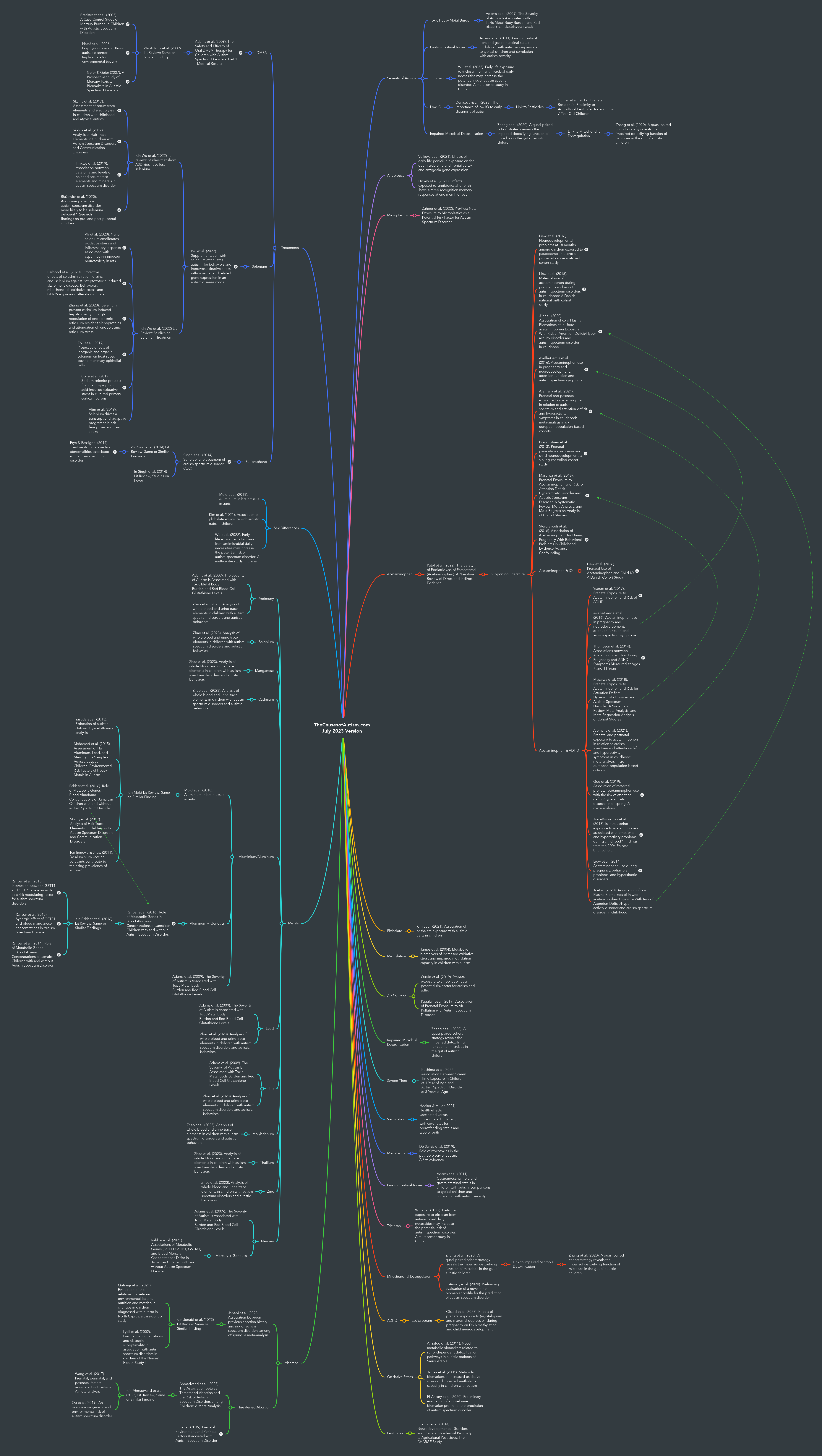
This section of the library shall be dedicated to commentaries on Children’s Health Defense content. Included below is not a summary of the content (I’ll leave that for you to check out), but rather my comments in terms of psychology, health, and human behavior. Whenever possible, I draw connections to autism as well. Most of my comments originally appear on Twitter/X, so be sure to follow on there.
Breaking: Fluoride in Water Poses ‘Unreasonable Risk’ to Children, Federal Judge Rules
The verdict is in! The United States District Court of the Northern District of California has ruled that the EPA must take regulatory action to remove the risk that water fluoridation poses to children’s health.
This is wonderful news for American health, and a good model for other countries around the world that may be influenced by this ruling.

As a reminder, fluoride is an industrial byproduct from the phosphate industry (nuclear waste, basically). And yes, this byproduct of the phosphate industry is the same fluoride that your favorite 3-letter health agencies are allowing into your water.
As cities and states cease water fluoridation, we should expect a positive impact on children’s IQ over time.
However, will this impact autism?
Should we expect the removal of water fluoridation to impact autism incidence?
Potentially…and here’s why.
If water fluoridation is impacting children’s IQ, and there’s a direct link between IQ and autism, then we may need to be on the watch for how the removal of water fluoridation impacts autism incidence, one particularly important subcomponent of autism diagnostic criteria being communication.
Communication, particularly speech and language delays, is one primary method through which many parents recognize something might be wrong and request an evaluation. Other factors are certainly worth mentioning, such that children may exhibit behaviors such tantrums, rigidity, socialization deficits, etc. that vary from child to child. But arguably, it is communication delays themselves that are the primary indicator that result in a child being taken for an evaluation.
So, what’s the research say?
According to a 2021 study published in the Journal of Pediatrics, 40% of parents reported speech/language delays as the primary referral concern, followed by autism concerns (34%), with only 8% of parents reporting behavior concerns as the primary referral concern [1].
Great.
So, what about IQ and autism? Some of the latest research on the relationship between IQ and autism indicates that 35% of individuals with autism have intellectual disability, based upon 2018 data of 8 year olds from the ADDM network [2].
A recent study also found a correlation between the severity of autism symptoms and low IQ and highlighted the importance of early identification of low IQ to autism diagnosis [3]. Oddly, this particular study did not find Verbal IQ (VIQ) to be more predictive of autism than full scale IQ. The authors of this study indicate that “there is no case to be made for VIQ being more predictive of childhood ASD…that the full-scale IQ is not inferior to predict the importance of low IQ to early diagnosis of autism.” However, technically a reverse interpretation may also apply: full-scale IQ may not be superior to Verbal IQ in predicting an autism diagnosis, especially given that the study did find that increased age predicted significantly lower VIQ in children with autism, while a significantly reverse association was found between VIQ and typically developing children (increased age predicted higher VIQ).
What does this all mean?
That it can certainly be argued that verbal communication, as well as IQ, are connected to autism. They are all intertwined, and the removal of water fluoridation across cities may certainly impact autism incidence via its relation to IQ/VIQ.
Let us remember that not all children with an autism diagnosis have an intellectual disability (low IQ), and that many do have above average IQ. What this commentary draws attention to, specifically, is those autism diagnoses whose low IQ (i.e., intellectual disability comorbidity) was impacted by exposure to fluoride.
Latest data published in 2023 from the CDC’s Autism and Developmental Disabilities Monitoring Network on 8 year olds with autism indicate that as many as 37.9% have an intellectual disability [4]. It is chilling to note that this study also found 50.8% of Black children had intellectual disability. The CDC’s latest publication on 4 year olds yielded even higher levels of intellectual disability comorbidity: 48.5% of children with autism had an intellectual disability while 62.7% of Black children with autism had an intellectual disability [5]. Horrendous. Unfortunately, this might also speak to the nightmare of the MMR vaccine connection to increased odds of autism among African American children as revealed by CDC Scientist William Thompson regarding the DeStefano et al. (2004) omission of data. These are stark numbers to consider within the context of autism, IQ, water fluoridation, and vaccines.
So, what now?
When the CDC publishes autism rates for the years 2024 and 2026 (this will most likely be published as we approach the year 2030), assuming major cities cease water fluoridation by the end of 2025 or sooner, there may very well be a slight decrease in autism incidence, this of course before considering other toxins connected to autism (e.g., vaccines, pesticides, air pollution, etc.). When the CDC publishes that paper, it may be prudent to look at the sites they collected data from to determine the potential impact of ceasing of water fluoridation at each of those sites on autism rates or co-occurring intellectual disability. In the upcoming months as more cities cease water fluoridation, researchers should conduct IQ tests on children comparing IQ rates among groups exposed to fluoride and those not exposed. The same could be said for local autism rates; the opportunity for data collection at a local level should not be passed up at this important time.
Will this mean we have more children with autism who perhaps have a higher IQ and whose other autism symptoms (like socialization) didn’t get recognized at a young age due to better communication, leading to an autism diagnose later in life? Or perhaps because of a higher IQ they might miss the diagnosis altogether… Or maybe the impact of IQ for some individuals will be so profound they may not develop autism symptoms at all…
Or, to play devil’s advocate, are American children and pregnant mothers repeatedly harassed by such a grand collective of toxins that the difference in autism incidence as a consequence of the removal of water fluoridation will be negligible?
Time will tell.
In a previous commentary, I discussed the connection between fluoride and aluminum, such that fluoride may increase aluminum’s ability to pass the blood brain barrier. Two major sources of aluminum in our environment being the consequence of geoengineering and vaccines filled with aluminum adjuvants.

Additionally discussed were the relations among fluoride, thyroid function, and autism, such that 11% of individuals with autism suffer from thyroid problems and a 25% suffer from kidney disease. Incidentally, Dr. Harold Hodge, one of the first proponents of water fluoridation, exposed fluoride to humans with kidney disease and found those with kidney disease couldn’t excrete fluoride. Would this exacerbate intellectual disability? I did some additional digging, and one study tells us that children with chronic kidney disease have problems with attention regulation and inhibitory control, even after controlling for IQ [6]. Is fluoride the link? The authors admit, “it is equally likely that causes of [chronic kidney disease] and numerous comorbid events affect both [executive function] and IQ and these may not be separable in a heterogeneous population like ours.”
Finally, I drew attention to the NTP monograph’s dismissal of the animal literature due to confounding concerns. Not entirely agreeing with the researchers on the matter, I argued:
“…if studies on animals exposed to fluoride in the absence of aluminum (assuming the fluoridated water contains zero levels of aluminum) indicate negative impacts on neurodevelopment, it should be safe to draw conclusions regarding fluoride’s isolated impact on neurodevelopment. Thus, future animal studies could provide answers through environmental control to various toxins that we may have a harder time obtaining in human studies subject to more confounds, like aluminum.”
This will be a key point I draw upon when comparing the multiple literatures on toxins connected to autism.
I have, admittedly, for some time wondered why I have not encountered studies in the pesticide literature controlling for particulate matter (aka air pollution), or vice versa. Why not factor out the impact of air pollution when assessing the impact of pesticides on autism? The same goes for other toxins…
But the answer hit me: they don’t need to if in tightly controlled environments with no exposure to other toxins the animals exposed to the toxin (or their offspring) are also displaying autism symptoms!
Thus, it may not be unreasonable to state that each individual literature that connects a toxin to autism should be treated separately if there is a corresponding animal literature that displays similar results as humans insofar as autism symptoms are concerned. In the case of vaccines where there is not an extensive animal literature on autism, there is an overabundance of data, investigations, challenges, conflicts of interest in research, etc. to heavily implicate vaccines in being causally connected to autism. What is most concerning is that a single flurry of vaccines can trigger neurodevelopmental regression in a child; alarming is that we don’t have this data, whether anecdotal or otherwise, for any other toxin postnatally connected to autism. To my present knowledge, no other toxin is capable of triggering neurodevelopmental regression as quickly as a vaccine. Vaccines are heavily implicated and even within the context of these multiple literatures deserve great attention.
Once again, the animal studies will play a much more significant role than we realize in litigation and public health discussion regarding confounding and co-exposures to multiple toxins in that the animal literatures will allow us to argue each individual toxin is resulting in autism-like symptoms in animals, and therefore, the same should be assumed for humans if there is also an existing literature for autism, that toxin, and humans.
So, it was with fluoride’s animal literature, and so it will be with other toxins connected to autism.
Additional Reading
References
- McNally Keehn, R., Tang, Q., Swigonski, N., & Ciccarelli, M. (2021). Associations Among Referral Concerns, Screening Results, and Diagnostic Outcomes of Young Children Assessed in a Statewide Early Autism Evaluation Network. The Journal of pediatrics, 233, 74–81.e8. https://doi.org/10.1016/j.jpeds.2021.02.063
- Maenner, M. J., Shaw, K. A., Bakian, A. V., Bilder, D. A., Durkin, M. S., Esler, A., Furnier, S. M., Hallas, L., Hall-Lande, J., Hudson, A., Hughes, M. M., Patrick, M., Pierce, K., Poynter, J. N., Salinas, A., Shenouda, J., Vehorn, A., Warren, Z., Constantino, J. N., DiRienzo, M., … Cogswell, M. E. (2021). Prevalence and Characteristics of Autism Spectrum Disorder Among Children Aged 8 Years – Autism and Developmental Disabilities Monitoring Network, 11 Sites, United States, 2018. Morbidity and mortality weekly report. Surveillance summaries (Washington, D.C. : 2002), 70(11), 1–16. https://doi.org/10.15585/mmwr.ss7011a1
- Denisova, K., & Lin, Z. (2023). The importance of low IQ to early diagnosis of autism. Autism research : official journal of the International Society for Autism Research, 16(1), 122–142. https://doi.org/10.1002/aur.2842
- Maenner, M. J., Warren, Z., Williams, A. R., Amoakohene, E., Bakian, A. V., Bilder, D. A., Durkin, M. S., Fitzgerald, R. T., Furnier, S. M., Hughes, M. M., Ladd-Acosta, C. M., McArthur, D., Pas, E. T., Salinas, A., Vehorn, A., Williams, S., Esler, A., Grzybowski, A., Hall-Lande, J., Nguyen, R. H. N., … Shaw, K. A. (2023). Prevalence and Characteristics of Autism Spectrum Disorder Among Children Aged 8 Years – Autism and Developmental Disabilities Monitoring Network, 11 Sites, United States, 2020. Morbidity and mortality weekly report. Surveillance summaries (Washington, D.C. : 2002), 72(2), 1–14. https://doi.org/10.15585/mmwr.ss7202a1
- Shaw, K. A., Bilder, D. A., McArthur, D., Williams, A. R., Amoakohene, E., Bakian, A. V., Durkin, M. S., Fitzgerald, R. T., Furnier, S. M., Hughes, M. M., Pas, E. T., Salinas, A., Warren, Z., Williams, S., Esler, A., Grzybowski, A., Ladd-Acosta, C. M., Patrick, M., Zahorodny, W., Green, K. K., … Maenner, M. J. (2023). Early Identification of Autism Spectrum Disorder Among Children Aged 4 Years – Autism and Developmental Disabilities Monitoring Network, 11 Sites, United States, 2020. Morbidity and mortality weekly report. Surveillance summaries (Washington, D.C. : 2002), 72(1), 1–15. https://doi.org/10.15585/mmwr.ss7201a1
- Mendley, S. R., Matheson, M. B., Shinnar, S., Lande, M. B., Gerson, A. C., Butler, R. W., Warady, B. A., Furth, S. L., & Hooper, S. R. (2015). Duration of chronic kidney disease reduces attention and executive function in pediatric patients. Kidney international, 87(4), 800–806. https://doi.org/10.1038/ki.2014.323
 The Causes of Autism