

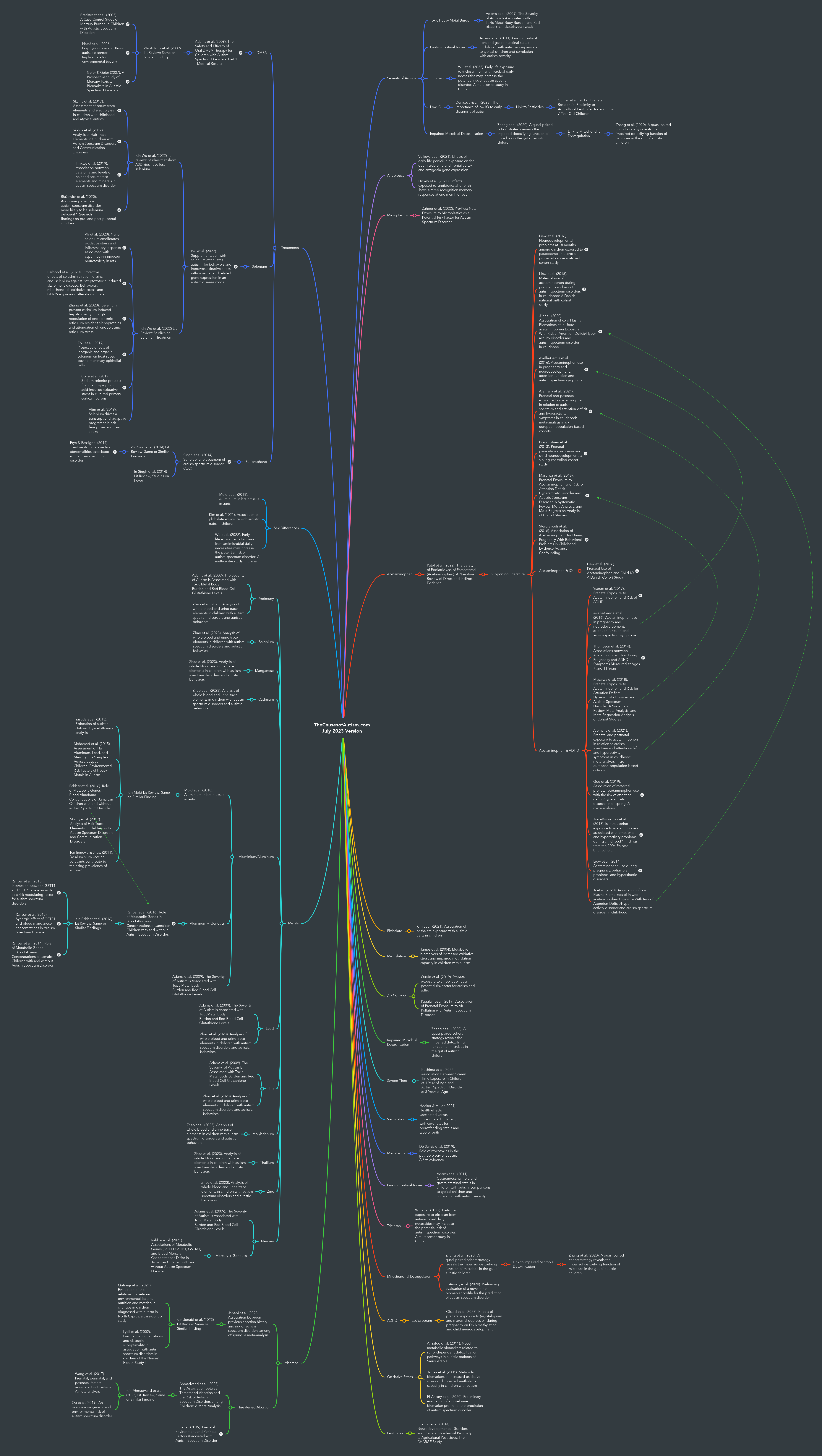
This section of the library shall be dedicated to commentaries on the Hubermanlab podcast. Included below is not a summary of the episode (I’ll leave that for you to check out), but rather my comments on the episode in terms of psychology, health, and human behavior. Whenever possible, I draw connections to autism as well. Most of my comments originally appear on Twitter/X, so be sure to follow on there.
Dr. Mark D’Esposito: How to Optimize Cognitive Function & Brain Health
Frontal Lobes and Estrogen
It was shared by Dr. D’Esposito that the frontal lobes of the brain are full of estrogen receptors, and that higher estrogen levels are correlated with increases in dopamine levels. A study conducted by a colleague of his measured estrogen levels in women during periods when their estrogen levels were at their lowest and highest, finding a clear relationship between estrogen levels, dopamine, frontal lobe function, and working memory. If estrogen was low so were dopamine levels, and consequently, so was frontal lobe functionality and working memory.
I guess women should try to conduct all the tasks that rely heavily on working memory during periods when estrogen levels are high, eh?
Just kidding.
Of course estrogen is a hormone found in both men and women.
Although, I do wonder about anecdotes that state women are better at multi-tasking than men. There is a female a musician named Lindsey Stirling who can both ballet and play the violin at the same time -I may own one of her albums, or three. Personally, some ability in the latter ability would be good enough for me. Nevertheless, there are plenty of entertainers/performers who can multitask and appear on such shows as “America’s Got Talent” and many others. I wonder if a review of their database would reveal any sex differences in performers whose ‘talent’ involves multitasking.
Alzheimer’s and Socialization
A small topic discussed was a study on the treatment of Alzheimer’s through the use of socialization, which can include the use of family photo albums and videos to improve symptoms. Interestingly, that study found that the socialization treatment worked better than any drugs. It’s quite an interesting finding, and I wonder the degree to which emotions would mediate this relationship; perhaps the stronger the emotion tied to the memory, the stronger the memory recall? Additionally, how would the valence of the emotion be reflected in terms of memory recall via its interaction with the person’s own biases toward memory recall (i..e, is it ever the case that some people are more likely to remember happy memories and forget sad memories or the reverse, and how would that interact with the use of photo albums/videos to assist in memory depending on the valence of the emotion that is evoked, as well as its strength?). Would a person with Alzheimer’s with negative recall bias benefit from being shown pictures of sad events in life -i.e., a funeral event…? If some people ever take pictures at such events…some people do…not me. Certainly would be an interesting study.

In response to this study shared by Dr. D’Esposito, Dr. Huberman shared that he has seen videos on social media where people with Parkinson’s or Alzheimer’s respond positively to a piece of music, which appeared to trigger a “context appropriate emotional state which brings the person to the surface.” I know of a study (I haven’t read it at length so I won’t cite it), that found cognitive recovery for early stage post-stroke through the use of music as a treatment, which also helped prevent negative moods in the participants.
It would be interesting to conduct a study that uses a combination of socialization, emotions, and music to improve Alzheimer’s or Parkinson’s symptoms; although there is likely little incentive for the pharmaceutical industry to fund such a study as they wouldn’t make much money from it.
It was saddening to hear Dr. D’Esposito say that after 35 years of treating Alzheimer’s patients, that have been no major changes in drugs that can be transformative.
Perhaps better treatments can be found through music and socialization.
Working Memory and Dopamine
Dr. D’Esposito confirms, which is consistent with what Dr. Huberman previously shared on his episode on Working memory, that having less available dopamine in the brain depletes working memory, while more working memory improves it -that is, until you cross a certain threshold where the available dopamine no longer improves working memory but rather detracts from it.
It was interesting that Dr. D’Esposito shared that Ritalin or Adderal wouldn’t be his choice for improving working memory, but rather, drugs that impact multiple neuro-modulators involved in working memory -not just dopamine. It’s actually quite beautiful how the brain works; Dr. D’Esposito mentioned that positively impacting one neuro-modulator can trickle into other areas of the brain and improve their function as well, hence his apparent preference for a treatment that works on multiple systems at once.
A study reviewed in the National Toxicology Program’s monograph on fluoride found that a genetic polymorphism that results in more dopamine in the brain was associated with lower IQ and more fluoride in the urine, drawing attention to the interaction of environmental toxins and genes. I will add though that another similar study discussed in the monograph reported no such findings depending on which polymorphism was observed. There is room for further investigations on dopamine and fluoride.
Dr. D’Esposito actually mentioned an enzyme in the prefrontal cortex involved in the breakdown of dopamine, such that in some people over-activity of the enzyme would result in less available dopamine, and vice versa. He went so far as to state that in 25-50% of the population the enzyme is overactive and underactive. Thus, if you have an underactive enzyme and more available dopamine, subsequently you would have better working memory.
The difficulty in measuring dopamine levels, as well as other neuro-modulators, was discussed in the episode, such that it is difficult to determine any individual person’s baseline levels of dopamine to determine if they would benefit from a drug that improves dopamine or other neuromodulators. This is something that was on my mind in its connection to autism, and is a point I will return to.
Mindfulness for Improving Cognition
Hehe. Dr. Huberman said ‘third eye.’ 🙂
Love catching those snippets that transcend mainstream physical sciences.
The context was in regards to using mindfulness meditation practices for improving executive functioning, and research shows that it is better than executive training alone.
Good thing I meditate everyday then, looks like I’m reaping the benefits.
Phone Use and Adaptive Behaviors
Dr. Huberman mentioned a concern regarding the use of our phones not generalizing to other adaptive behaviors. In other words, a concern that spending too much time on our phone could detract from other meaningful behaviors.
I would agree that this is certainly a cause for concern. However, the right behavior analyst can create a systematic progression involving the use of a phone to improve what could have been nonexistent social skills in some people toward the gradual integration of face-to-face interactions.
Perhaps a child or a teenager who is less inclined towards social interactions may benefit from the use of a phone for social interactions at first, with the progressive introduction of interactions that bring them closer toward face-to-face social interactions.
It can start with text messaging,
to a phone call,
to a video call,
to playing an online game together with a camera on,
and whatever additional steps are helpful toward promoting face to face interactions.
It can be a useful tool if used correctly.
I don’t disagree with Dr. Huberman’s implied concern that some people spend too much time on their phones. Certainly, for some people, this is robbing them of precious time to engage in other meaningful activities.
Autism and Working Memory
Working memory is a topic Hubermanlab has previously covered and whose connection to autism I previously discussed in the context of IQ and fluoride. In reading additional recent studies on the topic of working memory and autism, the relationship is clear: working memory is impaired in individuals with autism, and this is confirmed through studies using methodologies including functional Magnetic Resonance Imaging (fMRI) [1], functional Near-Infrared Spectroscopy (fNIRS) [2], Magnetoencephalography (MEG) [3], and various working memory tests [4, 5]. A recent meta analysis concluded on the relationship between working memory and autism, such that working memory deficits were found across different working memory tasks, as well as different outcome measures whose relationship age and IQ did not modulate [6].
Interestingly, a study conducted on pre-school children involving a task that does not rely on verbal skills -most working memory tasks do rely on verbal skills- found no significant differences between the autism and the typically developing peers group [7]. The task involved the use of movie clips where a train moves from one side of the screen to another, with sustained eye-tracking movement as the outcome measure of working memory. Understandably, the authors attribute the lack of findings to the fact that the working task they used in the study was a modified version of a task typically used with younger children than were used in their sample. Thus, the children in the sample may simply have been at an age where the task was too easy for them -although perhaps this is some information in itself, as if there were children who performed poorly, perhaps a developmental age for working memory could be ascertained.
A study published in 2023 found that parental socioeconomic status was a predictor for the child’s working memory upon school entry, but not working memory growth throughout the first 3 years of elementary school [8]. The authors indicate that this finding could be due to other external factors impacting working memory prior to the child entering school -and I can think of QUITE a few external factors. Ahem! The study measured variable I had never encountered before called ‘Approach To Learning’ (ATL) whereas children with higher ‘ATL’ performed better on working memory tasks than those with smaller ATL. The rating of ATL was obtained from teacher ratings on various questions: keeps belongings organized, shows eagerness to learn new things, works independently, easily adapts to changes in routine, persists in completing tasks, pays attention well, and follows classroom rules. Given the early-learner population I predominantly work with, these ATL skills in the questionnaire seem quite advanced and I can think of half a dozen factors related to motivation that could impact these scores (e.g., ‘eagerness to learn new things’ requires motivation that may be mediated by the reinforcer that is utilized and which the child may or may not desire; some children are motivated to earn praise/attention from adults, while many children with autism are not; many children may have some intrinsic, rather than extrinsic, motivation to succeed; whereas many children with autism have not yet developed a motivation to succeed, whether its for feelings of self-esteem or external rewards; the desire to escape undesirable consequences at home could be another factor impacting motivation, as is common with typically developing peers, which requires comprehension that actions at school may have consequences at home, which children with severe autism may not have). Thus, the findings regarding ATL and working memory make sense, but I don’t know that they are particularly meaningful for many children with autism.
I’m surprised to find myself a bit annoyed after reviewing some of the latest studies on autism and working memory. The main question I ask myself now is: did we really need these studies to confirm what is already observably consistent? The heterogeneity of autism is certainly a factor to consider in regards to examining working memory, however, various of these studies used “high functioning” individuals with autism in their sample size and still found working memory impairments [1, 2, 3, 4, 5], including, arguably, the study on socioeconomic status if there were students in their sample with high enough ATL levels [8]. Given the extensive special education placements, additional need for ABA and other services to teach adaptive skills to children with autism, it is obvious that there are working memory impairments, otherwise there would not be a need for so many autism services aimed at teaching adaptive skills.
One point brought up in the meta analysis on working memory and autism is that cognitive impairments are not presently a part of the DSM5 criteria for autism, and this is one major potential contribution toward the literature on autism that isn’t mentioned in any of these studies: the push for executive functioning deficits, such as working memory, as part of the criteria for autism diagnosis. This would be huge.
As Dr. D’Esposito discussed, there has been little progress in research on drugs for cognitive improvement, nevertheless, another domain affected by this working memory research comes to mind: should executive functioning skills become a part of DSM criteria for autism, can treatments for working memory via executive functions be classified as a treatment for autism?
There are no FDA approved drugs for treating autism; which may be for the best given that the CDC doesn’t seem to be paying much attention to various other factors associated with autism that have received meta analyses (e.g., abortion, pesticides, acetaminophen). Thus, the CDC -and by extension the FDA- may not be the best equipped for developing treatments for autism if they are not fully considering all the potential factors, to be quite frank. It was mentioned in the Hubermanlab episode that aerobic exercise and mindfulness meditation work well for improving working memory, and these seem like excellent low-risk strategies that any parent or adult with autism can immediately try. I’m sure healthy diet and a healthy circadian rhythm would probably positively impact this somehow as well.
Returning to the topic of neuromodulators, its been discussed that too much dopamine can negatively impact working memory. Anecdotally, some children with autism seem to be very, very happy and seemingly swimming in a cocktail endorphins. I do wonder to what extent too many or too little neuromodulators are an obstacle to tasks that require working memory: is there too much dopamine and other neuromodulators in some children that leads to less working memory capacity, and not enough in others? Returning to the enzyme that breaks down dopamine, what is the relationship between under- or over-activity of that enzyme and autism symptoms as they relate to performance on working memory tasks?
Until we understand at depth the neurotransmitter components that affect some individuals with autism, whether it is deficits or excesses that could impact working memory, it doesn’t appear that we would make progress with using neuromodulator enhancements (or suppressors?) to improve executive functioning. And that’s before we throw in environmental toxins like air pollution and pesticides into the equation. How are environmental toxins associated with autism impacting these neuromodulators? That, I would really like to know.
As usual, thanks for the lovely episode Dr. Huberman.
References
- Barendse, E. M., Schreuder, L. J., Thoonen, G., Hendriks, M. P. H., Kessels, R. P. C., Backes, W. H., Aldenkamp, A. P., & Jansen, J. F. A. (2018). Working memory network alterations in high-functioning adolescents with an autism spectrum disorder. Psychiatry and clinical neurosciences, 72(2), 73–83. https://doi.org/10.1111/pcn.12602
- Han, Y. M. Y., Chan, M. C., Chan, M. M. Y., Yeung, M. K., & Chan, A. S. (2022). Effects of working memory load on frontal connectivity in children with autism spectrum disorder: a fNIRS study. Scientific reports, 12(1), 1522. https://doi.org/10.1038/s41598-022-05432-3
- Sato, J., Safar, K., Vogan, V. M., & Taylor, M. J. (2023). Functional connectivity changes during working memory in autism spectrum disorder: A two-year longitudinal MEG study. NeuroImage. Clinical, 37, 103364. https://doi.org/10.1016/j.nicl.2023.103364
- Rabiee, A., Vasaghi-Gharamaleki, B., Samadi, S. A., Amiri-Shavaki, Y., & Alaghband-Rad, J. (2020). Working Memory Deficits and its Relationship to Autism Spectrum Disorders. Iranian journal of medical sciences, 45(2), 100–109. https://doi.org/10.30476/IJMS.2019.45315
- Rabiee, A., Vasaghi-Gharamaleki, B., Samadi, S. A., Amiri-Shavaki, Y., Alaghband-Rad, J., Seyedin, S., & Hosseini, S. (2018). Impaired nonverbal working memory in high-functioning autism spectrum disorder. Medical journal of the Islamic Republic of Iran, 32, 107. https://doi.org/10.14196/mjiri.32.107
- Habib, A., Harris, L., Pollick, F., & Melville, C. (2019). A meta-analysis of working memory in individuals with autism spectrum disorders. PloS one, 14(4), e0216198. https://doi.org/10.1371/journal.pone.0216198
- Zacharov, O., Huster, R. J., & Kaale, A. (2022). Working memory in pre-school children with autism spectrum disorder: An eye-tracking study. Frontiers in psychology, 13, 922291. https://doi.org/10.3389/fpsyg.2022.922291
- Kim, S. A., & Kasari, C. (2023). Working memory of school-aged children on the autism spectrum: Predictors for longitudinal growth. Autism : the international journal of research and practice, 27(8), 13623613231165599. Advance online publication. https://doi.org/10.1177/13623613231165599
 The Causes of Autism