

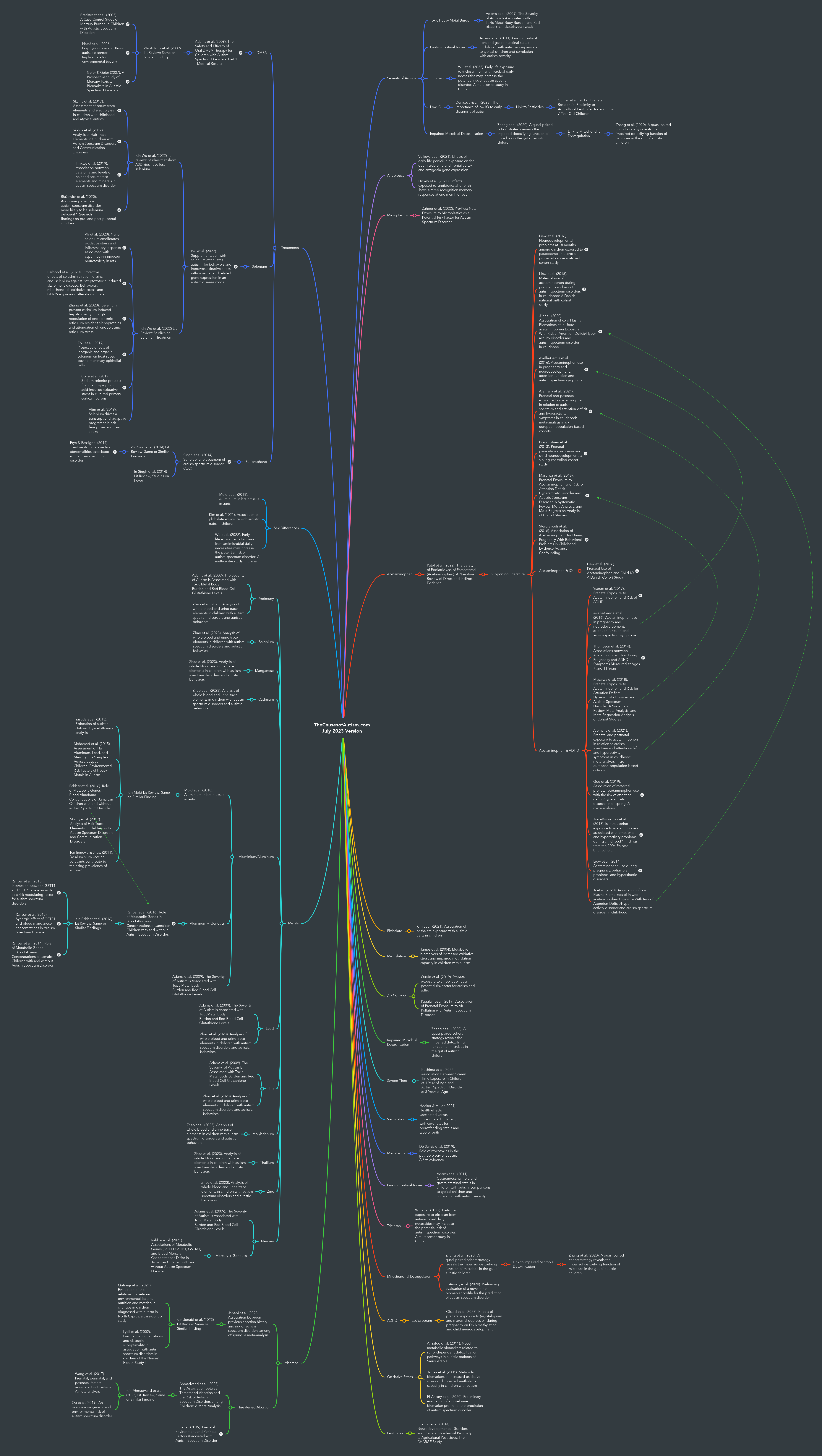
This section of the library shall be dedicated to commentaries on the Hubermanlab podcast. Included below is not a summary of the episode (I’ll leave that for you to check out), but rather my comments on the episode in terms of psychology, health, and human behavior. Whenever possible, I draw connections to autism as well. Most of my comments originally appear on Twitter/X, so be sure to follow on there.
Journal Club with Dr. Peter Attia | Effects of Light & Dark on Mental Health & Treatments for Cancer
While listening to Dr. Huberman discuss the research paper on the importance of early morning light exposure as well as evening darkness exposure and its impact on sleep and health, the question at the forefront of my mind was: what about autism? Is there any research that applies this to autism?
So, I did some digging.
And you’ll be a disappointed.
Sleep and Autism
In reviewing some of the latest reviews on autism and sleep disorders, it is apparent that there is little discussion around the modification of exposure to sunlight in the early morning or environmental modification toward darkness in the evening. The literature seems quite literally to be in its infancy -much like plenty of the other autism literature in spite of ever-increasing autism rates. Let us take a moment to criticize the millions (if not billions) of dollars wasted into investigating genetic contributions to autism spectrum -they have done little to prevent autism incidence from rising and latest research shows genes alone most likely account for no more than 10-13% of autism cases [9].

A moment of silence for the wasted money that would’ve seen better use into investigating environmental toxins that contribute to autism and the development of strategies to mitigate/prevent their presence & impact on human health and the environment. (I’m in a mood about this, sorry -not sorry). [For more information in the increase of autism incidence, and how research indicates it is NOT due to better diagnostic criteria, see my other commentary]
Now, moving on to some of the literature regarding autism and sleep issues.
Ji et al. (2023) discusses the impact of genes on sleep-wake regulation, over-enhancement of the nucleus locus coeruleus, disruption of histamine receptor-related genes, abnormalities in the bilateral amygdala and poor connectivity to other brain regions, mutations in genes for dopamine synthesis, catabolism, and reuptake; poor regulation between the thalamus and the cortex which can lead to poor transition from wake to sleep, lower iron levels in autism than control groups (iron being important for the synthesis of other neurotransmitters) -a recent study finding a negative relationship between ferritin level (an iron biomarker) and sleep [2], and lower release of melatonin in SOME individuals with autism. No mention of controlling for light exposure in the early daytime, or controlling for dark exposure in the evening, per the research reviewed by Dr. Huberman [1].
An HHS paper published in 2017 discussed brain-wave organization and maturation, circadian genes, abnormal melatonin production, and arousal/sensory disruptions. It is worth mentioning they briefly discussed over-responsivity (aka sensitivity) to stimuli as a factor associated with sleep problems in children with autism, with the recommendation of decreasing environmental stimuli prior to bedtime (no mention of darkness exposure, but it seems to be the implication) -this was part of their literature review leading up to a case study in which a behavioral method developed by the Sleep Committee of the Autism Treatment Network. This is where Dr. Huberman might get excited, because the intervention revolves around a bedtime routine involving reducing environmental stimuli, darkening the environment, reducing the room temperature (didn’t expect to see this one), a red nightlight, and additional behavioral and environmental modifications. The child receiving the treatment had a decrease in sleep latency of about 20 minutes and an increase in sleep minutes for over an hour -quite nice. No mention of controlling for light exposure in the early daytime, although there seems to be some controlling of dark exposure in the evening [3].
Buckley et al. (2020) highlighted that long-term safety research for the use of melatonin in pediatrics is lacking and cause for concern. The authors expressed puberty development as a factor that may be influenced due to melatonin’s effect on the hypothalamic-gonadal axis. Overall, the authors expressed concerns that many children with autism, due to comorbidities, are exposed to medications that disrupt sleep as a side effect; there is a lack of evidence for behavioral strategies and parental training to improve sleep; there’s low/inconsistent evidence on the ability of melatonin to help sleep in children with autism; and there is also a lack of inconsistent evidence for the efficacy of complementary and alternative medicine (i.e., in this case the use of weighted blankets or STS mattress technology). No mention of controlling for light exposure in the early daytime, or controlling for dark exposure in the evening [4].
Lane et al. (2022) particularly discussed the role of hyper-sensitivity to stimuli, highlighting research that found its relationship to sleep onset delay, sleep duration, and night waking. Interestingly, there is research that has found sleep disturbances associated with tactile and oral hyper sensitivity. High levels of visual reactivity have been found to predict severity of insomnia. There was unsatisfactory evidence for weighted blankets, and a study that implemented a sensory swim program found mixed results: sleep disturbance increases in some children and sleep disturbance decreases in other children. No mention of controlling for light exposure in the early daytime, or controlling for dark exposure in the evening. The discussion around visual reactivity could be perhaps said to allude to visual hypersensitivity to light, although this is not discussed in the paper [5].
Patti et al. (2023) highlights the need for controlled studies for autism/ADHD sleep disruption interventions. Briefly, the paper touches on the use of bright light therapy (Phototherapy) in adults with ADHD, although research in pediatrics is lacking. Behavioral interventions touched upon include reducing screen time before bed, sleep routines, evening blue light filters, and a few others. Regarding medication: No medication has been approved by the FDA for pediatric insomnia. The authors appear to have a positive attitude toward melatonin, although they do inform readers that melatonin has been reported to national poison control centers in the past -implying caution in its use. The paper also discusses the use of ferritin (iron), as well as, surprisingly, Gabapentin -the absence of clinical trials which apparently has not prevented its pediatric use (is this something to be concerned about?). All in all, this paper minimally discusses the use of modifying exposure to light and dark as a treatment option for sleep in autism and ADHD. No mention of controlling for light exposure in the early daytime, and some mention of controlling for dark exposure in the evening [6].
Deliens & Peigneux (2019) discusses the impact of genes on sleep-wake regulation, the mention of a behavioral intervention on improving sleep problems, the worsening of autism symptoms of poor communication due to poor sleep which leads to more externalizing behaviors that could lead to agitation due to an event before bedtime, and a few minor other topics with minimal research. No mention of controlling for light exposure in the early daytime, or controlling for dark exposure in the evening [7].
Finally, Ogundele & Yemuna (2022) also discuss behavioral interventions (discussing the implementation of extinction to not reinforce attention-seeking behaviors), the use of melatonin and its impact on sleep onset delay versus nighttime disruptions (improvements in one, but not in the other), good sleep hygiene, the lack of evidence and/or non-recommendations of various pharmacological treatments in spite of their use, and inconsistent findings for bright light therapy. No mention of controlling for light exposure in the early daytime, or controlling for dark exposure in the evening [8].
Overall, the literature is in its infancy, and the results across studies are inconsistent no doubt due to the lack of control for the heterogeneity of autism no one seems capable of getting a grasp on -and I hypothesize this is due, at least in part, because of misunderstanding and not accounting for environmental factors that are contributing to autism diagnoses whose cumulative effect, coupled with genetic interactions, are resulting in so much heterogeneity in autism.
Librarian’s Hypothesis
For children/adults with autism who have sensory over-responsivity to stimuli due to various biological reasons discussed in the research (in this case, highlighting the importance of over-responsivity to light exposure), one hypothesis could be that those who are more prone to over-responsivity may need less sunlight to regulate their wake-sleep cycle, but thereby may be more sensitive to light exposure in the evening -which would cause light-based disruptions in the sleep wake cycle, which I would also hypothesis would be independent of other cofactors affecting sleep in a particular case of autism.
Bi-directionality
It was concerning to see in multiple papers (I didn’t do it justice above) discussion around autism symptoms making sleep problems worse, which in turn, exacerbate autism symptoms. One example was poor sleep affecting communication in the child, which could lead to more externalizing behaviors due to the child’s frustration, which in turn could lead to agitation right before bedtime -resulting in delayed sleep onset. Highly concerning…and valid.
As always, thanks for the lovely episode Dr. Huberman.
References
- Ji, Q., Li, S. J., Zhao, J. B., Xiong, Y., Du, X. H., Wang, C. X., Lu, L. M., Tan, J. Y., & Zhu, Z. R. (2023). Genetic and neural mechanisms of sleep disorders in children with autism spectrum disorder: a review. Frontiers in psychiatry, 14, 1079683. https://doi.org/10.3389/fpsyt.2023.1079683
- Giambersio, D., Marzulli, L., Margari, L., Matera, E., Nobili, L., De Grandis, E., Cordani, R., Barbieri, A., Peschechera, A., Margari, A., & Petruzzelli, M. G. (2023). Correlations between Sleep Features and Iron Status in Children with Neurodevelopmental Disorders: A Cross-Sectional Study. Journal of clinical medicine, 12(15), 4949. https://doi.org/10.3390/jcm12154949
- Souders, M. C., Zavodny, S., Eriksen, W., Sinko, R., Connell, J., Kerns, C., Schaaf, R., & Pinto-Martin, J. (2017). Sleep in Children with Autism Spectrum Disorder. Current psychiatry reports, 19(6), 34. https://doi.org/10.1007/s11920-017-0782-x
- Williams Buckley, A., Hirtz, D., Oskoui, M., Armstrong, M. J., Batra, A., Bridgemohan, C., Coury, D., Dawson, G., Donley, D., Findling, R. L., Gaughan, T., Gloss, D., Gronseth, G., Kessler, R., Merillat, S., Michelson, D., Owens, J., Pringsheim, T., Sikich, L., Stahmer, A., … Ashwal, S. (2020). Practice guideline: Treatment for insomnia and disrupted sleep behavior in children and adolescents with autism spectrum disorder: Report of the Guideline Development, Dissemination, and Implementation Subcommittee of the American Academy of Neurology. Neurology, 94(9), 392–404. https://doi.org/10.1212/WNL.0000000000009033
- Lane, S. J., Leão, M. A., & Spielmann, V. (2022). Sleep, Sensory Integration/Processing, and Autism: A Scoping Review. Frontiers in psychology, 13, 877527. https://doi.org/10.3389/fpsyg.2022.877527
- Petti, T., Gupta, M., Fradkin, Y., & Gupta, N. (2023). Management of sleep disorders in autism spectrum disorder with co-occurring attention-deficit hyperactivity disorder: update for clinicians. BJPsych open, 10(1), e11. https://doi.org/10.1192/bjo.2023.589
- Deliens, G., & Peigneux, P. (2019). Sleep-behaviour relationship in children with autism spectrum disorder: methodological pitfalls and insights from cognition and sensory processing. Developmental medicine and child neurology, 61(12), 1368–1376. https://doi.org/10.1111/dmcn.14235
- Ogundele, M. O., & Yemula, C. (2022). Management of sleep disorders among children and adolescents with neurodevelopmental disorders: A practical guide for clinicians. World journal of clinical pediatrics, 11(3), 239–252. https://doi.org/10.5409/wjcp.v11.i3.239
- Keil-Stietz, K., & Lein, P. J. (2023). Gene×environment interactions in autism spectrum disorders. Current topics in developmental biology, 152, 221–284. https://doi.org/10.1016/bs.ctdb.2022.11.001
 The Causes of Autism