

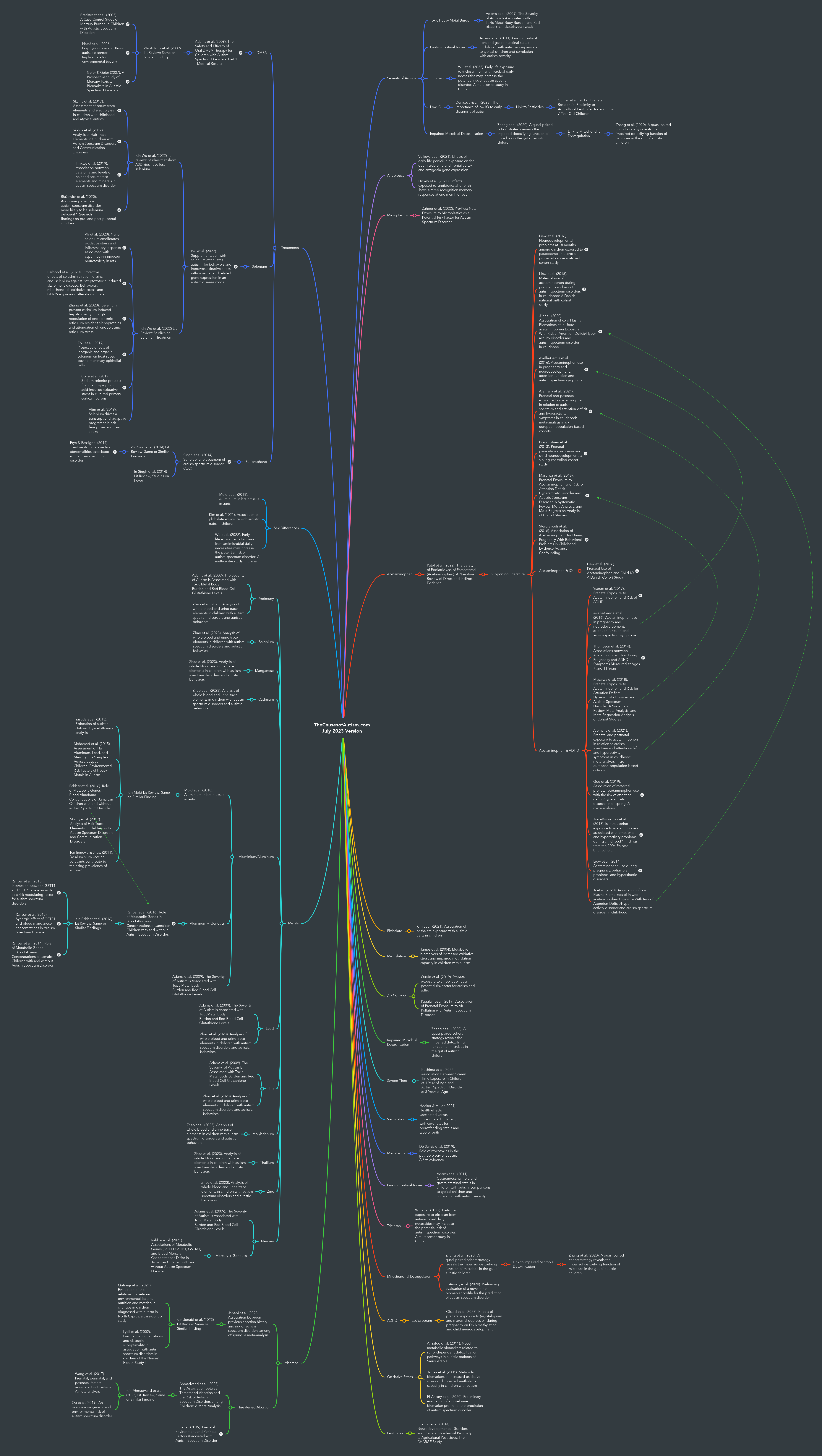
This section of the library shall be dedicated to commentaries on the Hubermanlab podcast. Included below is not a summary of the episode (I’ll leave that for you to check out), but rather my comments on the episode in terms of psychology, health, and human behavior. Whenever possible, I draw connections to autism as well. Most of my comments originally appear on Twitter/X, so be sure to follow on there.
Rick Rubin: Protocols to Access Creative Energy and Process
Creativity
Rick discussed that often people have creativity blocks due to comparing themselves to others or not feeling adequate enough. Well that’s hilarious. I can definitely say that as I’ve worked on this library and now hit the reset button on old avenues, starting fresh again with new perspectives, I’ve definitely had to struggle with a sense of imposter syndrome in the past when comparing myself to people whose work I admire. I’ve even wondered whether my work is of any consequence or making a difference at all, or whether it will make a difference in the future or not. Ultimately, one way to get around that is allowing myself more intrinsic reinforcement through enjoying the process of creating this library. So in a way, this library is becoming an outward pouring of my own inner desire to accomplish something for myself.

The Unconscious Mind as a Supercomputer
I definitely resonate strongly with assertions that it is the unconscious mind that is really the hidden supercomputer of the brain. One of the people whom I consider my mentors in this lifetime is Paul Scheele, who teaches accelerated learning methods. It is definitely his assertion, as well as that of those he himself learned from, that the unconscious mind has the capacity to process millions of bits of information all at once, and that our brain’s true hidden potential for intelligence and creativity is in accessing this unconscious part of the brain. I’m not sure if he himself described it this way, but what I’ve ultimately found myself describing it as is an increasing connectivity between our conscious mind and all of the unconscious part of the brain. Expanding our executive functioning, otherwise known as working memory, I think, also has a lot to do with it, because if we increase our capacity for working memory, if we increase our capacity to think about 10 or 20 ideas all at once, our creativity is expanded. Admittedly, one of the things I have struggled with the most in my life is actually long-term memory. I think I have excellent working memory and the ability to think about things in the moment and connect them to a lot of other things, but long-term memory about distant events is something I seek to improve, and which Paul Scheele talks about.
Horror Movies
I definitely have that in common with Rick. I don’t care for horror movies, neither monster nor realistic horror movies.
Unpleasant Feelings Associated with Watching a Movie that leaves a type of Emotional Mark
I think there’s something to the way a movie can convey information indirectly that bypasses the area of the brain that normally integrates, or rejects, information into our personal reality. I recently watched a movie called “Archive,” which was basically about archiving a person’s consciousness into a machine after they pass away to allow people to settle their affairs with the deceased. So the person’s body basically dies, but their consciousness is sort of kept alive somehow through this electronic device called an Archive. Initially, you can hold video calls with the deceased person, but eventually, it’s almost like the archive decays or something, and you’re no longer able to hold conversations with that person.
But anyway, I knew within the first 15 minutes of the movie that the movie was going to really get on my nerves, and it was because I became acutely aware of the fact that the movie was based upon the premise of not letting go and not obtaining emotional closure with the loss of loved ones. And not that this isn’t something that people don’t experience on a regular basis, but I guess my issue with the movie is that it’s based on a psychological premise that leads to unhealthy mental health outcomes (i.e., holding onto grief, holding onto sad memories, holding onto what could have been -rather than having hope, cherishing the good times of the past, knowing you’ll see them again, etc.). So just the fact that you are holding onto a person’s consciousness because you’re having a difficult time letting go of them really bothered me. You could say I’m pretty sensitive to the energy, or feel, of movies, so I knew I wasn’t going to like the movie within the first 15 minutes. It was already depressing me from the beginning. And sure as heck, I did not particularly care for the movie itself. It was overall quite depressing. Perhaps there are other ways the message of ‘hey, you get to talked to your loved ones for a while after they pass’ could’ve been conveyed more positively through a movie, and I’m open to that idea.
Dr. Huberman mentioned that he had watched the movie “Good Valentine” and that it had left him with unpleasant psychological effects for months at a time. I think this happens whenever we watch a movie and we don’t necessarily expunge or purge ourselves of the emotional information that was conveyed through the movie itself -and that perhaps bypassed areas of the brain that accept/reject information -I would argue, it sometimes goes into automatic integration as true. For example, let’s say a movie being in love with an AI robot conveys the overall feeling of loneliness that a lot of people experience in their personal lives and perhaps in romantic relationships. The movie heavily focuses on the hardships of making friends and relationships. It can leave people feeling that there is an overarching sense of loneliness about life itself, pessimistic perspectives that are integrated into one’s reality that later turn into behaviors that affirm those views…that perhaps would lead people to try to develop a relationship with an AI -because apparently humans are viewed as less than.
So I think it’s that hidden information that we accidentally accepted and integrated into our reality that we have to expunge ourselves from emotionally in order to get rid of any emotional after-effect the movie may leave. So with the movie “Archive” I watched, I had to let go of that overall feeling of depression of the loss of a loved one that was conveyed through the whole movie itself in order to move on from it and not be affected by it the next day (and believe me, having just lost a parent this year, I was more highly attuned to the feelings of the movie). I think it’s another reason I’m less inclined these days to listen to music with lyrics -I don’t always agree with what’s being said and I don’t want to subconsciously integrate anything that may not resonate.
Interestingly enough, near the end of the episode, Rick mentions the concept of the intention of the performance -basically, knowing whether something is going to be good or not within the first moment of the song itself. So that’s more or less how I felt about this movie within the first 10 minutes.
Creativity
My final thoughts on creativity and my overall takeaway from the episode is that there appears to not be a clear-cut route to creativity, whether it’s chaotic or organized, but it seems to be rather what works for the individual person. Within the realm of science and presently for myself reading lots of research, it seems that creativity works slightly differently when conducting investigations and building upon previous people’s work. It seems at times that within the scientific field, creativity sometimes can mean not taking other people’s work at face value or even destroying previous scientific evidence with new evidence that may say otherwise. My own creative process has been geared toward the creation of something that the world would find useful and is not presently being done by other people. For me, one of the things I’ve recently come to terms with is that I need to do what the CDC themselves are not doing, which is providing the public a better understanding of the environmental factors associated with autism that people can take measures to mitigate, whether that’s during or after pregnancy, or for adults on the spectrum.
Meditation/Spirituality
Rick used a few phrases that were not lost on me, such as calling this reality a ‘simulation,’ that were hidden gems that spoke about his inner sense of spirituality and overall view of life, as well as the universe. He actually referred to the universe itself as an intelligence, which was awesome. I believe it was a quote along the lines of “if the universe isn’t making things happen, I wouldn’t try to go against the universe”…. I appreciated and enjoyed catching those little phrases that revealed aspects of his innermost self.
His gratitude 4 phrases:
“May I be filled with love and kindness.
May I be well.
May I be peaceful and at ease.
May I be happy.”
Thank you for the lovely episode.
Autism Librarian
 The Causes of Autism