

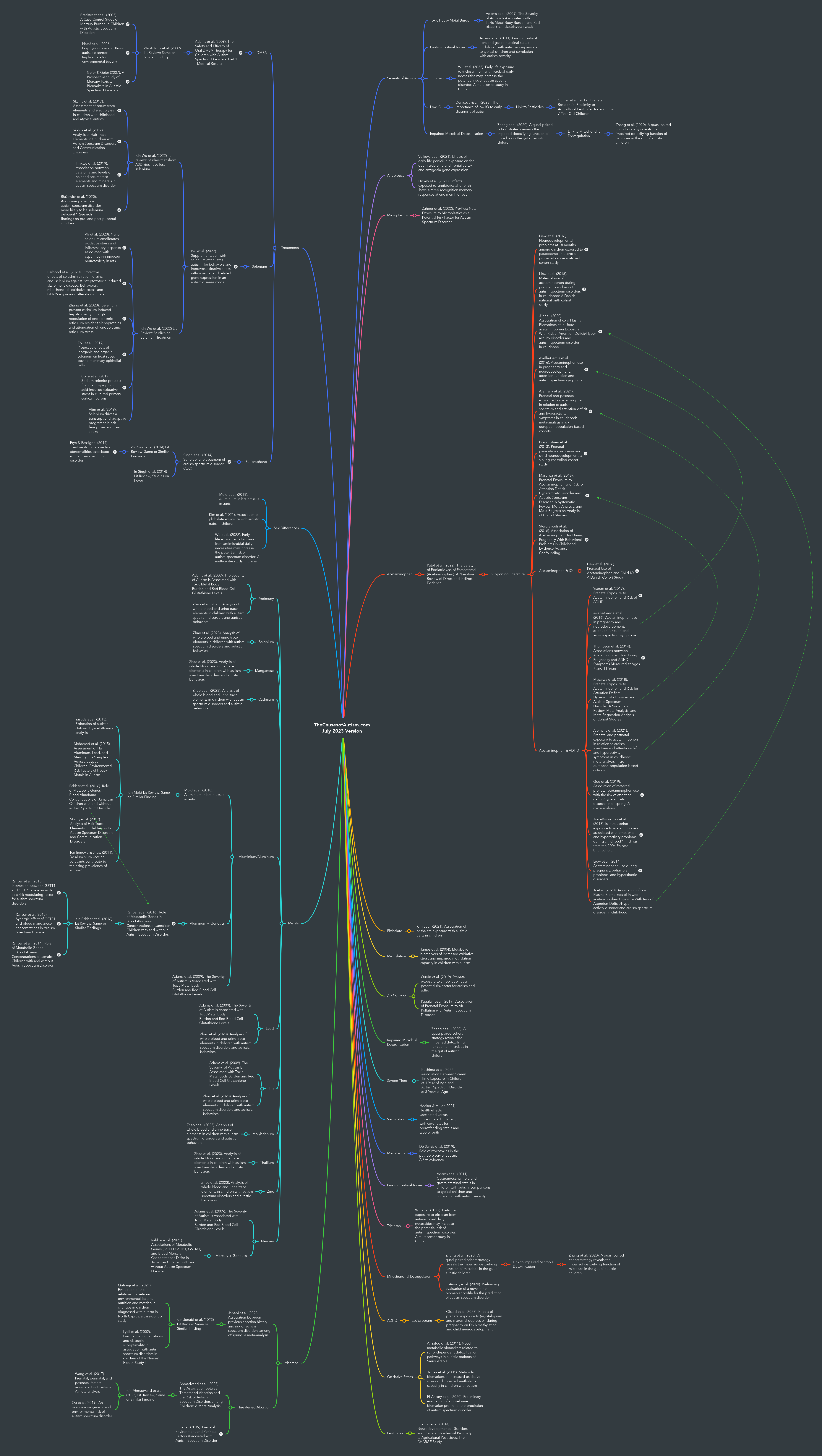
This section of the library shall be dedicated to commentaries on the Hubermanlab podcast. Included below is not a summary of the episode (I’ll leave that for you to check out), but rather my comments on the episode in terms of psychology, health, and human behavior. Whenever possible, I draw connections to autism as well. Most of my comments originally appear on Twitter/X, so be sure to follow on there.
Dr. Robert Malenka: How Your Brain’s Reward Circuits Drive Your Choices | Huberman Lab Podcast
In a recent Huberman Lab podcast, Dr. Huberman interviews Dr. Robert Malenka, a professor of psychiatry and behavioral sciences at Stanford. It was certainly a fascinating discussion, with the topics around autism being obviously my favorite.
To summarize the content of the podcast, here were my takeaways:
- Dopamine is cool
- Serotonin is cool
- Dopamine and serotonin are involved in reward systems of the brain
- Dopamine and serotonin do not act in isolation (sorry, we can’t oversimplify brain chemistry)
- Dopamine and serotonin are involved in neuroplasticity, including learning, memory, and learning adaptive skills
- Addictive drugs can hijack our brain’s reward systems, although so can non-drug related behaviors, such as gambling
- Discussions were made regarding autism, and whether individuals with autism seek out social interactions, or perhaps find them less rewarding/reinforcing due to certain brain chemistry
- Etc. etc. etc. (go listen to the podcast, it was great).
I held a discussion with a friend shortly after listening to the podcast, specifically discussing addiction and reward centers in the brain. They immediately brought up a question regarding personal willpower in overriding desires/cravings. In this case, my friend argued that even though addiction ran in their family, this very awareness of a potential predisposition drove them to develop a mindset of “I will never get addicted to drugs,” and thus, even though experimenting with various highly addictive drugs on numerous occasions during their youth, they never became addicted and did not actively seek out those drugs again afterward.

Within the ream of neuroplasticity and addiction, its interesting to consider that a certain mindset could overcome a family/genetic predisposition to addictive behaviors out of sheer determination and willpower. How much does personal willpower mediate the rewarding qualities of a substance, insofar as cravings may ignored? Are there differences beyond brain physiology that differentiate between a person acting on cravings, versus one who doesn’t? It would seem that many substance abuse support groups are aimed at developing the “strength” to overcome the addictions -dare we call it neural strength? It was mentioned in the podcast that various substance abuse groups seek to make sobriety more rewarding than the use of the substance, and this certainly makes sense when we view the mind itself as the regulator of what is rewarding/punishing. In other words, how enjoyable can an experience be, regardless of chemicals firing off in the brain and body, if we are mentally rejecting the reinforcing/pleasurable properties of the stimulus? Can the mind itself mediate the reinforcing quality of a stimulus? A glazed donut may hijack our reward systems through its delicious sugary tastes, but can we choose to not find it rewarding/pleasurable at all, and therefore, ignore/bypass those sensory experiences? Perhaps the chemicals in the brain may fire off regardless, but does one’s choice to partake in those chemical experiences matter? Does such a choice exist?
Social media was brought up as a topic of discussion, one area being how receiving messages from friends or acquaintances can be a rewarding experience. My same friend mentioned earlier who grew up before the advent of social media, could certainly be said to be the type of person who prefers face to face interactions over social media interactions. I do wonder if some individuals who frequently experienced face to face interactions before the advent of social media have nice little neural highways that have received tons of stimulation through such face to face interactions, such that social media interactions might be less rewarding. Although, this is not to say that without enough social media exposure, those neural circuits that also find social media interactions pleasurable cannot be established. Certainly there are many older adults who, although did not grow up with social media, find it highly reinforcing. What could mediate these relationships? Does the desire for some forms of attention that may not be obtained through face to face interactions result in “settling” for social media interactions? Are notification bells, sounds, and messages contributing to the reward systems of the brain that get addicted to social media? One mediator may be how much attention, or social reciprocity, a person desires to begin with. How much does a single person’s desire for various forms of attention mediate the ability of social media to hijack those reward systems? In behavior analytic terms, is social media even rewarding for them?
Returning to addiction, I must confess a similar story as my friend, having born witness to many years of alcohol abuse in my youth and consequently resolving myself to never engage in those behaviors. When I did partake in some alcohol a few times due to peer pressure, the experience was a physiologically unpleasant one, resulting in very uncomfortable chest pain -never in my life did I experience any ‘good’ sensations from drinking alcohol. Additionally, and this is something that to this day I cannot recall, it would seem that my alcohol abusing relative protected me from alcohol abuse. They would call alcohol ‘poop’ when I would be requested to bring a tall can. “Go bring me a poop” were the words that were used. Is there some unconscious association between alcohol and ‘poop’ that remains in my brain to this day, which leads me to not engaging in those behaviors due to a negative association that blocked the expectation of a pleasurable feeling associated with alcohol? Perhaps…

Regarding autism, reward systems and neuroplasticity are something that the whole science of Applied Behavior Analysis (aka, ABA) could be argued to have its foundations based upon. It might be said ABA uses the reward systems to: 1. teach adaptive skills, 2. minimize or eliminate maladaptive behaviors (i.e., aggression or self-injurious behaviors), as well as 3. build positive associations between stimuli that may not initially be reinforcing to a child -partly due to neurological reasons associated with autism diagnosis, and partly due to normal human deviations, genetics and personality, and other factors considered- through pairing those stimuli with other stimuli that are rewarding (i.e., classical conditioning). For many individuals with autism -let’s use a toddler in this example- rewarding stimuli could initially be limited to a few primary reinforcers, such as food (especially processed foods that may especially stimulate reward centers), water, sleep, etc. However, these can be paired with social stimuli so that eventually, although perhaps not equal to a sugary snack or a beloved ipad, social stimuli come to also possess some manner of reinforcing qualities, although previously they did not. The discussion regarding certain drugs/chemicals that could enhance empathy or enhance desire for social connectedness, is particularly fascinating. Although there is certainly much to consider regarding the genesis of autism spectrum disorder insofar as other factors associated with autism are also concerned.
After listening to the podcast, it certainly leaves me with much to consider regarding the role of brain chemicals in autism. Admittedly thus far, my literature review in this library has primarily focused on discovering factors associated with autism, and this is mainly because it seems that aside from endless vaccine arguments, there is a plethora of other research that is not being addressed by mainstream media (oxidative stress, pesticides, gastrointestinal issues, & gene-metal interactions, to name a few) that also deserve attention.
Oxidative stress is perhaps the topic with most attention in the literature. The following literature reviews may be of interest to you: Article 1, and Article 2.
All in all, thank you Dr. Huberman and Dr. Malenka for such a wonderful podcast. It was a great lesson. I wasn’t able to write this all in a Tweet, so I had to write all my thoughts out here. Thank you if you had the time to read all this.
Oh, and I loved the comments about the biological evolution of these various processes. It gave me flashbacks to the grad school Evolutionary Psych. seminar. 🙂
Thanks again.
Autism Librarian
 The Causes of Autism