

A study conducted in 2019 by a team of researchers concluded that there is around an 80% risk factor for autism inherited through genes, that environmental factors contributed between 0-20%, and that maternal effects contributed close to zero percent [1]. In other words, it provided evidence that individuals who were diagnosed with autism were diagnosed due to almost entirely genetic reasons. Thus, it seemed that conclusive evidence was drawn that autism was a largely genetically inherited trait. The argument about any other causes for autism seemed almost over.
In the study, the researchers calculated genetically induced correlation (a fancy term for comparing relatives genes to one another) between participants, through which they conducted another set of additional computations to determine the family members’ environmental and maternal effects. This is not the first study that uses this design, as the authors cite previous literature that uses similar designs and statistics to infer environmental and maternal effects. However, can only wonder how such a method was ever allowed in the research literature on genetics and autism due to its stupendously obvious low validity. The researchers used a multigenerational family design, that although may seem to convey great importance in name, leaves much to be desired in terms of its ability to assess environmental and maternal effects in the real world.

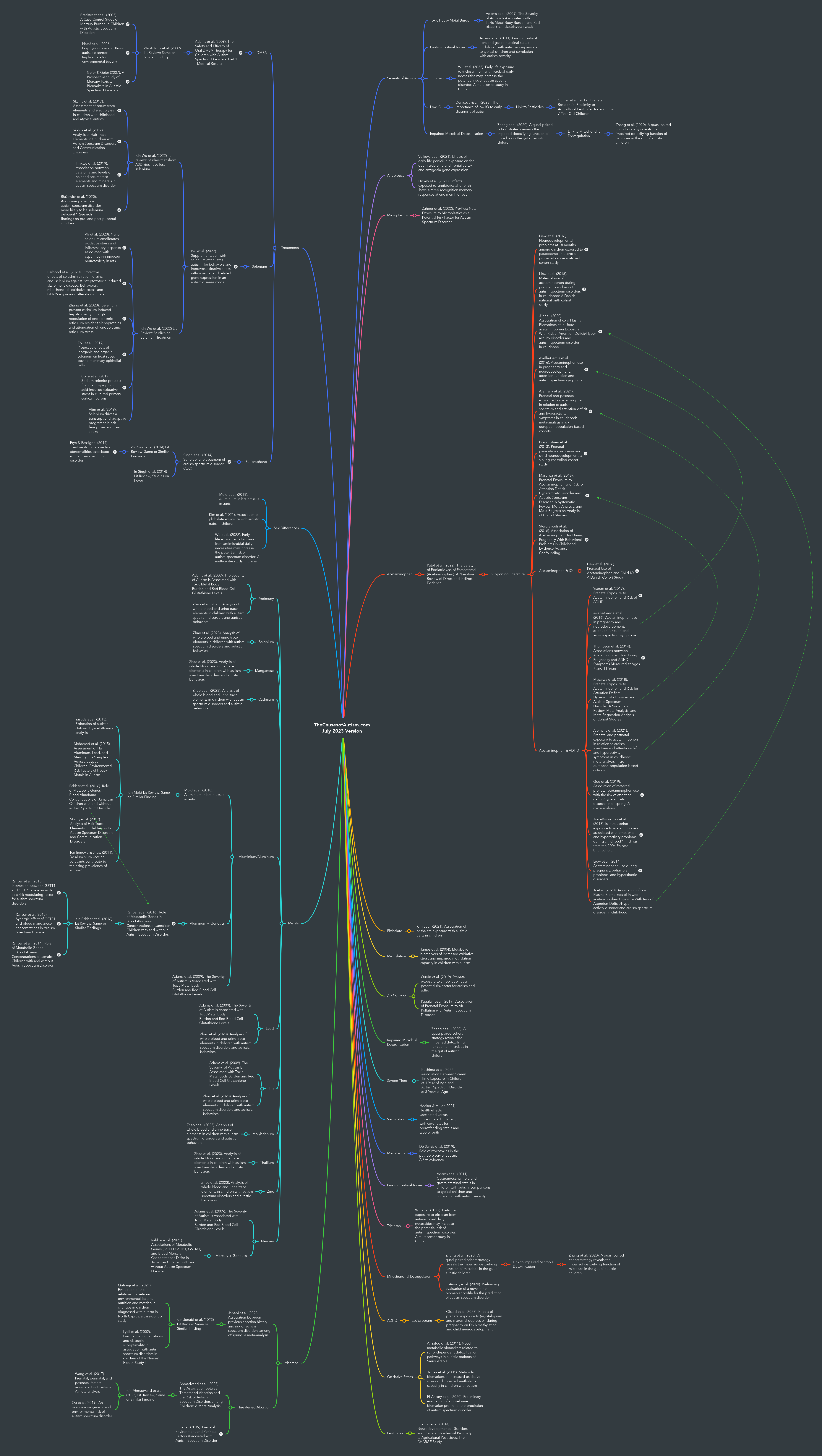
In research there is this thing called ‘validity,’ and a study with high validity means that their measurement tools actually measured what they intended to measure, which make the findings credible. For example, a valid measure of your annual income might be your paycheck. A valid measure of your health might be your cholesterol or blood sugar levels. In the autism field, there is a literature of studies that directly test for various environmental factors, such as the excretion of toxic metals, flora of the microbiome, and testing for biomarkers of oxidative stress. However, this genetics study utterly fails to test such biomarkers in spite of a small but growing literature on them, or to obtain concrete information on any other potential environmental factors associated with autism (i.e., pesticides, triclosan, previous abortion history, etc.), which draws into question the validity of the measurement tools themselves. In other words, are their mathematical/statistical calculations to determine environmental and maternal effects based solely on genetic correlations valid at all?
There are various types of validity in research: Construct, Content, Criterion, Internal, External, Face, and Ecological Validity. It can be argued that the more validity a measurement tool has, the more the tool can be said to ascertain a true value –in other words, the measurement tool obtains a completely, 100% error free value. Truthfully, a ‘true value’ is hard to obtain -research and humans are prone to error. However, researchers go through painstaking efforts to ensure their measurement tools come close to obtaining true values. The true value of your annual income with one company can be obtained from your W-2; a true value of your health might be actual disease-free, longevity. Needless to say, designing a study and using measurement tools with high validity in order to obtain what a researcher hopes are true values, should be highest priority. However, this study uses genetic analysis itself to ascertain environmental effects and maternal effects, rather than assessing them through other means (e.g., medical records, surveys, lab tests, etc.), to ascertain some value of maternal and environmental effects. It brings into question the validity of the measurement tool, in this case, the multigenerational family design, to assess anything remotely close to a true value, which effects the credibility of the study and whether any agency or organization should be using this, or studies with similar designs, to inform families that their child’s autism was of purely genetic origin (for example, this study is presently used on the Autism Speaks website to inform parents about what causes autism, I’m sure there are more).
For a moment, let’s discuss a few of the specific types of validities in research:
Construct Validity: This refers to the degree to which a test or measure accurately reflects the concept or construct it is intended to measure. For instance, if a researcher developed a test to measure self-esteem, construct validity would examine whether the test truly measures self-esteem or unintentionally measures something else (like mood or sociability).
Librarian’s Assessment: If the goal of any research study is to obtain the truth (i.e., true values), one would assume it would be the researchers highest priority to obtain construct validity regarding the environmental or maternal impact on a genetic trait through obtaining as much quantitative or qualitative information from the mother and family, and using this information in the actual analysis. However, no such information was included in the analysis, but rather, the methodology of the study itself claims to have assessed maternal and environmental effects through studying the family genetic correlations/differences themselves, surely a poor attempt at ascertaining differences that could be obtained through simple interviews, questionnaires, and family medical history records. Thus, the construct validity of this study is, to this researcher and librarian, non-existent, and thus, marring on the validity of measurement of maternal and environmental effects, and consequently, the credibility of the “findings.”

Content Validity: This form of validity checks whether the test or measurement covers all aspects of the construct it is supposed to measure. For example, if a researcher develops a test to measure mathematical ability, the test should cover all areas of math (such as algebra, geometry, statistics, etc.) to have strong content validity.
Librarian’s Assessment: Once again, a disappointingly reductive approach is used in this study through the use of genetic correlations between family members to assess what the researchers call “shared environmental effects” and maternal effects. Unfortunately, the truth is compromised by looking solely at genetic relations rather than obtaining concrete, real-world information that could’ve been obtained through creative avenues, like talking to someone. While the ability of this genetic methodology to obtain some information is certainly acknowledged, the superiority of obtaining factual, concrete information regarding potential exposure to various factors associated with autism cannot be denied.
Additionally, the environment we live in is filled with hundreds upon thousands of stimuli, and research within the past decade has found environmental factors associated with autism, including pesticides, triclosan, acetaminophen; previous abortion history; prenatal vitamins contaminated with heavy metals; GI issues in the children, and toxic heavy metal levels, just to name a few. Should future studies wish to obtain the highest content validity to ascertain the differences between genetic inheritance of a trait and the environmental impact of factors associated with autism, let alone prenatal exposure effects on the offspring, it would be prudent to include the efforts of previous research that has shed light on these factors.
External Validity: Also known as generalizability, this refers to the extent to which the results of a study can be applied to or inferred for other people, settings, times, and measures.
Librarian’s Assessment: This study obtains an incredibly large sample size of 2,001,631 children that many would argue would lead to high generalizability (aka, external validity), however, the primary analysis focused on the Danish, Finnish, and Swedish samples, predominantly White/Caucasian regions, thus, bringing into question the generalizability to other ethnic groups -the researchers mention nothing of ethnic analyses.
Because there is now research on the effects of air pollution and pesticides on autism, the researchers could have collected data on the possible exposure of families to these two factors based on where they lived (e.g., rural areas, city areas, farmland, etc.). However, no such data or analysis was conducted, thus even bringing to question the external validity of these findings for White/Caucasian groups alone due to the great amount of variability in environments that exist in the world.
So, these are the major flaws of the study, and I could go on, but it isn’t presumptuous to state that all other types of validity are tarnished by not using better measures of environmental effects.

Although this environmental-factors-excluding design is not regarded as a limitation of the study by the authors, on the other hand, the authors do correctly identify another major flaw of the statistical design: misspecification. Misspecification can occur when environment and genetic interactions are not accounted for and a bias toward genetics/inherited traits occurs –a MAJOR flaw in any autism study using this or similar designs. Why? It’s due to the simple fact that humans do not live in a vacuum –but rather, our genes are constantly interacting with our environment. The authors conducted a sensitivity analysis in order to attempt to account for misspecification, however, it must be remembered that the validity of their very measurement tools’ ability to ascertain something remotely close to a true value for environmental and maternal effects is questionable, and thus, obfuscates the credibility of the sensitivity analysis itself. Why calculate a person’s annual income if you don’t even have an accurate number for their weekly paycheck?
In fairness to this study, there is other research I collect and review within my make-believe library that is subject to similar criticism regarding the validity of their measurement tools, and believe me when I say that I treat the research very carefully when considering potential effects, which drives my present views on the causality of any one of the factors I’ve collected and included in the library (see the About section). Frankly, I’m analyzing, assessing, and attempting to make sense of what is now a cocktail of environmental factors associated with autism, any single one of them a potentially highly relevant factor in a single child’s diagnosis, while possibly irrelevant in another child’s who may have been exposed to different environmental stimuli. Needless to say, many children are exposed to multiple factors through the course of their lifetime, beginning at conception.
I must deliver praise and admiration for clever researchers who consider both genes and environment in their analysis, or at the very least, use methods to account for the other. In various environmental studies I have reviewed thus far, genetics are accounted for by not including children with Fragile X syndrome in the analysis, which could bias the results of the study toward overestimation of the environmental, or in the following case, biological factors.
One such study was El-Ansary et al. (2020), who successfully assessed various biomarkers to separate the autism and control groups from one another, thereby establishing the usefulness of assessing autism-risk through certain biomarkers, especially for early-age detection [2]. These researchers did not include participants who tested positively for fragile X syndrome in their sample, which could have biased their results.
Similarly, Al-Yafee (2011) also conducted analyses by only including participants who tested negative for Fragile X, thereby ruling out any genetic contribution to their findings regarding the role of oxidative stress in autism, which consequently links it to leaky-blood brain barriers, mitochondrial dysfunction, and other problems [3].
The study by De Santis et al. (2019) excluded participants who tested positive for certain genetic varians, adding credibility to their findings regarding the environmental impact of mycotoxins on autism, also providing insights into their possible role on DNA methylation –whoa [4].
In the spirit of truth and research, it would admittedly be interesting to find a study that solely looks at the biomarkers of those who do test positive for Fragile X to determine any potential interventions that can be used to improve biomarkers levels, and compare the interventions effectiveness to participants who are negative for Fragile X, further examining differences in treatment response. A nearly 20 year old study by James et al. (2004) used nutritional supplements to improve various metabolic biomarkers that reflect the function of the one-carbon metabolism and transsulfuration pathways, as well as oxidative stress and antioxidant capacity [5]. In this study, the researchers found that the biomarkers significantly differed between the autism and control groups. In their discussion of results, the authors speculated if genetic predisposition to environmental factors promoting oxidative stress could also play a role in the metabolic abnormalities observed in autism. Bravo for looking at both sides of the coin and looking at both genetics AND environment!
It is therefore disappointing that this study utterly ignored a growing literature on biomarkers and other environmental factors associated with autism, as it does little to contribute to an understanding of the epidemiology of the condition. Various studies I have summarized thus far have conducted blood tests, fecal tests, and urine tests to examine environmental factors; however, this study did no such thing. One of my favorite studies is the one by Zhang et al. (2020), who utilized metagenome sequencing and annotation to analyze the gut microbiomes of 20 ASD children and 18 healthy controls, finding that impaired microbial detoxification contributed to autism, which mcould explain why ASD children are more vulnerable to environmental toxins -like wow [6].
Final Remarks

In conclusion, it is my sincere desire to continue reviewing autism research and provide the public with a better explanation for autism than most caregivers receive at the time of their a diagnosis. My hope is to continue conglomerating research so that physicians, psychiatrists, psychologists, and all parties of interest are properly informed regarding a child’s diagnosis. However, I understand that such an endeavor is a grand one.
In the meantime, the public at large should be advised against the face-value interpretation the findings of studies such as this one or others who employ similar methodologies without also seriously examining other factors that are associated with autism. It seems fairly obvious that if we want to move forward in understanding this diagnosis, we must employ a multidisciplinary approach that places all variables on the table to understand any common denominators so that measures can be taken to both prevent autism, and properly treat it. Unfortunately, the findings of the study by Bai et al. (2019) are regressive in advancing the public’s awareness of the causes of autism.
Addressing Possible Counterarguments
- Genetics research and methods are robust and backed by decades of research.
- Absolutely, and the argument here isn’t to undermine genetics research. It is extremely valuable for research into autism. However, this argument doesn’t address the notion that environment and genetics do interact, and higher quality analysis can and would be obtained through additional measurement tools that assess the family’s exposure to factors associated with autism. For example, the study by Rahbar et al. (2021) studied genetic-mercury interactions in autism, a great addition to the literature regarding gene-environment interactions [7].
- The general “scientific consensus” is that autism is caused by genetic risk factors, and these arguments go against what hundreds of scientists and researchers believe and know about autism.
- This argument is the weakest of all possible counterarguments because it provides no valid reasoning, but simply weighs the agreement between certain small groups of researchers as “enough” to discredit, discount, and undermine research that provides novel points of view. It could be said that, sure, the ‘scientific consensus’ among a specific set of researchers is that autism is purely caused by genetics, however, the ‘scientific consensus’ among another set of researchers may be entirely different. I’m certain that should all of the researchers whose studies have contributed to this library be placed in a single room, the ‘scientific consensus’ among them would be quite different from those who argue for solely genetic causes.
- Autism is a form of ‘neurodiversity’ and autism is to be celebrated as a unique expression of individual life.
- A person doesn’t need to be diagnosed with autism to be celebrated as a unique expression of life (aka, neurodiverse) –the two are not mutually exclusive. Unfortunately, given the amount of research regarding environmental toxins associated with autism diagnosis, the term ‘neurodiverse’ is quite damaging in that it enables a misconception of possible bodily harm as ‘normal and to be celebrated,’ rather than regarding the condition as a medical malady. Frankly, it is also insulting to many parents who experience great levels of stress and anxiety due to their child’s diagnosis, and are told to simply ‘accept’ their child. Acceptance isn’t the problem for most parents, of course they love and accept their child unconditionally; it is knowing and understanding why their child was diagnosed so that they can take the correct actions that is the issue. Everyone is special, everyone is beautiful and unique, and you don’t need a diagnosis of ‘autism’ to affirm this.
- Adults who ‘identify’ as having autism or wish they had an autism diagnosis, similarly, potentially misunderstand the condition of the diagnosis, misunderstand how and why it is diagnosed, and could benefit from some form of mental health care to address their needs if identifying as having autism is used as a way to cope with their emotions.
- July 4, 2023 Update: To avoid misinterpretation of this section, it should be added there are surely adult individuals who indeed may be in need of a genuine autism diagnosis due to potential exposure to various factors associated with autism that has impacted their way of living, as well as adults who already meet the criteria for autism diagnosis, and these adults are to be differentiated from adults who ‘desire’ an autism diagnosis but do not meet criteria or have not been exposed to any of the factors associated with autism.
- Adults who ‘identify’ as having autism or wish they had an autism diagnosis, similarly, potentially misunderstand the condition of the diagnosis, misunderstand how and why it is diagnosed, and could benefit from some form of mental health care to address their needs if identifying as having autism is used as a way to cope with their emotions.
- A person doesn’t need to be diagnosed with autism to be celebrated as a unique expression of life (aka, neurodiverse) –the two are not mutually exclusive. Unfortunately, given the amount of research regarding environmental toxins associated with autism diagnosis, the term ‘neurodiverse’ is quite damaging in that it enables a misconception of possible bodily harm as ‘normal and to be celebrated,’ rather than regarding the condition as a medical malady. Frankly, it is also insulting to many parents who experience great levels of stress and anxiety due to their child’s diagnosis, and are told to simply ‘accept’ their child. Acceptance isn’t the problem for most parents, of course they love and accept their child unconditionally; it is knowing and understanding why their child was diagnosed so that they can take the correct actions that is the issue. Everyone is special, everyone is beautiful and unique, and you don’t need a diagnosis of ‘autism’ to affirm this.
- Government organizations and major autism organizations didn’t inform the public about these factors associated with autism when the research came to be known. Therefore, there must be something wrong with these studies and they must not be true, or there must be some good reason they have been ignored by mainstream media.
- This argument relies once again on the notion of ‘scientific consensus’ or ‘general consensus,’ and if we wish to defer to questions regarding why mainstream media or certain autism groups don’t address this type of research, you need only ask yourself: who funds them? So-called ‘general consensus’ even among laypersons is massively influenced by the funding sources of the news organizations that parade information that serves primarily the private interests of said funding sources.
References
- Bai, D., Yip, B. H. K., Windham, G. C., Sourander, A., Francis, R., Yoffe, R., Glasson, E., Mahjani, B., Suominen, A., Leonard, H., Gissler, M., Buxbaum, J. D., Wong, K., Schendel, D., Kodesh, A., Breshnahan, M., Levine, S. Z., Parner, E. T., Hansen, S. N., Hultman, C., … Sandin, S. (2019). Association of Genetic and Environmental Factors With Autism in a 5-Country Cohort. JAMA psychiatry, 76(10), 1035–1043. https://doi.org/10.1001/jamapsychiatry.2019.1411
- El-Ansary, A., Hassan, W. M., Daghestani, M., Al-Ayadhi, L., & Ben Bacha, A. (2020). Preliminary evaluation of a novel nine-biomarker profile for the prediction of autism spectrum disorder. PloS one, 15(1), e0227626. https://doi.org/10.1371/journal.pone.0227626
- Al-Yafee, Y. A., Al-Ayadhi, L. Y., Haq, S. H., & El-Ansary, A. K. (2011). Novel metabolic biomarkers related to sulfur-dependent detoxification pathways in autistic patients of Saudi Arabia. BMC neurology, 11, 139. https://doi.org/10.1186/1471-2377-11-139
- De Santis, B., Brera, C., Mezzelani, A., Soricelli, S., Ciceri, F., Moretti, G., Debegnach, F., Bonaglia, M. C., Villa, L., Molteni, M., & Raggi, M. E. (2019). Role of mycotoxins in the pathobiology of autism: A first evidence. Nutritional neuroscience, 22(2), 132–144. https://doi.org/10.1080/1028415X.2017.1357793
- James, S. J., Cutler, P., Melnyk, S., Jernigan, S., Janak, L., Gaylor, D. W., & Neubrander, J. A. (2004). Metabolic biomarkers of increased oxidative stress and impaired methylation capacity in children with autism. The American journal of clinical nutrition, 80(6), 1611–1617. https://doi.org/10.1093/ajcn/80.6.1611
- Zhang, M., Chu, Y., Meng, Q., Ding, R., Shi, X., Wang, Z., He, Y., Zhang, J., Liu, J., Zhang, J., Yu, J., Kang, Y., & Wang, J. (2020). A quasi-paired cohort strategy reveals the impaired detoxifying function of microbes in the gut of autistic children. Science advances, 6(43), eaba3760. https://doi.org/10.1126/sciadv.aba3760
- Rahbar, M. H., Samms-Vaughan, M., Saroukhani, S., Bressler, J., Hessabi, M., Grove, M. L., Shakspeare-Pellington, S., Loveland, K. A., Beecher, C., & McLaughlin, W. (2021). Associations of Metabolic Genes (GSTT1, GSTP1, GSTM1) and Blood Mercury Concentrations Differ in Jamaican Children with and without Autism Spectrum Disorder. International journal of environmental research and public health, 18(4), 1377. https://doi.org/10.3390/ijerph18041377
 The Causes of Autism